 Whalesbook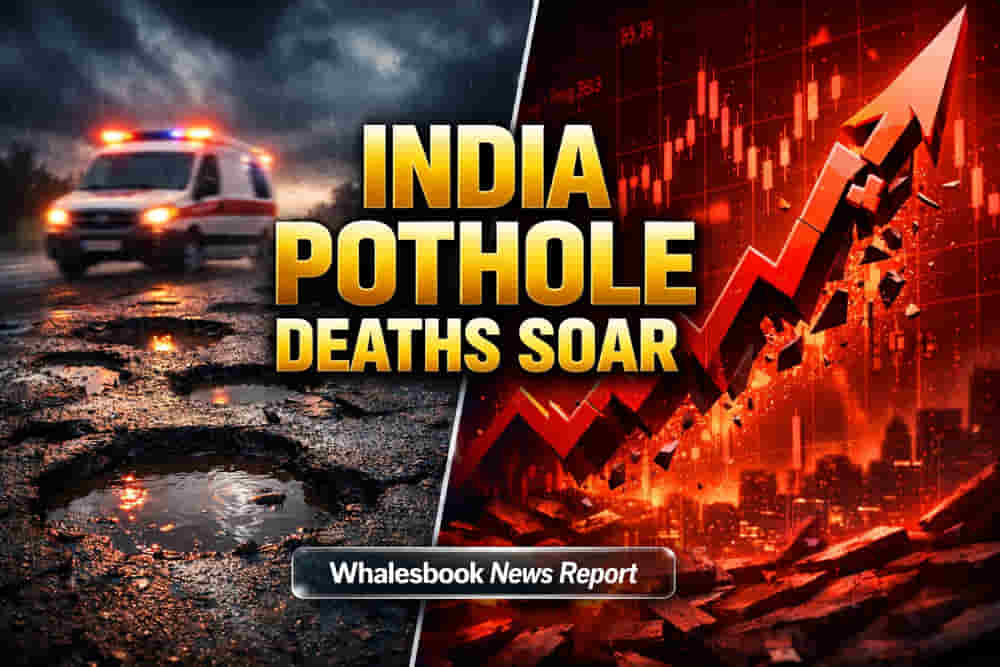
The Seamless Link
The stark rise in road fatalities, driven by neglected infrastructure, is more than a tragic statistic; it represents a fundamental flaw in India's infrastructure development strategy. This focus on expansion over preservation is not merely inefficient but actively undermines economic progress by creating persistent safety hazards and incurring massive costs that dwarf the investment in new projects. The systemic undervaluation of maintenance and accountability is a critical blind spot that jeopardizes future economic potential.
The Infrastructure Deficit & Economic Drag
India's roads are claiming an alarming number of lives, with pothole-related fatalities escalating by over 53% from 1,555 in 2020 to 2,385 in 2024. Over this five-year period, 9,438 lives were lost and 19,956 injuries were recorded. This grim tally is a symptom of a larger issue: an infrastructure deficit characterized by inadequate drainage, poor construction practices, and delayed maintenance. The economic toll extends far beyond human life; road crashes cost India an estimated 3% to 5% of its GDP annually. Compounding this, traffic congestion, often a result of poorly maintained or designed road networks, leads to an annual productivity loss of 1.5% to 2.0% of GDP. High logistics costs, already standing at 13-14% of India's GDP compared to 8-10% in developed economies, are further inflated by these inefficiencies. For instance, traffic delays in major cities like Bengaluru can result in economic productivity losses of ₹1.2 lakh crore annually. Speeding, a factor exacerbated by road conditions, remains a dominant contributor to fatal crashes.
The Policy Imbalance Exposed
The central government's budgetary allocations starkly reveal a policy favoring new construction over preservation. For the 2025-26 fiscal year, over ₹2.7 lakh crore is earmarked for highway development, a figure dwarfing the mere few hundred crore allocated for road safety and maintenance. This trend is consistent; capital expenditure for highways consistently receives priority, with FY25 seeing an allocation of ₹2.72 trillion, while maintenance budgets remain a fraction, often around 1% of the total capital expenditure. While initiatives like the Bharatmala Pariyojana and the Motor Vehicles (Amendment) Act, 2019, aim to expand connectivity and improve road safety through stricter penalties, they do not address the foundational issue of maintaining existing assets. Global benchmarks, such as Germany's mandated regular inspections and accountability for road authorities, highlight India's deficiency in robust maintenance frameworks [cite: Source A]. The World Economic Forum's Global Competitiveness Index ranks India's infrastructure pillar at a modest 66th, indicating room for improvement despite advancements in other areas.
The Forensic Bear Case
This persistent imbalance between expansion and maintenance creates significant systemic risks. It fosters an environment where asset degradation is normalized, leading to escalating repair costs and premature infrastructure failure. The high rate of crashes, particularly on national highways where speeds are higher, not only results in loss of life but also damages India's reputation for safety and reliability. This can deter crucial foreign direct investment, which is vital for long-term economic growth. The current approach risks creating a cycle of decay, where neglected roads become a drag on productivity, increase operational costs for businesses, and diminish overall national competitiveness. The World Bank's Logistics Performance Index, while showing improvement, still highlights that India's logistics costs are considerably higher than developed nations, a gap directly attributable to infrastructure inefficiencies. Furthermore, vulnerable road users like pedestrians and two-wheeler riders disproportionately bear the brunt of poor road design and maintenance, underscoring an equity issue within the current strategy. The lack of stringent, independent oversight and performance-based accountability for road-owning agencies on maintenance standards is a critical weakness.
The Path to Preservation
Reversing this trend requires a fundamental shift in public expenditure priorities, placing a greater emphasis on road maintenance and asset management. Implementing frameworks similar to those in Germany, with mandatory regular inspections and clear accountability for road authorities, is essential [cite: Source A]. Contracts should incorporate multi-year performance guarantees with financial penalties for premature failure. Increased investment in developing and adopting road asset management systems (RAMS) can optimize maintenance funding and resource allocation, ensuring infrastructure longevity and reducing lifecycle costs. Public-private partnerships, structured with robust performance metrics and penalties, could also play a vital role. By rebalancing investment towards preservation, India can not only mitigate the current safety crisis but also unlock significant economic efficiencies, enhance its global competitiveness, and build a more resilient and sustainable transportation network.