 Whalesbook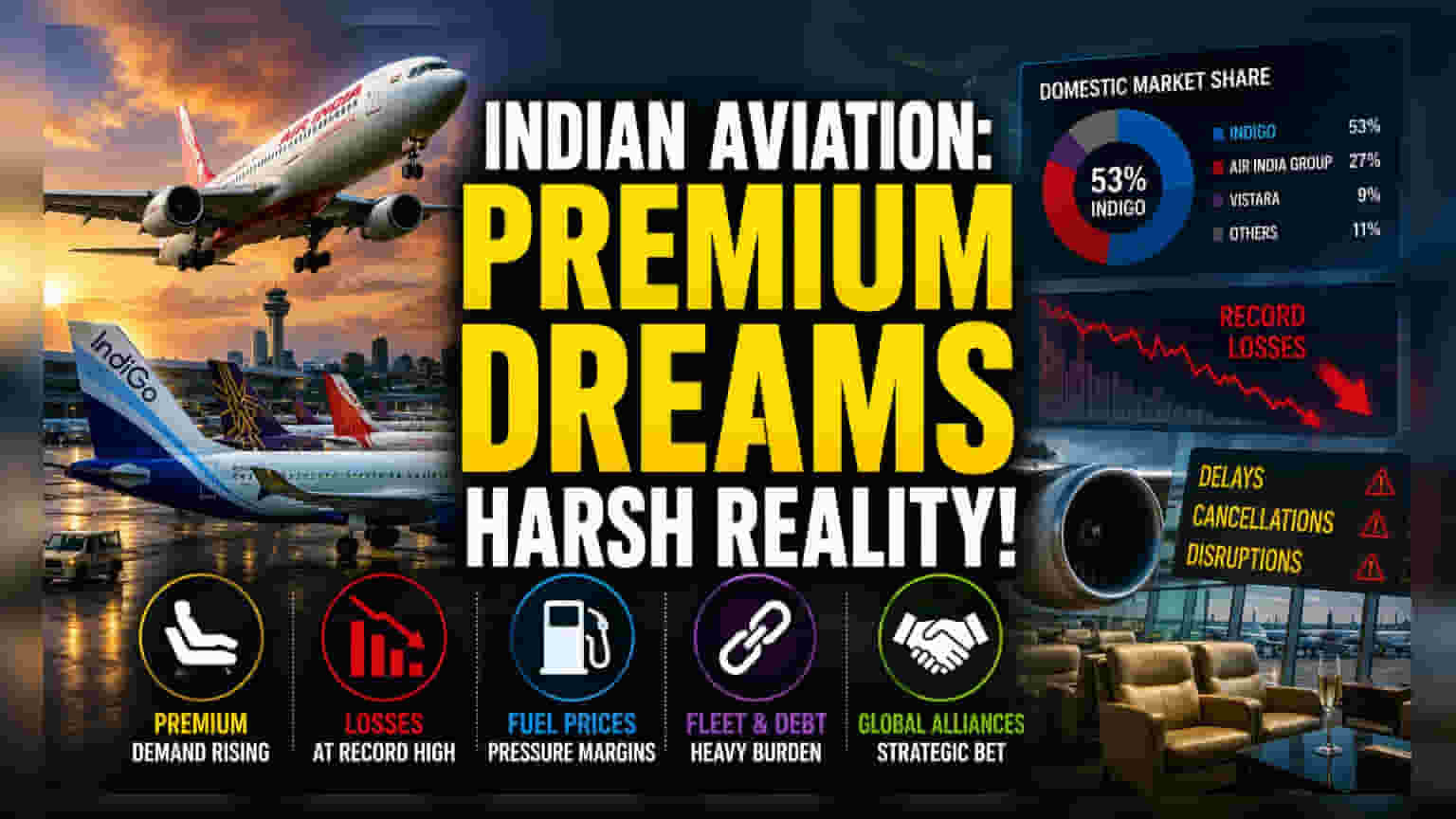


The Premium Leisure Mirage
Star Alliance’s optimistic outlook on the Indian aviation sector centers on a shift in traveler behavior, with a growing leisure segment increasingly willing to pay for premium economy, business, and first-class seating. This trend aligns with a global movement toward higher-yield travel, pushing legacy carriers to reconfigure fleets for a more affluent demographic. However, translating this narrative into sustainable profitability in India requires more than just seat upgrades. The domestic market remains fundamentally price-sensitive, and any strategy relying on premium leisure spending risks overestimating the elasticity of the middle-class traveler, especially as low-cost carriers (LCCs) continue to optimize their own high-frequency, cost-efficient models.
The Operational Reality Check
While the industry narrative highlights growth, the operational metrics reveal a more complex picture for the Tata Group. Air India, currently executing its ambitious 'Vihaan.AI' transformation, is simultaneously battling significant headwinds. The carrier holds a smaller market share compared to the dominance of IndiGo, which retains over 50% of the domestic market. Air India's path to recovery involves not just fleet modernization but also the monumental task of harmonizing operational procedures, loyalty programs, and organizational culture following recent mergers. The financial pressure is palpable; reports indicate that the airline group has faced record-level losses, exacerbated by volatile jet fuel prices and the broader impact of geopolitical instability in West Asia, which has forced costly route diversifications.
The Forensic Bear Case
The narrative of long-term opportunity often overshadows the immediate structural risks inherent in the carrier's revival. Air India is navigating a 'perfect storm' of operational challenges, including recent management turnover, with the CEO resigning amid mounting losses. Furthermore, the carrier's capital-intensive strategy—demanding huge outlays for new fleet acquisitions—creates a precarious financial position during periods of economic contraction or fuel price spikes. Unlike lean competitors that have honed their low-cost operations over decades, Air India is attempting a massive cultural and technological overhaul while simultaneously managing an aging infrastructure and the heavy debt burden typical of a legacy transition. Regulatory and operational scrutiny remains high, particularly following recent incident reports that have forced the leadership to shift focus from expansion to basic operational reliability.
Future Outlook
The next phase for India’s aviation sector will be defined by consolidation and a brutal battle for yield. While partnerships—such as the recently announced cooperation between Air India and Thai Airways—offer a tactical avenue to expand network reach and optimize hubs, they do not resolve the fundamental issue of domestic cost competitiveness. The sector is moving beyond simple passenger volume metrics toward a focus on sustainable profitability and capital efficiency. For the Tata Group, the coming quarters will be a stress test on whether the investments in customer experience and fleet modernization can translate into a defensible competitive moat before the high-growth trajectory of the Indian market matures.