 Whalesbook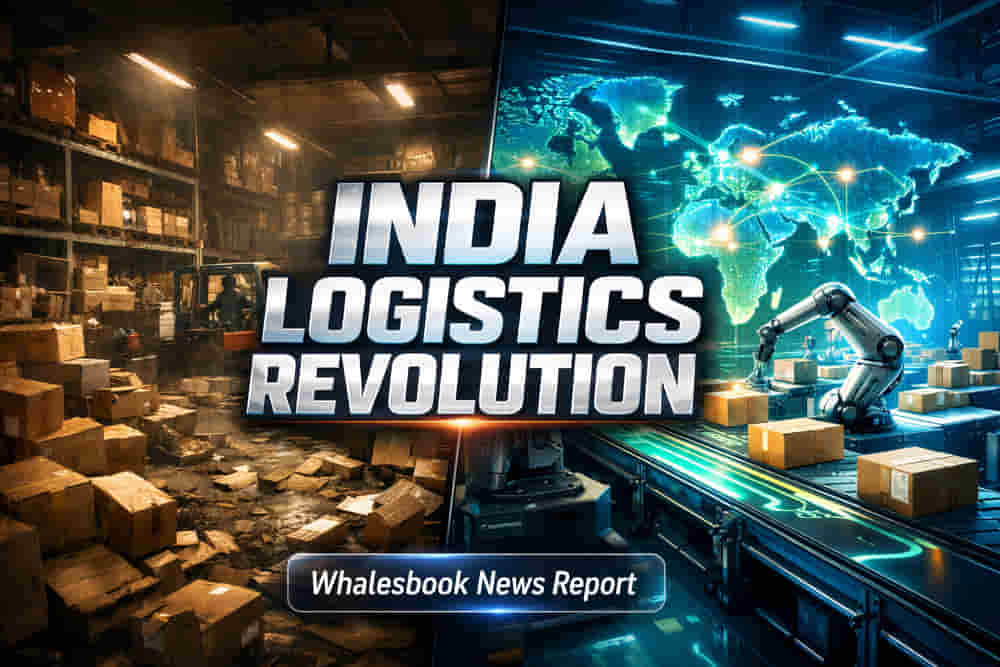


Logistics Sector Embraces Real-Time Collaboration
India’s logistics backbone is entering a new phase defined by collaboration and real-time intelligence across partners. The traditional linear supply chain, where procurement, warehousing, transportation, and delivery operated with limited context, is now yielding to a dynamic network. People, technology systems, delivery partners, and sellers are making integrated decisions.
This transition is critical as India’s logistics sector, valued at approximately $250 billion, is projected to surpass $380 billion within two years. Rapid growth necessitates networks that can respond instantly to variations across geographies and categories. With retail expanding into Tier II and III markets, orchestrating intelligence collectively is essential for building predictable and resilient operations at scale.
E-commerce Drives Demand for Distribution
India's e-commerce market is expected to reach $300 billion by 2030, with nearly 60% of new shoppers anticipated from smaller towns. This surge fuels demand for distributed fulfillment, hyperlocal capabilities, and consistent service levels. Warehousing capacity has now exceeded 533 million square feet, with major brands strategically locating facilities closer to demand centers to reduce transit times.
Navigating Complexity Through Shared Data
Growing complexity, fragmented data across partners, and unmapped delivery environments create operational risks. Isolated systems struggle to deliver predictable outcomes. A collaborative model offers a solution: sharing real-time context, integrating partner signals with AI, and building intelligence through local insights creates a supply chain capable of handling India's diverse scale.
India’s warehousing industry is forecast to reach ₹2,87,200 crore by 2027, indicating significant investment in infrastructure. Fulfillment centers are evolving into connected command environments where humans, robotics, and software collaborate. Last-mile delivery, which can account for up to 41% of overall supply chain costs, benefits from AI-led routing and partner inputs that account for traffic, weather, and local conditions.
Unified Insights Enhance Planning and Returns
Unified demand signals provide retailers and marketplaces a consolidated view of consumption patterns, promotional impacts, and seasonality. AI merges data from multiple partners and external factors to highlight emerging trends sooner, enabling local hubs to adjust in real time. Shared dashboards allow regional fulfillment nodes to modify routing, reassign inventory, or calibrate staffing swiftly, supporting faster decisions.
Returns analysis is improved as partners review patterns together. AI-supported insights help refine product information and packaging strategies. Predictive analytics offer early visibility into demand spikes and slowdowns, allowing procurement teams, fulfillment centers, and delivery partners to align capacity and scheduling in advance, reducing disruptions.
Human-Automation Synergy in Fulfillment
Fulfillment centers are crucial in converting shared intelligence into accurate output. Robotics handle structured tasks with speed, while human teams manage exceptions, conduct quality checks, and make contextual decisions. This balance maintains reliable outcomes and flexibility.
Predictive maintenance, supported by AI monitoring equipment health and workflow load, contributes to operational continuity. Reverse logistics are streamlined through shared assessment and AI-assisted classification, enabling faster reintegration into inventory. Unified operational dashboards allow brands, marketplaces, and logistics providers to align decisions effectively.
Last Mile Intelligence and Accuracy
The last mile benefits from combined intelligence of routing systems and field teams. AI generates routing paths using real-time data, while delivery partners contribute local familiarity and provide updates on road conditions. Address accuracy is strengthened through co-created local details and landmarks that improve AI geolocation over time, reducing delays and increasing first-attempt success rates.
India’s logistics transformation is founded on the principle that supply chains function best when decisions are shared. Collaboration, coupled with shared visibility and co-created intelligence, strengthens service quality for sellers and customers. Real-time coordination builds a logistics network designed for scale, reliability, and continuous improvement, supporting India’s digital commerce growth.