

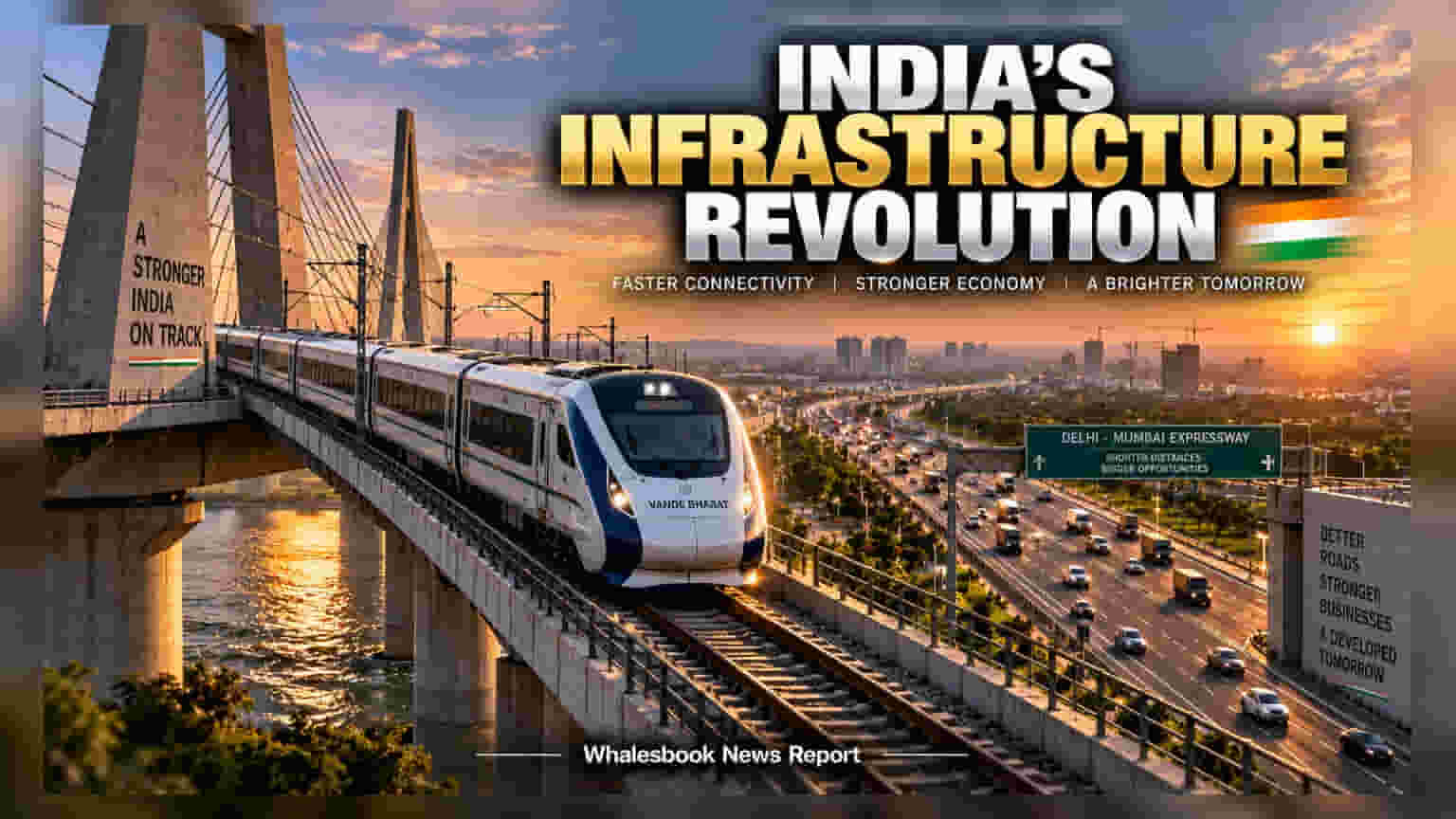
India’s massive infrastructure projects are significantly reducing travel times, lowering logistics costs for Indian businesses. This development creates potential for large engineering, procurement, and construction (EPC) companies, though investors should track execution timelines, debt levels, and project-specific risks which often impact sector profitability.
The rapid expansion of India’s infrastructure, including high-speed expressways, new bridges, and upgraded rail networks, is fundamentally changing the way goods and passengers move across the country. Projects like the Delhi-Mumbai Expressway and the expansion of the Vande Bharat rail network are not just saving time; they are improving logistics efficiency, a critical factor for the Indian economy. For investors, this shift translates into potential growth for the construction and logistics sectors.
Impact on Logistics and Efficiency
Historically, high logistics costs have been a significant burden for Indian manufacturers, sometimes estimated to be higher than in many developed nations. By replacing older, congested routes with modern tunnels, bridges like the Atal Setu, and access-controlled highways, the cost of transporting goods can decrease. Faster transit times allow companies to optimize their supply chains, reduce inventory carrying costs, and improve the turnaround time for trucks. As these infrastructure corridors become operational, companies in sectors such as manufacturing, FMCG, and e-commerce may see improved margins due to these operational efficiencies.
Opportunities for EPC Companies
The government's focus, backed by a proposed investment of Rs 16 lakh crore for rail and road expansion, provides a steady pipeline of work for large EPC companies. Firms like Larsen & Toubro (L&T), IRB Infrastructure, PNC Infratech, and NCC are primary participants in these large-scale projects. When these companies secure major orders, it strengthens their order book and provides revenue visibility for several years. However, the business model for these companies is capital-intensive. Investors typically monitor the 'book-to-bill' ratio, which indicates how many years of work a company has in hand relative to its current annual revenue.
Risks and Investor Monitorables
While the infrastructure sector presents growth opportunities, it is not without risks. Large projects often face execution delays due to land acquisition challenges, environmental clearances, and regulatory hurdles. For construction companies, these delays can lead to cost overruns, which put pressure on profit margins. Additionally, many companies in this space carry significant debt to fund their equipment and operational needs. In a high-interest-rate environment, servicing this debt can become a major concern.
Investors should be cautious of companies with high debt-to-equity ratios. It is also important to track the quality of the order book—specifically, whether the projects are from reliable government entities like the National Highways Authority of India (NHAI) or Indian Railways, which helps in timely payment realization. The ultimate benefit to the companies will depend on their ability to execute projects within the projected budget and timeline. The next key update for shareholders will be the quarterly financial reports, where management is expected to provide updates on project commissioning dates and the status of their ongoing debt reduction efforts.