

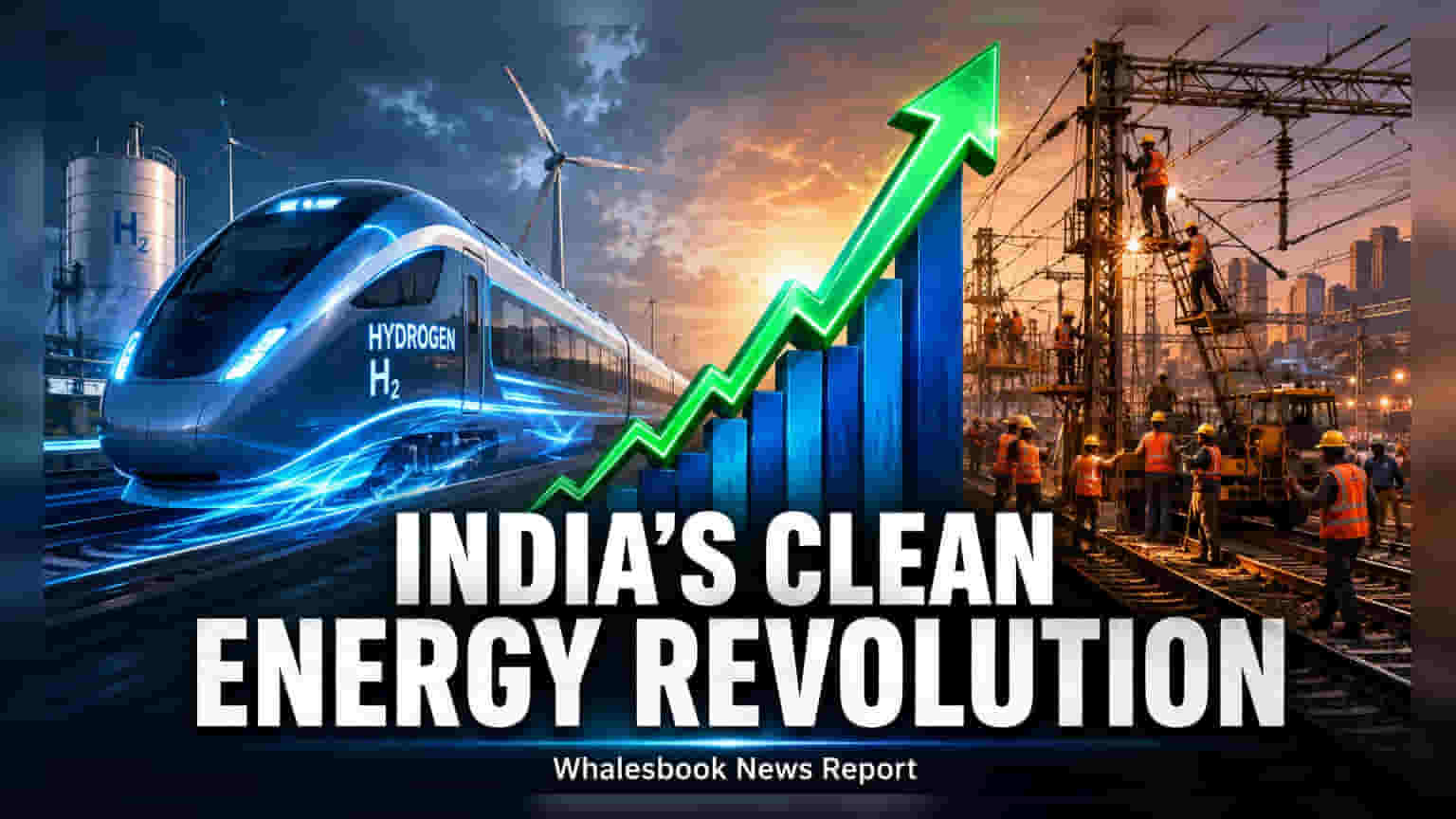
Prime Minister Narendra Modi highlighted the Jind-Sonipat hydrogen train as a key clean energy milestone. While Indian Railways is a government entity, the project underscores a broader push for technological modernization in the transport sector. Investors should note that this is a pilot project with significant initial cost and technical challenges, making it a long-term development rather than an immediate earnings driver.
During his Independence Day address on August 15, 2026, Prime Minister Narendra Modi spotlighted the launch of India’s first hydrogen-powered train as a key achievement in the nation's clean energy strategy. The train, which began operations on a pilot basis between Jind and Sonipat in Haryana on July 17, 2026, marks the country’s entry into using hydrogen fuel cell technology for public transport.
Pilot Project Scope and Technology
The initiative, branded under the 'Hydrogen for Heritage' project, involves a total investment of ₹141 crore. The train utilizes a 1,200 kW Proton Exchange Membrane Fuel Cell (PEMFC) system, which generates electricity by reacting hydrogen with oxygen. This process releases only water vapor and heat, positioning it as a zero-emission alternative to traditional diesel locomotives. The pilot serves as a testbed to evaluate technical feasibility, safety, and operational efficiency in real-world Indian conditions.
Impact on Railway Supply Chain and Sector
Indian Railways is not a publicly listed company, which means investors cannot directly buy shares in the train operator. However, the government’s aggressive focus on railway modernization, including electrification and new technology adoption, influences the broader railway ecosystem. Companies involved in the railway supply chain are often the primary beneficiaries of such government initiatives. For instance, Jindal Stainless provided approximately 40% of the stainless steel used in the coach bodies for this hydrogen train, demonstrating how specialized material suppliers can benefit from specific railway projects.
Beyond direct suppliers, various Railway PSUs such as Rail Vikas Nigam Ltd (RVNL), Indian Railway Finance Corporation (IRFC), and IRCTC remain the standard reference points for investors tracking the sector’s growth. These companies are closely tied to the capital spending and infrastructure plans of the Ministry of Railways. The transition toward advanced technology often creates long-term demand for specialized equipment, engineering services, and infrastructure maintenance, which these entities are positioned to capture.
Technological and Financial Hurdles
Investors should maintain a balanced view regarding the transition to hydrogen-powered rail. While the technology is environmentally friendly, it faces significant practical challenges. The initial setup and operational costs for hydrogen fuel cells are currently higher than those of fully electrified or diesel-based systems. Additionally, storing and handling hydrogen fuel requires strict safety protocols, especially in confined spaces or complex infrastructure environments.
Furthermore, the hydrogen train competes against fully mature battery-electric technology and existing electrified tracks. With Indian Railways having achieved near-complete electrification, the practical necessity for hydrogen-powered trains is limited to non-electrified, low-traffic routes. Therefore, the long-term success of this technology depends on whether the government can bring down operational costs to a competitive level compared to established electric alternatives.
The key monitorables for investors include the project's operational data, the scalability of the hydrogen refueling infrastructure, and the government's future allocation of funds for these specialized pilot programs. Success in these initial phases will determine if hydrogen power becomes a mainstream solution or remains a niche technology for specific regional heritage or difficult-to-electrify routes.