 Whalesbook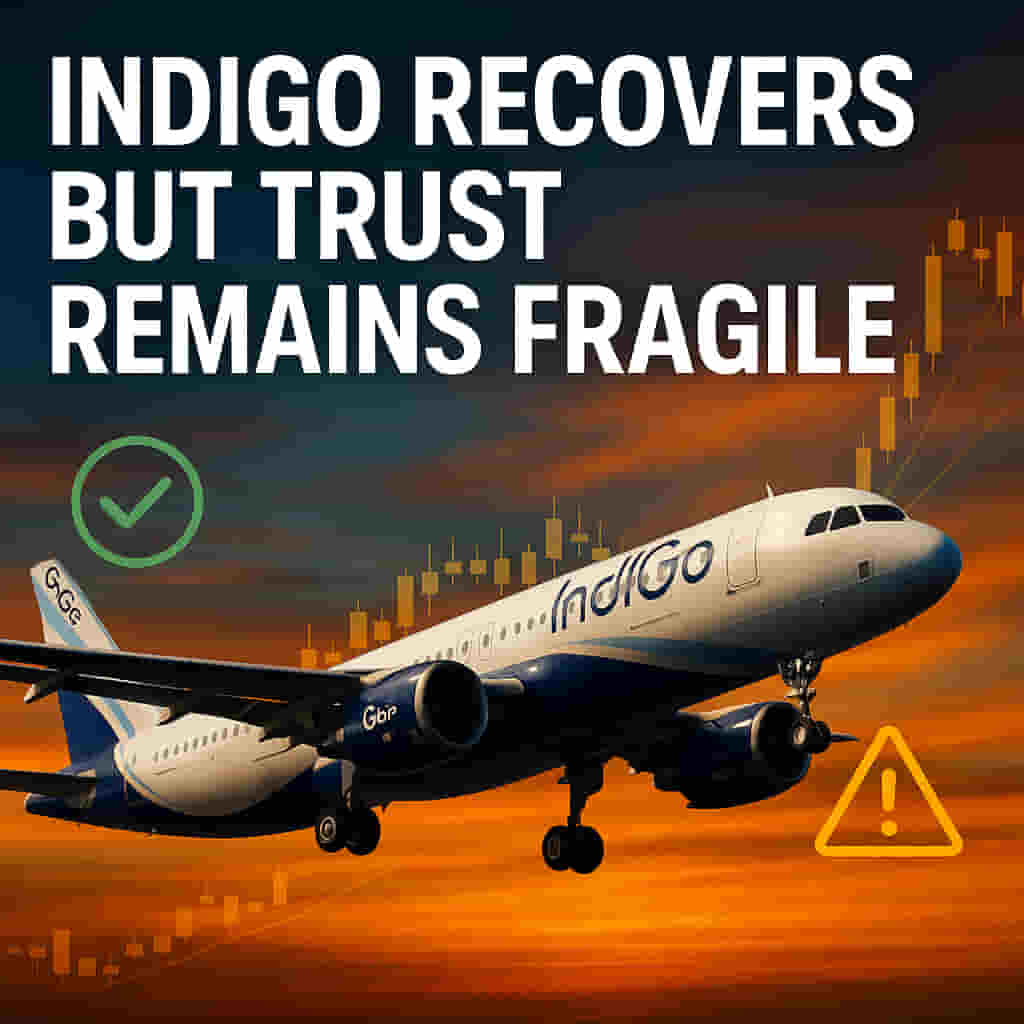
IndiGo's Post-Crisis Recovery Efforts Under Expert Scrutiny
IndiGo, India's largest airline, is currently in the spotlight for its efforts to stabilize flight operations and compensate passengers after experiencing its most severe operational meltdown. While the airline has managed to improve its flight schedule and offered substantial financial relief, industry experts are sounding a note of caution, suggesting that the path to fully restoring trust is complex and requires addressing deeper systemic issues.
Operational Stability Achieved
Following a period of significant disruptions, IndiGo has demonstrated notable progress in normalizing its operations. The airline confirmed operating over 1,950 flights on Thursday alone, maintaining this steady schedule for three consecutive days with minimal cancellations. This operational resilience is a key indicator of recovery.
- The airline's ability to run over 1,950 flights daily signifies a return to near-normal operations.
- This consistency over three days is a crucial step in reassuring passengers and stakeholders.
Passenger Compensation Measures
IndiGo has been proactive in addressing passenger grievances through financial compensation. The airline has already processed refunds totaling nearly ₹1,000 crore for affected passengers.
- In addition to mandated compensation, IndiGo announced a ₹10,000 travel voucher for passengers who faced significant disruptions between December 3 and December 5.
- This comprehensive approach aims to mitigate the inconvenience caused to a large number of travelers.
Expert Concerns on Trust and Oversight
Despite the airline's recovery actions, aviation industry experts emphasize that significant challenges remain in rebuilding credibility.
- Sanjay Lazar, CEO of Avialaz Consultants, commended IndiGo's recompense efforts but stated that they only address the surface.
- He stressed the imperative for IndiGo to focus on internal corrections and mend relationships with the government and regulators, highlighting the intense regulatory scrutiny.
- Vijay Gopalan, former CFO of AirAsia India, pointed out that the crisis exposes structural challenges within India's aviation oversight framework.
- Gopalan suggested that timely interventions at multiple stages could have prevented the severity of the situation.
Systemic Issues and Regulatory Scrutiny
The crisis has also brought India's aviation regulatory system under examination.
- Capt. M.R. Wadia, Founder and President of the Federation of Indian Pilots, questioned the competence and structure of the Directorate General of Civil Aviation (DGCA).
- Wadia indicated that underlying systemic issues, including a lack of technical expertise among bureaucrats and potential dispensations for compliance lapses, have persisted for years.
- The DGCA is reportedly scheduled to question IndiGo's CEO, Pieter Elbers, on December 12 regarding the ongoing flight disruptions.
Financial Implications and Future Outlook
The financial impact on IndiGo extends beyond immediate refunds, with potential payouts estimated to be substantial.
- CNBC-TV18 estimates suggest total payouts for the airline could exceed ₹525 crore, in addition to ticket refunds, primarily for the travel vouchers.
- Questions remain regarding the logistics and timeline for voucher distribution and the possibility of further regulatory penalties.
- Aviation experts concur that while the operational recovery is positive, IndiGo's long-term reputation hinges on aligning internal processes, adhering strictly to safety norms, and engaging proactively with regulatory bodies.
Impact
- On IndiGo: The airline faces significant reputational damage and financial costs associated with compensation and potential penalties. Rebuilding passenger and regulatory trust will require sustained, transparent actions.
- On Indian Aviation Sector: This event may lead to increased regulatory oversight and a demand for higher operational standards across the industry, potentially impacting all airlines.
- On Investors: IndiGo's stock (InterGlobe Aviation) may experience continued volatility. Investor sentiment will be closely tied to the company's demonstrable success in implementing corrective measures and ensuring operational reliability.
- Impact Rating: 8/10
Difficult Terms Explained
- Operational Meltdown: A severe, sudden failure in an airline's ability to conduct its normal flight operations, leading to widespread delays and cancellations.
- Regulatory Scrutiny: Close examination and oversight by government agencies responsible for enforcing rules and standards within an industry.
- Systemic Issues: Problems inherent to the fundamental structure or system of an organization or industry, rather than isolated incidents.
- Aviation Regulator: The government body responsible for overseeing and regulating the aviation industry to ensure safety, security, and compliance, such as the DGCA in India.
- Compliance Lapses: Failures to adhere to established rules, regulations, or standards.
- Dispensations: Special permissions or exceptions granted, sometimes deviating from standard rules or regulations, often related to compliance.
- Recompense: Compensation or reward for loss or harm suffered.