

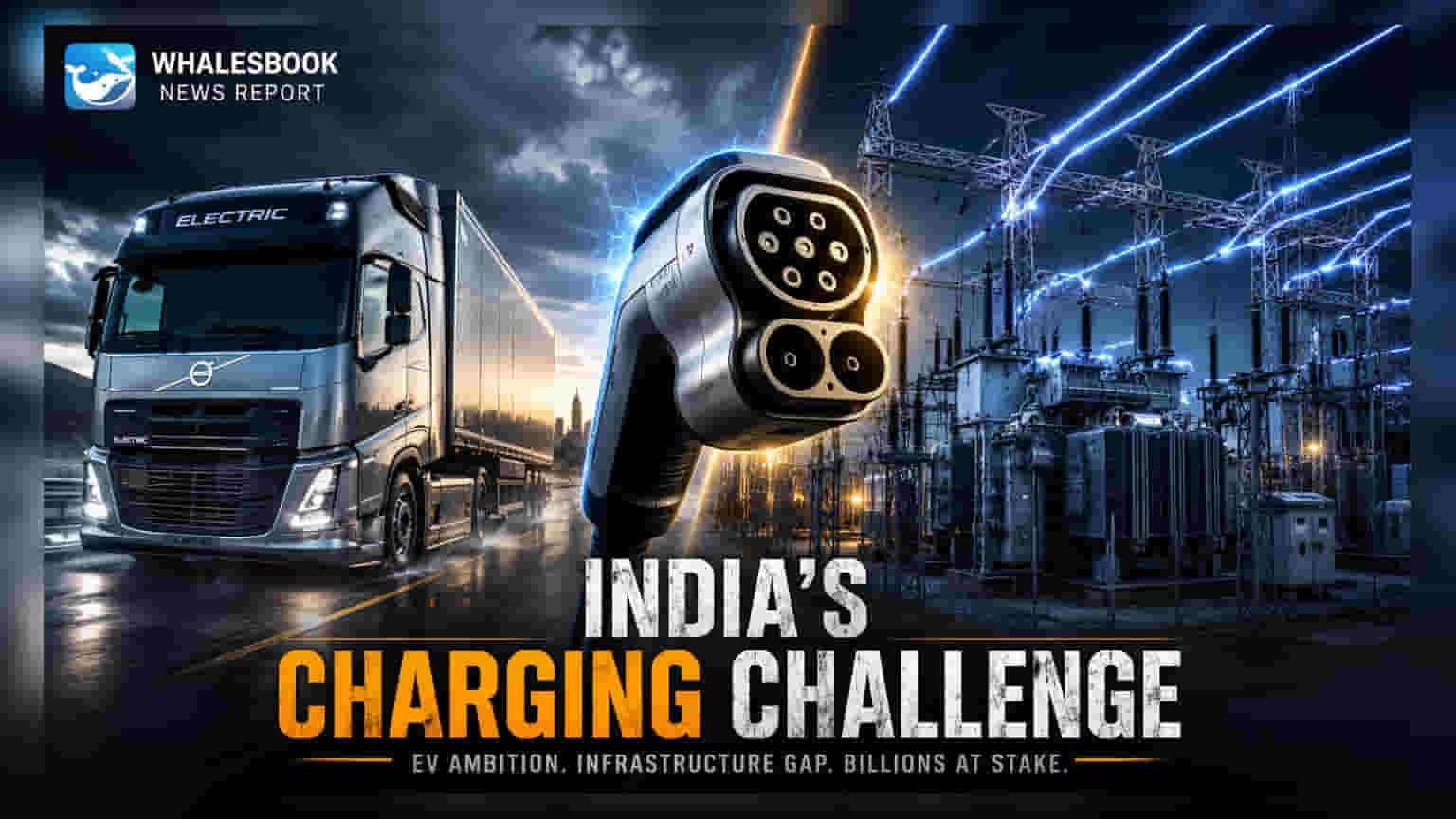
India is allocating ₹2,500 crore under the PM E-DRIVE scheme to boost electric truck adoption and charging infrastructure. While this policy supports a shift away from diesel, the sector faces a 'chicken-and-egg' challenge where charging availability depends on vehicle demand. Investors should watch how new power-sector-style auctions for charging contracts aim to lower these barriers, particularly for heavy-usage industries like mining and steel.
What Happened
The Indian government has launched the PM E-DRIVE program, allocating ₹500 crore specifically for electric truck adoption incentives and ₹2,000 crore for building the necessary charging infrastructure. Additionally, reports indicate that a separate ₹10,000 crore financing scheme for commercial vehicles like electric buses and trucks is under consideration. This initiative aims to address the logistics sector's heavy reliance on diesel, which creates economic vulnerability due to fluctuating oil prices and currency instability. Heavy-duty trucks, despite making up a small portion of the total vehicle count, contribute significantly to fuel consumption and emissions, making them a primary focus for long-term electrification.
The Infrastructure 'Chicken-And-Egg' Problem
The biggest hurdle for widespread electric truck adoption is not just the vehicle price, but the lack of dependable, high-power charging stations at key freight hubs. The industry currently faces a coordination deadlock: charging operators are hesitant to invest in infrastructure without guaranteed, high-volume usage, while fleet operators are reluctant to buy electric trucks without a ready, reliable charging network. This mutual hesitation creates a standstill, preventing the necessary scaling of the electric freight ecosystem.
Why Closed-Loop Routes Are Key
To break this deadlock, experts suggest a focused approach by prioritizing 'closed-loop' operations. These are logistics routes that are predictable, fixed, and high-utilization, such as transporting goods within mines, steel plants, cement factories, or port-to-factory routes. By concentrating charging infrastructure in these controlled industrial clusters, the government and operators can ensure consistent usage of charging stations. This strategy effectively creates a 'prove-it-first' model where the economic case for electric trucks is established before expanding to more complex, public highway networks.
The Financial And Grid Logic
To accelerate this transition, policies are looking to adopt models successfully used in the power sector. This includes using large, standardized auctions to create scale and provide long-term demand security for charging operators. Furthermore, there is a push to leverage the existing integrated national grid and provide fleets with direct access to clean, affordable electricity through open-access rules. Delivering power at competitive rates—around ₹6 per unit—is viewed as essential to compete with existing industrial tariffs and make electric freight economically viable against diesel.
What Investors Should Track Next
Investors should monitor how effectively these incentive schemes are deployed and whether they successfully kickstart private investment in charging networks. The success of this transition depends on several factors: the ability of manufacturers to produce reliable heavy-duty electric trucks, the speed at which grid infrastructure is upgraded in industrial clusters, and the actual acceptance rate by large fleet operators in the mining and steel sectors. Risks that remain include the high upfront cost of electric trucks, potential payload loss due to heavy batteries, and the reliability of uptime guarantees for charging stations. Future updates on the status of the potential ₹10,000 crore financing scheme and the progress of the first batch of charging auctions will be key indicators for the sector's growth.