 Whalesbook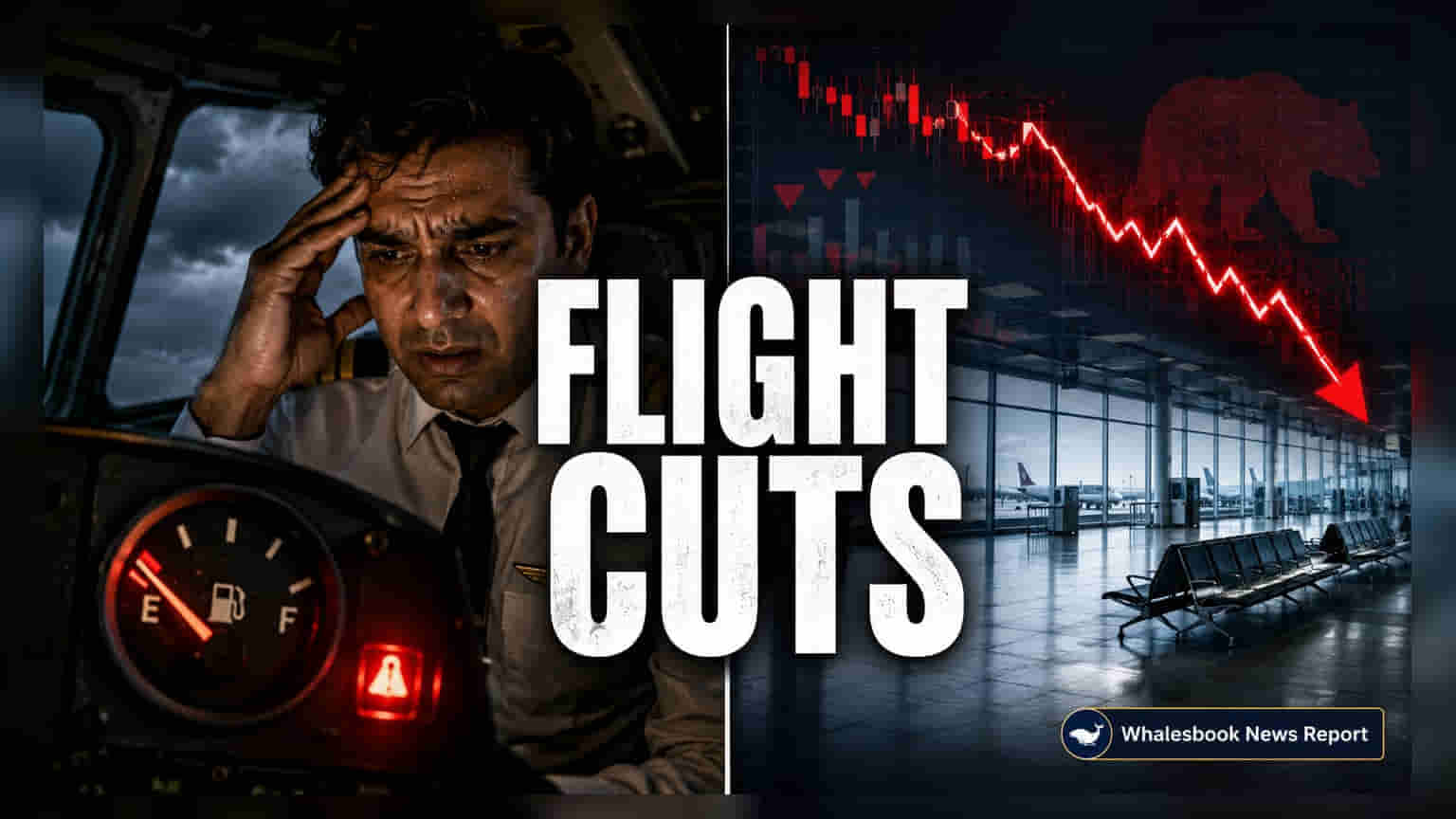


Flights Reduced Amid Rising Costs
Starting June 1, Indian airlines will trim their domestic flight schedules. Both Air India and IndiGo are cutting frequencies to reduce losses on less profitable routes. While airlines often describe such adjustments as managing demand, this move signals the sector's difficulty in absorbing rising costs. Instead of prioritizing growth as in past years, carriers are now focused on survival as Aviation Turbine Fuel (ATF) prices have surpassed ₹1 lakh per kilolitre.
Fuel and Currency Pressures Mount
Geopolitical events in the Middle East and a weaker rupee have exposed the financial strain on Indian airlines. Fuel costs, once 30-40% of expenses, now make up about 60%. ATF is not covered by GST, preventing airlines from claiming input tax credits and leading to a tax-on-tax burden that shrinks profits. Although the government has offered some relief through lower landing and parking fees, airlines are hesitant to raise fares significantly for price-sensitive passengers, fearing a drop in demand.
Investor Concerns for IndiGo
InterGlobe Aviation, which operates IndiGo, faces a challenging outlook. Despite holding over 60% of the market, the airline has experienced scheduling issues and relies heavily on routes to the Middle East. IndiGo's stock is trading at a high valuation compared to its 10-year average, suggesting that market expectations might be too optimistic about its ability to withstand current pressures. The industry as a whole is struggling with nearly 15% of its fleet grounded due to supply chain and engine problems, forcing airlines to use older, less fuel-efficient leased planes. Investors should be cautious due to the sector's high debt levels and the possibility of government intervention if fares remain elevated.
A Shift to Austerity
The aviation sector is entering a period of cost-cutting. Airlines are moving away from rapid expansion and are now closely examining the profitability of each route. Plans for capital expenditures, including salary increases, are being postponed. With domestic air travel growth slowing recently, the industry is preparing for a difficult second quarter. Future stability will likely depend on how long geopolitical conflicts continue and whether a better fuel pricing system can be established to equalize costs between domestic and international flights.