

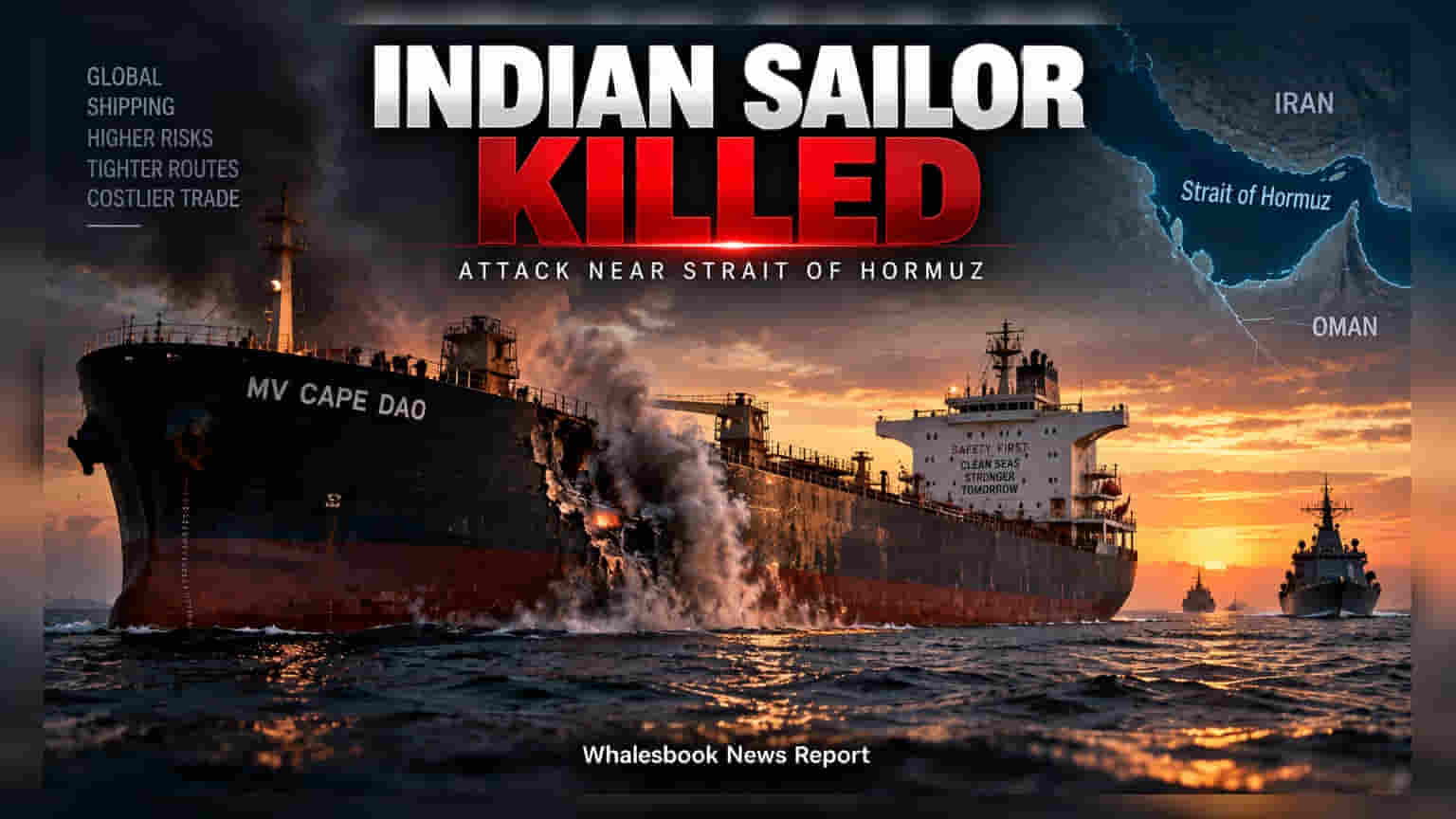
Indian national Suraj Yadav was killed following a torpedo attack on the merchant vessel MV Cape Dao near the Strait of Hormuz. The vessel was en route to India, and the incident has raised significant security concerns for maritime trade. Investors in shipping and logistics may monitor for potential increases in insurance premiums and freight rates as regional tensions impact maritime transit safety.
The merchant vessel MV Cape Dao was struck by two torpedoes while transiting near the Strait of Hormuz on Wednesday, resulting in the death of an Indian national. The victim, Suraj Yadav, was serving as a wiper on the ship, which was navigating toward India at the time of the incident. Reports indicate that the projectiles caused damage to the vessel's port side, specifically impacting the C-deck accommodation and the engine room.
Incident Details and Diplomatic Response
The Indian Embassy in Muscat is currently coordinating with authorities in Oman to ensure the safety of the remaining crew members. Official figures are currently being reconciled, with reports indicating between 19 and 20 Indian nationals were on board among a total crew of 28. Diplomatic efforts are focused on stabilizing the situation and managing the repatriation of the crew, while officials work to secure the vessel.
Economic Impact on Shipping and Trade
This incident has immediate implications for the shipping and logistics sector, as the Strait of Hormuz is a critical global chokepoint for energy and commercial goods. The maritime industry typically reacts to such security escalations with adjustments to insurance policies. Specifically, 'War Risk Premiums' for vessels passing through high-conflict zones often increase, which can lead to higher operational costs for shipping lines. These costs are frequently passed on through higher freight rates.
Furthermore, shipping companies may consider rerouting vessels to avoid the region, which adds to transit times and fuel consumption. For Indian investors, the event highlights the vulnerability of supply chains that depend on maritime transit through Middle Eastern waters. The Forward Seamen's Union of India has expressed concern over the safety of civilian mariners, emphasizing that current security protocols may require a re-evaluation to mitigate the risks of targeted violence.
Next Steps for Stakeholders
The market will likely monitor updates regarding the security status of the Strait of Hormuz and any official statements from shipping regulators regarding potential rerouting advisories. Investors may track whether insurance providers issue revised premium guidance for vessels traversing this corridor, as such shifts can directly influence the profitability of shipping and logistics companies with exposure to Middle Eastern trade routes.