

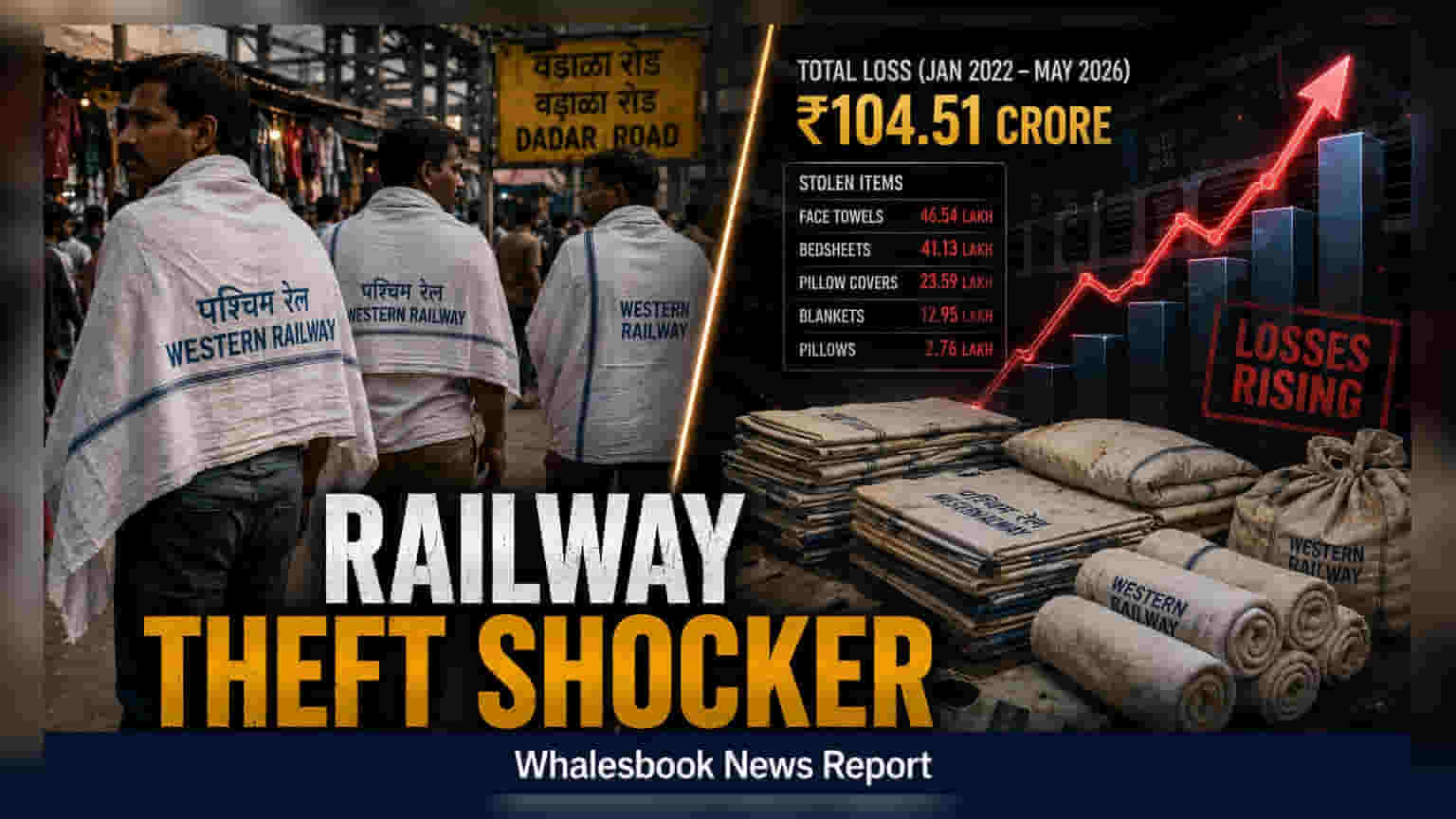
A viral video featuring men wearing stolen Western Railway bedsheets has reignited concerns over the loss of public property. According to recent RTI data, over 1.27 crore bedroll items, valued at approximately ₹104.51 crore, were stolen from Indian Railways coaches between 2022 and May 2026. This ongoing pilferage adds financial pressure to railway operational costs and service maintenance contracts.
A recent social media video showing individuals openly using railway-marked bedsheets as shawls has brought renewed public attention to the significant problem of theft within the Indian railway network. While the video serves as a visual indicator of the issue, the scale of the financial impact is much broader. Official data obtained through the Right to Information (RTI) reveals that the loss of railway property has reached substantial figures, affecting the operational efficiency of the public transporter.
Between January 2022 and May 2026, over 1.27 crore individual bedroll items were reported stolen from various railway coaches across the country. The total value of these pilfered assets is estimated at over ₹104.51 crore. The stolen inventory includes a wide range of passenger amenities, specifically 46.54 lakh face towels, 41.13 lakh bedsheets, 23.59 lakh pillow covers, 12.95 lakh blankets, and 2.76 lakh pillows. This systemic loss of property highlights a persistent challenge for railway administration regarding asset security.
From a financial and operational perspective, these losses have consequences that extend beyond the cost of the linens themselves. When such items disappear at scale, the burden of replacement often influences the operational costs of private contractors responsible for housekeeping and laundry services. In many cases, these financial losses are recovered directly from the monthly salaries of coach attendants or from the security deposits of private firms hired to manage these services. This creates a difficult environment for vendors, who must balance service quality with the rising costs of recurring asset replacement.
Ten railway divisions across seven zones are responsible for 67% of the total recorded linen thefts, indicating that the issue is not limited to specific regions but is a widespread logistical challenge. Implementing security measures within the high-traffic environment of passenger trains remains difficult, as strictly enforcing the Railway Property (Unlawful Possession) Act against a transient passenger base poses significant legal and logistical hurdles.
For the railway ecosystem, the challenge remains balancing the provision of passenger amenities with the need to protect public assets. Continued losses could force a re-evaluation of service models or stricter, perhaps more costly, asset-tracking implementations. As the railways continue to modernize their services, the ability to curb these losses will be a key factor in maintaining the cost-effectiveness of their housekeeping and onboard service contracts.