 Whalesbook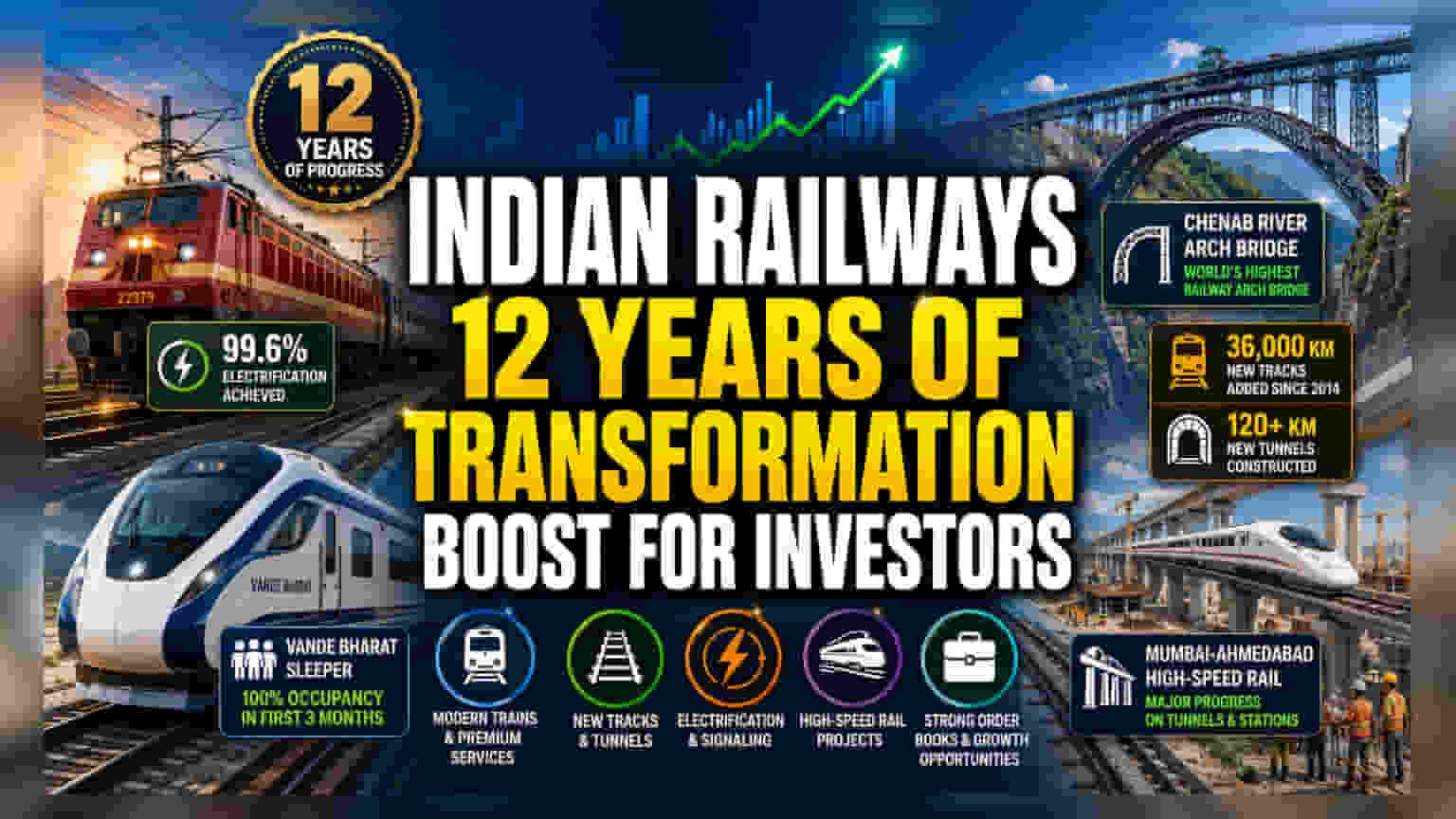


The government has reported a massive 12-year expansion in railway infrastructure, including nearly 100% electrification and new high-speed rail projects. For Indian stock market investors, this sustained government spending is a key driver for the order books of companies involved in railway construction, rolling stock manufacturing, and electrical engineering.
What Happened
The government has released a comprehensive progress report detailing major advancements in the Indian railway network over the past 12 years. Key milestones include reaching 99.6% electrification of the broad-gauge network and the completion of the Chenab River arch bridge, which stands as the highest railway arch bridge in the world. The report also highlighted the successful operational debut of the Vande Bharat Sleeper train, which recorded 100% occupancy in its first three months. Other major projects, such as the Mumbai-Ahmedabad High-Speed Rail corridor, continue to advance, with significant progress made on tunneling and foundation work across stations. Additionally, the network has seen the addition of 36,000 km of new tracks and hundreds of kilometers of new tunnels since 2014.
Why This Matters for Investors
These infrastructure achievements are not just engineering milestones; they are indicators of sustained capital spending by the government. In the Indian stock market, railway-related companies often rely heavily on government orders for their revenue and growth. When the government announces large-scale projects like new track laying, electrification, or the procurement of new train sets like Vande Bharat, it directly impacts the order books of various listed companies. Investors generally view this high level of government spending as a potential driver for revenue growth across several sub-sectors, including construction, signaling, rolling stock manufacturing, and railway financing.
The Impact on Railway Stocks
The railway ecosystem in India includes several listed players that benefit from these trends. Companies involved in manufacturing rolling stock, such as train coaches and wagons, have seen increased opportunities due to the rollout of premium services like Vande Bharat and Namo Bharat. Similarly, firms focused on electrification, signaling, and track construction are key participants in the government's target of near-total network electrification. Companies that provide financial services specifically to the railway sector also play a critical role in facilitating these large-scale capital investments. The shift toward modern, faster, and safer trains is also creating a market for specialized components and technology, which benefits engineering and electrical equipment manufacturers.
Risks and Sector Challenges
While the sector outlook is supported by government spending, investors should be aware of specific business risks. Execution risk remains a major factor, as large-scale railway projects are complex and prone to delays, which can impact project timelines and cost structures. Furthermore, the industry is highly competitive, and companies often compete through aggressive bidding for government tenders. This competition can sometimes lead to lower profit margins, as companies may sacrifice pricing power to win contracts. Additionally, these businesses are susceptible to fluctuations in raw material prices, such as steel and copper, which are essential for rail and electrification projects. A sudden increase in input costs, if not passed on to the government, can put pressure on the bottom line.
What Investors Should Track
Moving forward, the primary monitorable for investors is the flow of new orders and the execution capability of these companies. Investors may look for details in company filings regarding the size, timeline, and margin profile of new order wins. Additionally, keeping an eye on the government’s annual budget announcements is essential, as these provide the financial roadmap for future infrastructure development. Management commentary during quarterly results, specifically regarding raw material cost management and the pace of project execution, will be vital to understanding whether the sector's growth is translating into sustainable profitability.