

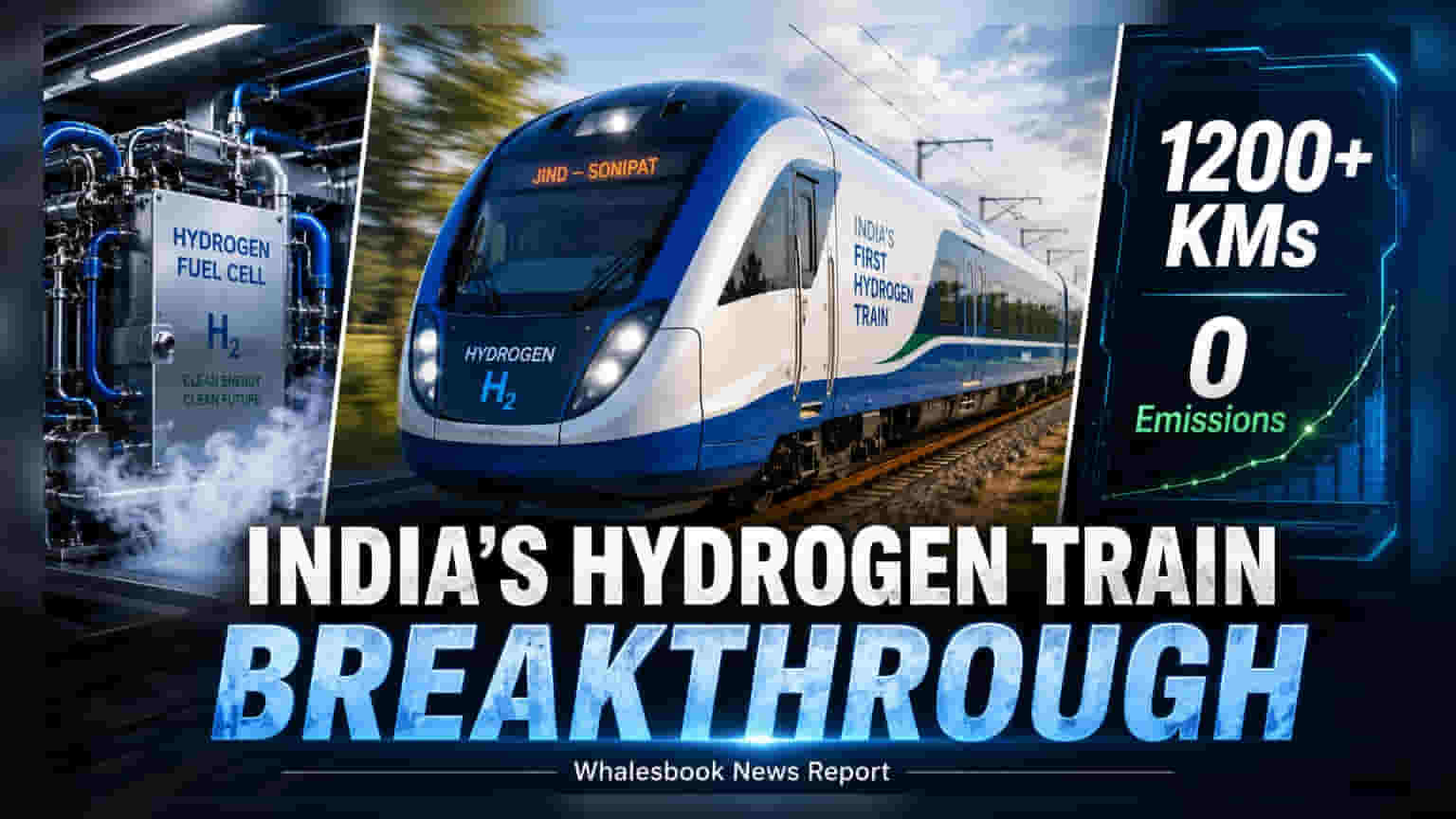
India’s first indigenous hydrogen train has successfully completed over 1,200 kilometers of operation between Jind and Sonipat. This pilot project replaces diesel fuel with hydrogen-based electricity, emitting only water vapor. The initiative marks a significant step toward sustainable rail transport and domestic technology development under the Atmanirbhar Bharat mission.
Detailed Coverage
India’s first hydrogen-powered train has achieved a notable operational milestone, covering more than 1,200 kilometers on the Jind-Sonipat route in Haryana since its launch on July 17. Managed by Indian Railways, this pilot project has successfully replaced approximately 3,200 liters of diesel fuel. By utilizing a chemical reaction between hydrogen and oxygen to generate onboard electricity, the train emits only water vapor, aligning with national goals for zero-emission public transportation.
The train consists of 10 coaches supported by two Hydrogen Driving Power Cars that provide 2,400 kW of power. The propulsion system integrates lithium iron phosphate batteries with onboard hydrogen storage to ensure steady energy delivery. To support this operation, the Railway Ministry has commissioned a dedicated facility in Jind capable of storing 3,000 kg of green hydrogen under high-pressure conditions.
Infrastructure and Future Testing Plans
The success of the Jind-Sonipat trial serves as a technical foundation for the next phase of development. Railway authorities have confirmed that the project will move into the next stage of testing on the Delhi route. Because this technology is new to the Indian rail network, safety remains a primary operational focus. The train is equipped with multiple independent sensors designed to detect heat, flame, and gas leaks, alongside automatic shut-off systems and continuous ventilation to manage the high-pressure storage environment.
From a financial and strategic perspective, this project represents a significant shift toward localizing clean energy technology. By developing these systems indigenously, Indian Railways aims to reduce long-term dependence on imported fossil fuels for rail operations. However, the commercial viability of this transition will depend on the cost of green hydrogen production and the necessary upgrades to rail infrastructure across the country.
Investors may monitor the progress of these trials as they provide insights into the future capital spending requirements for Indian Railways. The scaling of this technology will likely require consistent investment in both rolling stock and regional hydrogen storage hubs. Beyond the technological achievement, the project highlights the government's push to foster a domestic ecosystem for hydrogen mobility, which may have long-term implications for ancillary sectors, including battery manufacturing and specialized engineering services.