

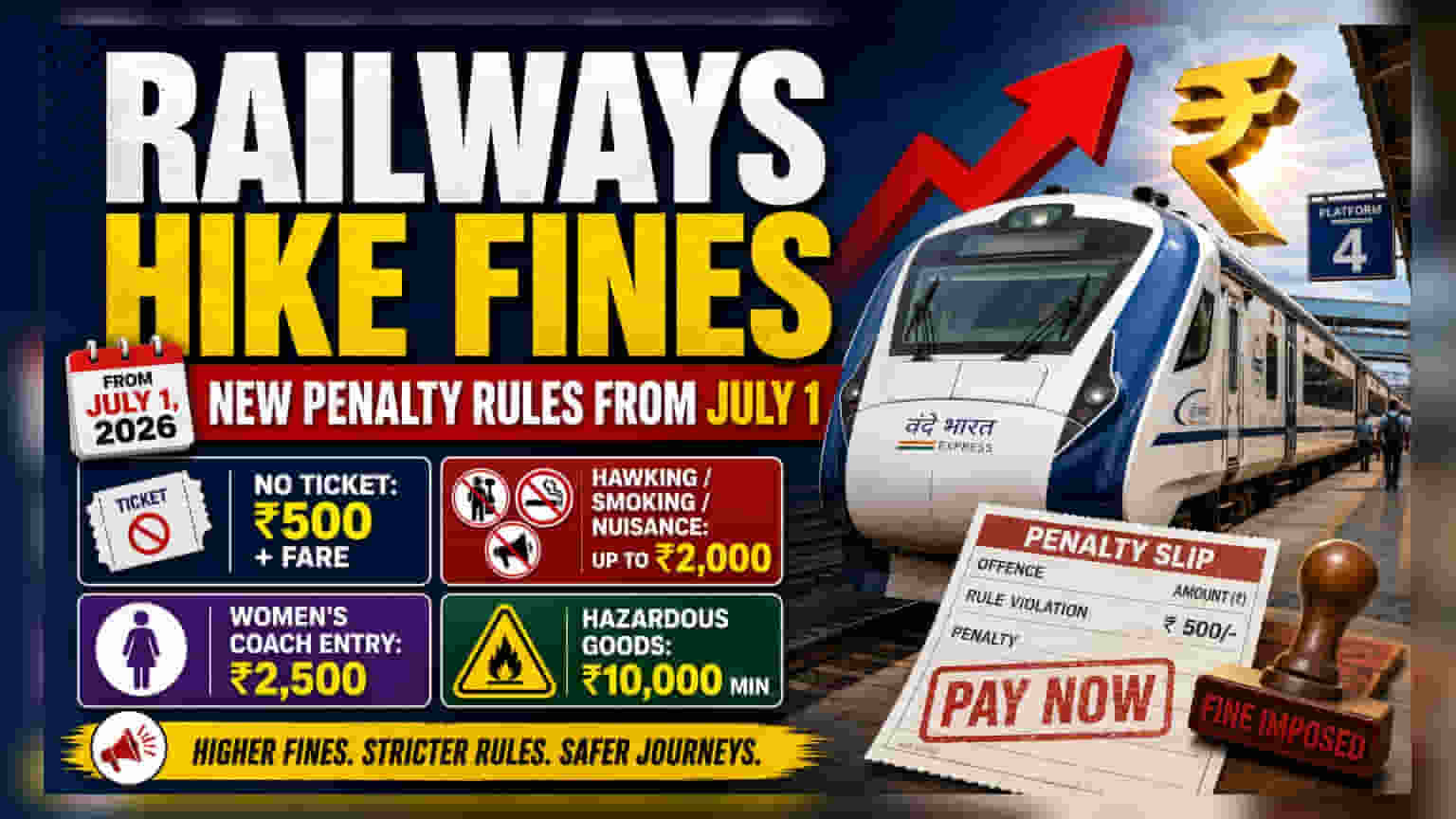
Indian Railways has implemented the Jan Vishwas Act effective July 1, 2026, increasing penalties for offenses like ticketless travel and unauthorized hawking. The new structure shifts from criminal prosecution to higher monetary fines, aiming to improve operational discipline and revenue realization across the national network.
What Happened
Starting July 1, 2026, Indian Railways has officially rolled out a revised penalty structure under the Jan Vishwas (Amendment of Provisions) Act, 2026. This move replaces several older criminal prosecution clauses with stricter monetary fines for various offenses. The objective is to streamline enforcement by making penalties immediate and financially significant, rather than relying on complex and time-consuming legal proceedings.
Why This Matters For Operational Efficiency
For the railway network, the enforcement of these penalties is linked to operational efficiency and revenue protection. Ticketless travel and unauthorized hawking contribute to congestion and can affect the quality of passenger services. By increasing fines, the railways aim to reduce revenue leakage and improve the overall environment for paying passengers. While fines are not a primary revenue source, better compliance helps in managing passenger loads and protecting railway assets, which is essential for maintaining service standards across the network.
The New Penalty Structure
Under the updated rules, the minimum penalty for traveling without a ticket or valid pass has been doubled to Rs 500, up from Rs 250. Passengers are now required to pay the full fare in addition to this penalty. Unauthorized hawking and begging on trains or at stations now attract civil penalties of up to Rs 2,000, with repeat offenses carrying the risk of up to one year in prison. Other behaviors, including public nuisance, smoking, and drunkenness, have also seen a penalty increase of up to Rs 2,000.
Safety and Asset Protection
Certain dangerous practices have been specifically targeted with higher financial deterrents. Traveling on train roofs or steps, which poses significant safety risks, now incurs a penalty of up to Rs 2,000, compared to the previous Rs 500. Unauthorized entry into coaches reserved for women now attracts a fine of up to Rs 2,500. Additionally, the transport of hazardous goods has been addressed with a stricter minimum penalty of Rs 10,000, reflecting the high risk to passenger safety and railway property.
Long-Term Adjustments
To ensure that these fines remain effective as a deterrent over time, the Act includes a provision for an automatic 10% upward revision of fines every three years, unless the government determines otherwise. This mechanism is designed to account for inflation and maintain the impact of the penalty structure without requiring frequent legislative changes.
What Investors Should Track
While the primary impact is administrative, the effectiveness of these measures in reducing unauthorized travel and improving passenger discipline is worth noting for the broader railway ecosystem. Investors may track whether these changes lead to measurable improvements in passenger throughput, revenue realization from ticket sales, or a reduction in operational disruptions related to unauthorized activities on trains and platforms.