

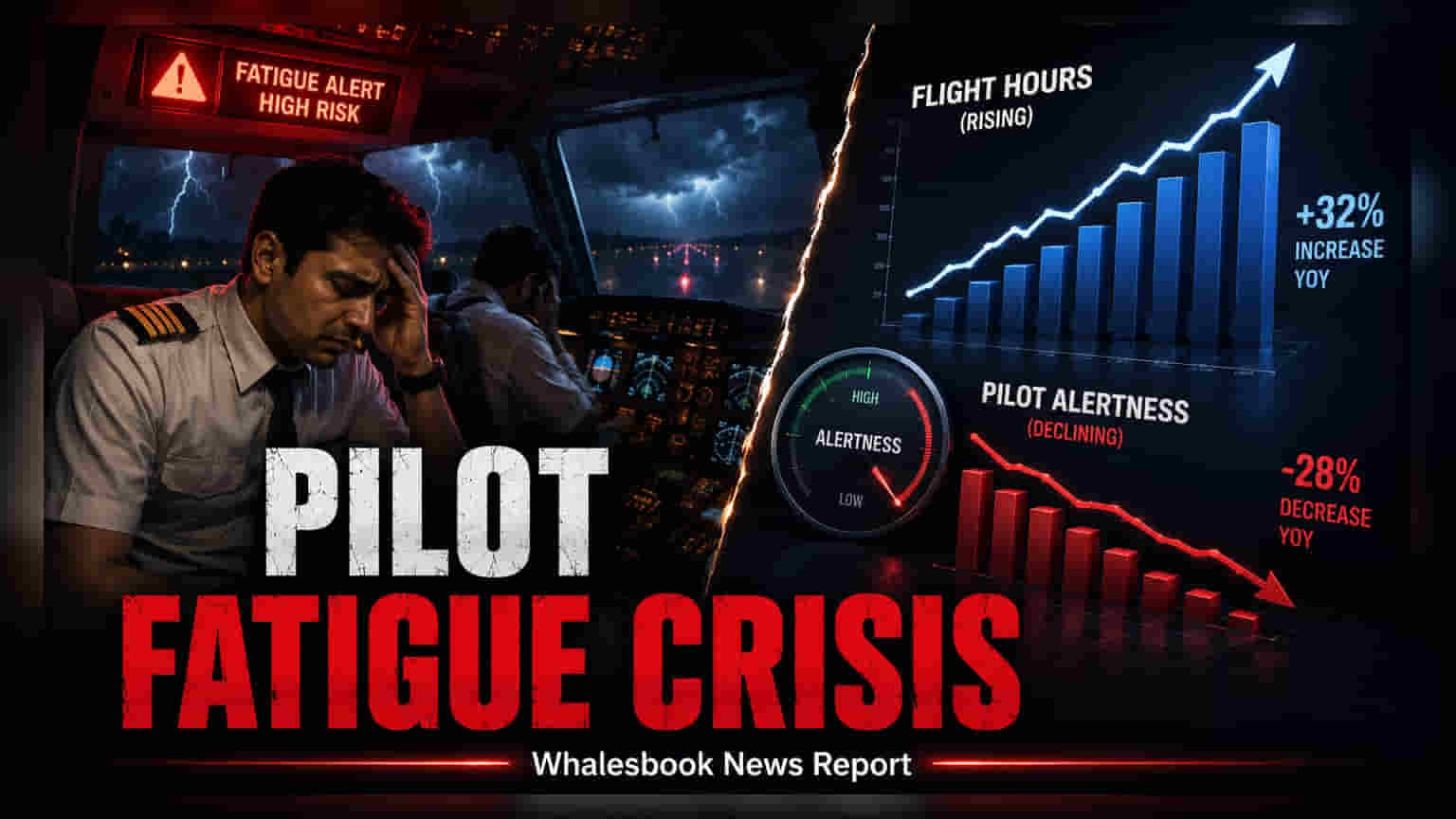
The Federation of Indian Pilots (FIP) has urged the DGCA to implement a mandatory Fatigue Risk Management System (FRMS) to better monitor and prevent pilot exhaustion. This request follows historical incidents like the 2024 Batik Air event and highlights ongoing tensions regarding pilot safety and rest norms. For investors, this signals potential operational and regulatory scrutiny for airlines as the industry navigates a balance between growth and safety mandates.
The Federation of Indian Pilots (FIP) has formally requested that the Directorate General of Civil Aviation (DGCA) implement a mandatory Fatigue Risk Management System (FRMS) for all scheduled airlines in India. This move comes as the aviation industry continues to grapple with the long-term challenge of managing crew exhaustion in a sector seeing high flight utilization and expansion.
The push for stricter fatigue management is partly influenced by the widely reported January 2024 incident involving Batik Air, where both pilots fell asleep mid-flight, leading to navigation errors. While the event occurred in Indonesia, pilot unions in India have used such instances to highlight the dangers of current flight duty practices. The central argument from pilot bodies is that simple duty-time limits are no longer enough to address the complex nature of fatigue, which involves circadian rhythm disruption and the physical strain of modern flying schedules.
This call for new rules is part of a broader, ongoing friction between pilot unions and regulators regarding how duty hours are monitored. In the past, the Delhi High Court had intervened, mandating increased weekly rest periods and restrictions on night flying to ensure pilot safety. However, pilot unions have frequently argued that these court-mandated improvements are often challenged or diluted by airline-led exemptions and slow regulatory enforcement. This creates a difficult environment for long-term operational planning.
For investors, the debate over fatigue management is a key factor to monitor. Aviation companies are currently in a phase of aggressive fleet expansion and route growth. However, this growth requires a stable and well-rested crew. When systemic fatigue issues arise, they often lead to unscheduled flight cancellations, regulatory warnings, or even financial penalties, all of which can disrupt an airline's operational efficiency and reputation.
Airlines face pressure to maintain high aircraft utilization to support profitability, but this must be balanced against safety standards. If the DGCA eventually mandates a strict, data-driven fatigue management system, it could lead to changes in rostering, potential increases in crew requirements, and higher operational compliance costs for carriers like InterGlobe Aviation.
The primary monitorable for investors and stakeholders in the coming months will be how the DGCA balances these safety demands with the operational needs of the industry. Investors should track future regulatory circulars regarding duty hours, the outcomes of safety audits, and any management commentary regarding crew availability and rostering efficiency. Unresolved friction between unions and regulators remains a risk, as it can lead to legal uncertainty and potential operational setbacks if disagreements over work hours remain persistent.