

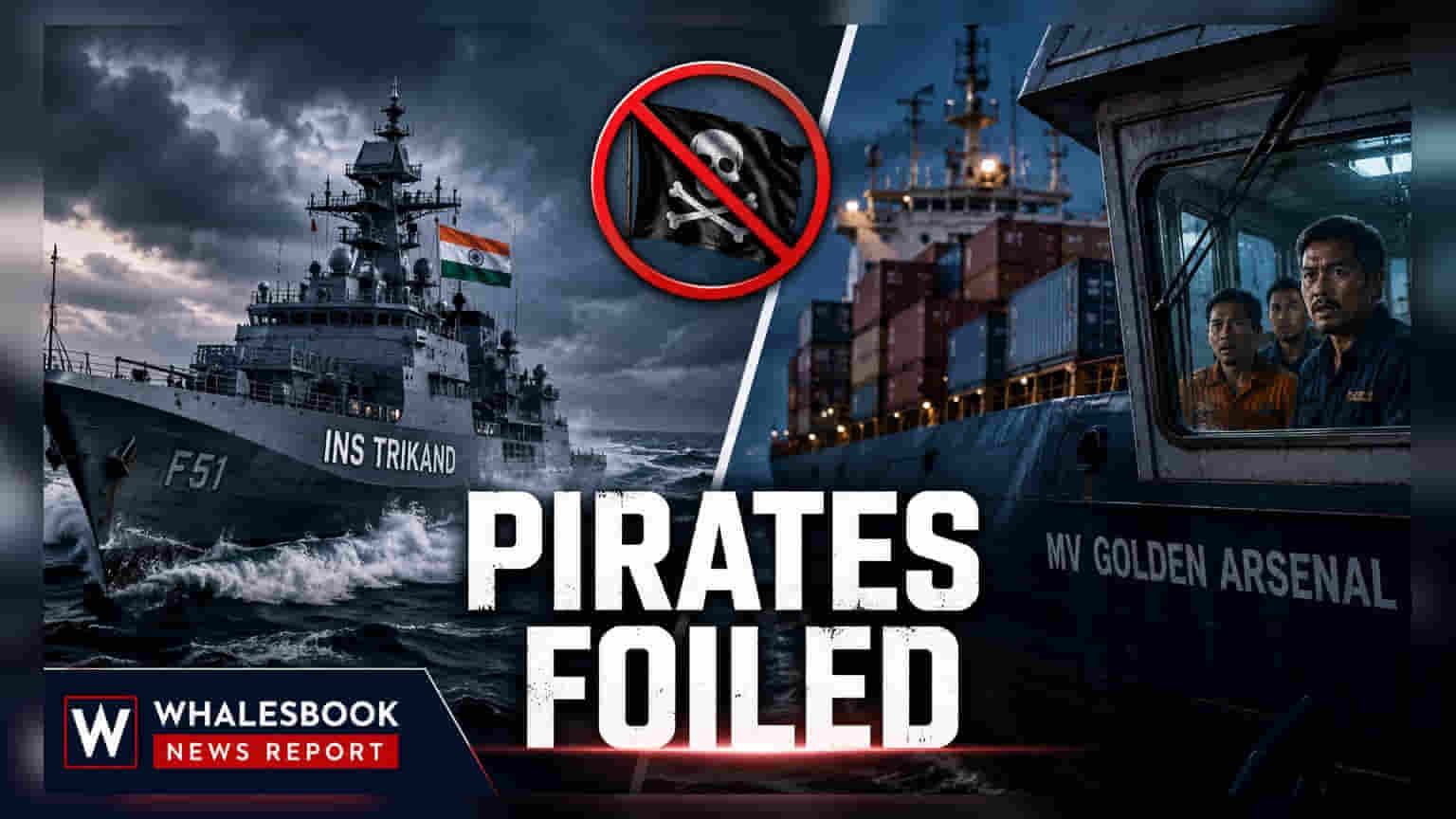
The Indian Navy warship INS Trikand successfully stopped a piracy attack on the cargo vessel MV Golden Arsenal in the Gulf of Aden. This incident highlights ongoing security risks in critical maritime trade lanes often used for Indian energy and goods imports. Such security challenges can impact shipping insurance costs and supply chain stability for logistics and commodity-focused companies.
What Happened
The Indian Navy’s warship, INS Trikand, intercepted and thwarted a piracy attempt on the merchant vessel MV Golden Arsenal in the Gulf of Aden on Tuesday night. The cargo ship issued a distress call after identifying suspected pirates approaching the vessel. Following standard anti-piracy protocols, the crew of the merchant ship retreated to a secure area of the vessel and transmitted an alert. INS Trikand, operating in the vicinity, responded by altering its course to intercept. Upon detecting the approach of the Indian naval vessel, the suspected pirates abandoned their boarding attempt and fled. Marine Commandos (MARCOS) from the Indian Navy subsequently boarded the MV Golden Arsenal to conduct a security sweep, confirming the vessel was safe to continue its journey.
Maritime Security and Trade Impact
The Gulf of Aden remains a highly sensitive maritime trade route. It is a critical artery for global shipping, particularly for vessels traveling between Asia and Europe. For India, this region is vital for the movement of energy supplies, raw materials, and finished goods. The presence of the Indian Navy in these waters is part of a broader effort to safeguard Indian commercial interests and ensure the safety of Indian crew members working on international merchant vessels. While the incident was resolved without injury or cargo loss, it serves as a reminder of the persistent security challenges in international waters.
The Cost of Shipping Risks
For businesses and investors, piracy risks in major shipping lanes are often viewed through the lens of operational costs. When the frequency of security threats increases in regions like the Gulf of Aden or the Red Sea, shipping companies and cargo owners often face higher "War Risk" insurance premiums. These additional costs can compress profit margins for companies heavily reliant on sea-based supply chains, such as oil importers, fertilizer manufacturers, and large-scale logistics providers. Furthermore, disruptions or necessary diversions to avoid unsafe areas can lead to delays in cargo delivery, potentially impacting inventory cycles and operational efficiency for manufacturers.
What Investors May Track Next
Investors monitoring the logistics and energy sectors may keep an eye on developments that could signal shifts in maritime security. The key monitorables include any updates on shipping insurance premiums for vessels navigating these routes and statements from the Ministry of Shipping or the Indian Navy regarding maritime protection operations. Additionally, tracking broader sector reports on freight rates and shipping delays can provide insight into whether geopolitical or security tensions are creating measurable headwinds for companies with significant export-import exposure. While individual incidents like this are often isolated, they contribute to the ongoing assessment of global supply chain reliability.