

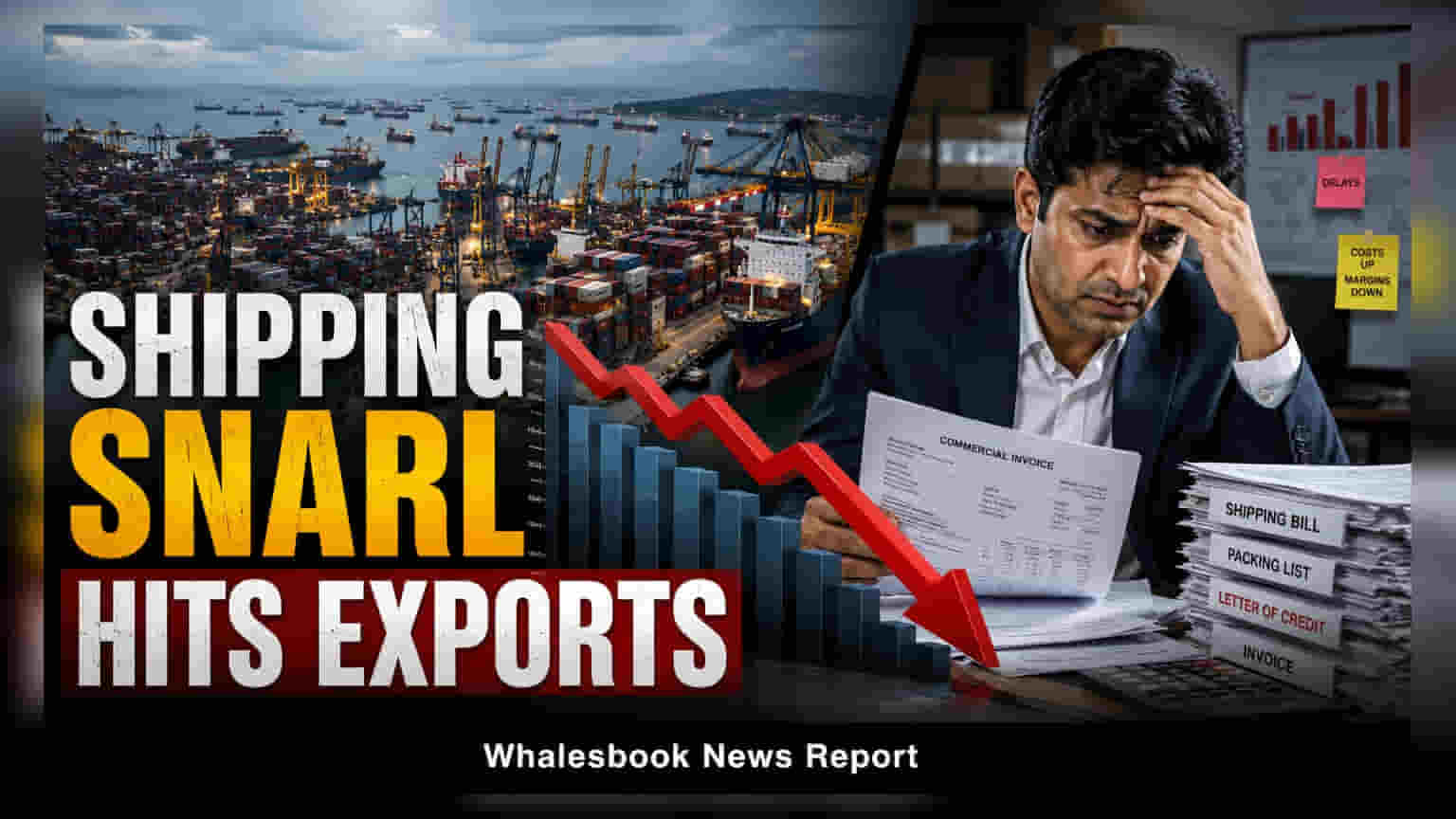
Indian exporters are struggling with severe port congestion in hubs like Colombo and Singapore, causing shipment delays of up to 20 days. A surge in global trade and rerouted vessels have triggered a sharp rise in freight rates and detention charges. This situation creates significant financial pressure for businesses in the textile, pharmaceutical, and agricultural sectors, as rising logistics costs eat into already thin profit margins.
Indian exporters are currently facing a major logistical challenge that is disrupting trade flows to key international markets. Ports that serve as essential transfer points for Indian goods—specifically Colombo and Singapore—are dealing with extreme congestion. This bottleneck means that cargo meant for Europe and North America is getting stuck, causing shipment delays that reach as long as 15 to 20 days in some instances.
Why Shipping Costs Are Rising
Several factors have converged to create this environment. A significant surge in trade between China and the United States has pulled a large amount of container capacity toward trans-Pacific routes, leaving fewer ships available for other regions, including India. As global demand for shipping space increases, freight rates have spiked. For example, reports indicate that freight costs on major routes, such as from Shanghai to Los Angeles, have risen by over 130 percent compared to last year. This global scramble for space has left Indian exporters struggling to find available feeder vessels, with slot rates rising sharply, particularly from South Indian ports.
Impact on Profit Margins and Operations
For many Indian businesses, these delays are not just an operational headache but a direct hit to their finances. Sectors such as textiles, garments, pharmaceuticals, and agricultural exports operate on thin profit margins and depend on strict, just-in-time delivery schedules. When shipments are delayed or cargo is rolled over to later vessels, exporters often face heavy detention and demurrage charges. These are fees paid when shipping containers are kept longer than permitted at a port or in a yard.
Because many exporters lack the bargaining power of larger global corporations, they often have to absorb these extra costs themselves, which directly reduces their profitability. The Federation of Indian Export Organisations (FIEO) has actively engaged with the Ministry of Commerce and the Ministry of Ports to address these concerns. They have specifically raised issues regarding non-transparent billing and what they describe as opportunistic pricing by some shipping lines during this period of high demand.
Long-Term Infrastructure Challenges
The current crisis highlights a structural dependence on foreign transhipment hubs. When ports like Colombo or Singapore face operational stress, Indian exporters have few alternatives, which makes their supply chains vulnerable. To reduce this reliance, India is focusing on developing its own infrastructure. Projects like the Vizhinjam International Deepwater Multipurpose Port in Kerala are designed to act as a major domestic transhipment terminal. If successful, such projects could allow Indian goods to be loaded onto larger vessels directly from Indian shores, potentially cutting down logistics costs and reducing the time cargo spends waiting in foreign ports.
Moving forward, the primary monitorables for investors and businesses will be the stability of freight rates and the effectiveness of government efforts to ease port congestion. Continued delays at major Indian hubs like Mundra and Nhava Sheva (JNPT) will likely remain a key challenge, and any improvement in vessel availability will depend on broader global shipping trends.