 Whalesbook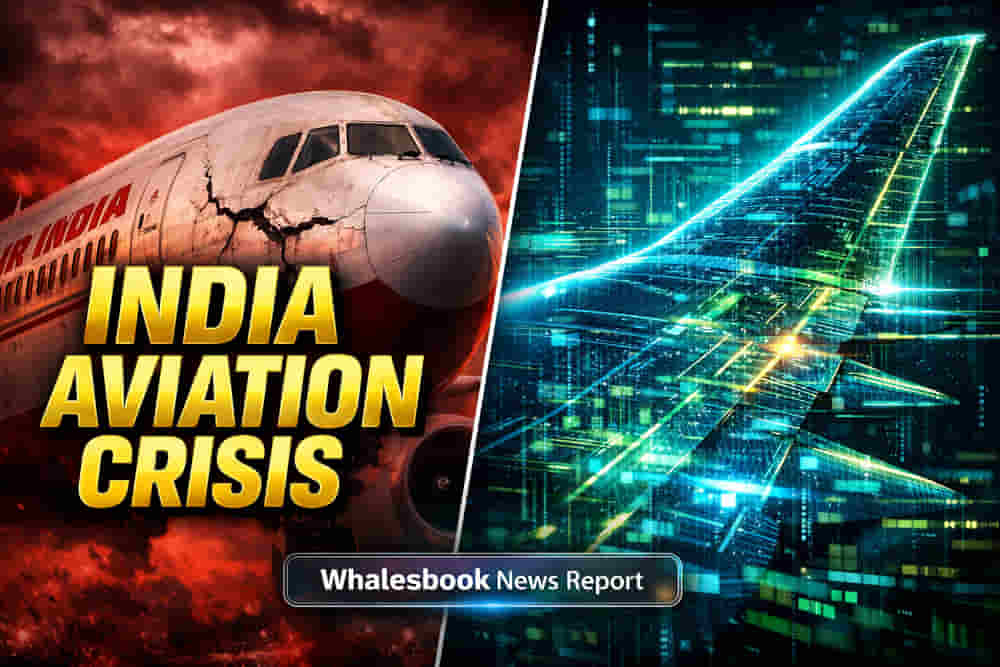
Sector-Wide Challenges Emerge in FY2026
Fiscal Year 2026 has been a period of considerable strain for the Indian aviation industry. The sector has contended with a series of critical incidents, including a fatal Air India crash, widespread cyber intrusions affecting airline and airport systems, and a notable increase in technical malfunctions across various aircraft fleets. These events, compounded by significant operational disruptions experienced by IndiGo in December 2025, have exposed the sector's vulnerability and diminished public confidence. Industry analysis from ICRA indicates that the rapid expansion of the aviation sector has collided with an unusually challenging operational year. This confluence has led to revised estimates, with ICRA projecting the domestic aviation industry's net loss for FY26 to be between ₹17,000–18,000 crore, a substantial increase from earlier forecasts of ₹9,500–10,500 crore.
Balancing Growth with Systemic Resilience
Beyond immediate incidents, the underlying pressure stems from the industry's rapid capacity expansion outpacing the development of its support systems. This has resulted in a slowdown in domestic air passenger traffic growth for the current fiscal year, with forecasts revised down to 0–3%, compared to an earlier projection of 4–6%. The depreciation of the Indian Rupee against the US Dollar has further impacted airline finances, contributing to the heightened net losses. In response to concerns about market concentration, particularly after the December disruptions, the Ministry of Civil Aviation is actively encouraging new airline entrants, with new no-objection certificates (NOCs) issued to companies such as Al Hind Air, FlyExpress, and Shankh Air. However, experts emphasize that this expansion must be carefully managed alongside robust oversight, enhanced training programs, and strengthened regulatory frameworks to ensure long-term stability and safety. Policy discussions increasingly focus on structural resilience rather than just capacity expansion, advocating for a shift from reactive measures to preventive, system-level reforms.
Addressing Operational Bottlenecks and Cost Pressures
A significant operational hurdle is aircraft availability, with numerous planes grounded due to engine issues and global spare part shortages, exacerbated by delays in maintenance and repair services. Streamlining customs procedures and rationalizing taxes on imported aircraft parts and maintenance services are seen as critical steps to expedite repairs and improve fleet reliability. Developing domestic Maintenance, Repair, and Overhaul (MRO) capabilities is also identified as a key structural opportunity to reduce operational costs and enhance self-sufficiency. Furthermore, Aviation Turbine Fuel (ATF) remains a major cost component, accounting for 30–40% of operating expenses. High state-level Value Added Tax (VAT) on ATF is cited as a substantial cost factor for Indian carriers compared to international peers, with ongoing industry calls for tax rationalization.
Regional Connectivity and Budget Expectations
The Ude Desh ka Aam Naagrik (UDAN) scheme continues to play a vital role in enhancing regional connectivity, having facilitated over 1.56 crore passengers on more than 3.23 lakh flights connecting 93 aerodromes. Budget 2026 is widely expected to reaffirm the government's commitment to improving regional connectivity and may also address airport infrastructure constraints through support for new airport development and capacity expansion at existing key airports. The upcoming budget's allocations will be closely watched for policy directions aimed at shoring up the sector's safety, operational efficiency, and financial health.
Market Sentiment and Outlook
The recent challenges have cast a shadow over investor sentiment towards the aviation sector, with financial results reflecting significant strain. The industry is now looking towards Budget 2026 for decisive policy interventions and fiscal support. The focus is on measures that can restore confidence, bolster safety protocols, and create a more sustainable operational environment, moving beyond a narrative of pure expansion to one of robust and reliable growth.