

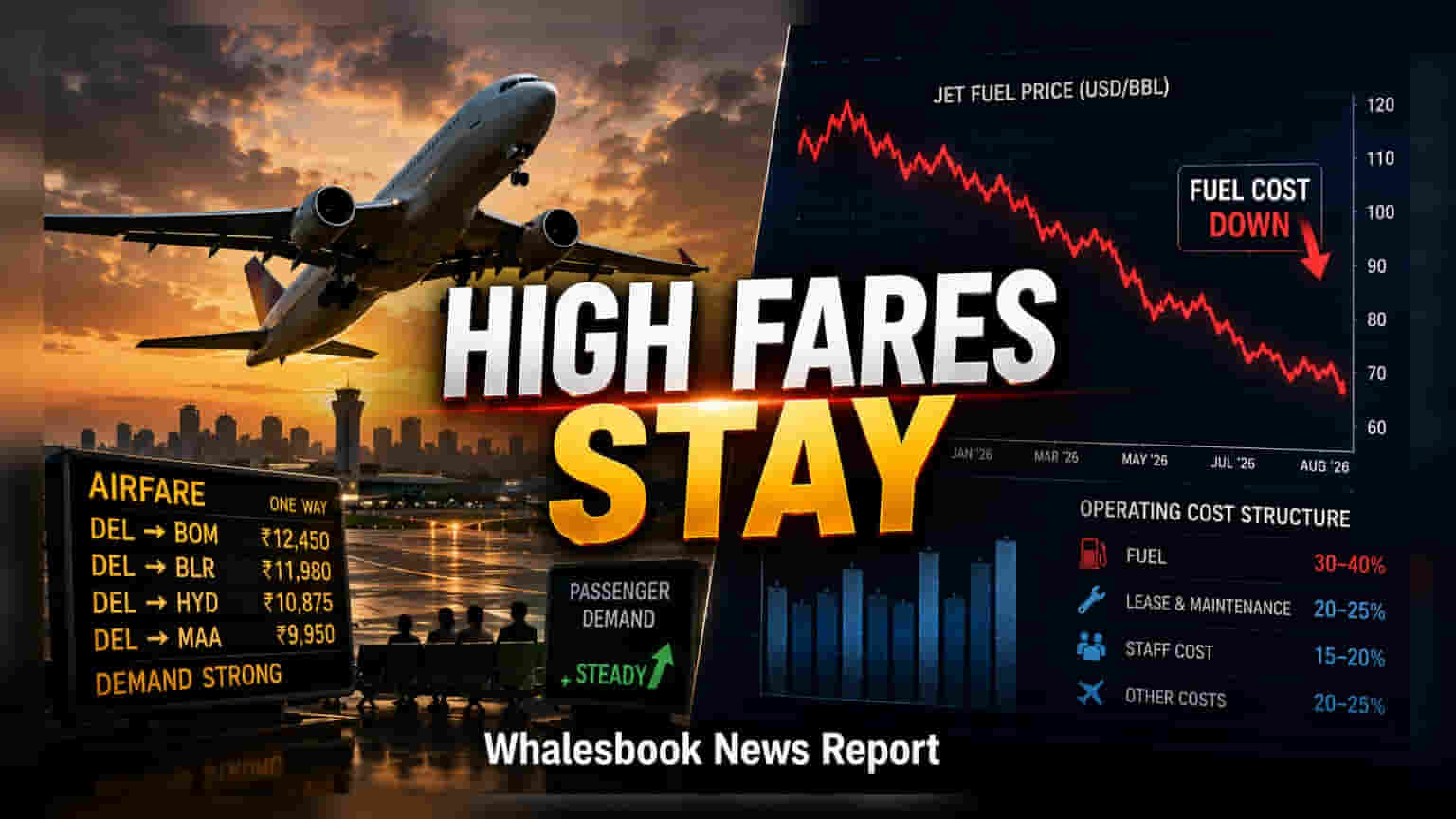
Indian airlines are keeping airfares elevated even as jet fuel costs moderate. According to S&P Global Ratings, this strategy aims to rebuild financial buffers amid inelastic passenger demand. However, the sector continues to face significant pressure from currency depreciation and geopolitical risks, keeping the outlook for profitability cautious.
Indian air travelers are likely to see sustained high ticket prices in the near term, as airlines across the Asia-Pacific region continue to prioritize profitability over market share. Despite a recent decline in jet fuel prices from the peaks seen in early 2026, carriers show little inclination to reduce fares. This trend, highlighted in a recent report by S&P Global Ratings, is driven by the industry's need to recover from significant cost shocks and build stronger financial defenses against future volatility.
The strategy is supported by what experts call inelastic passenger demand. Even with higher fares, passenger traffic has remained resilient, with only a marginal dip in volume, suggesting that travelers are currently willing to pay a premium for connectivity. Airlines are using this window to improve their balance sheets. Aviation Turbine Fuel (ATF) typically accounts for 30% to 40% of an airline's operating expenses, and the desire to protect profit margins remains a top priority following a challenging fiscal year.
The financial reality of the sector reflects this ongoing pressure. For example, industry leader IndiGo reported a consolidated net loss of ₹238 crore in the first quarter of fiscal year 2027, contrasting with profits in the same period last year. This highlights how high operational costs, including leasing and maintenance, continue to outweigh the benefits of minor relief in fuel prices. Ratings agency ICRA maintains a negative outlook on the Indian aviation industry, pointing to weakened interest coverage ratios and the persistent impact of high fuel costs.
Several risks continue to cloud the sector's recovery. The Indian Rupee’s continued depreciation against the US Dollar remains a significant concern, as many airline costs—including aircraft leases and maintenance—are denominated in dollars. Additionally, while fuel prices have softened, geopolitical tensions in West Asia present a constant risk of renewed price spikes. There is also the risk that if fares stay elevated for too long, consumer demand may eventually soften, putting a cap on the industry’s pricing power.
Investors and travelers should monitor whether this pricing strategy holds as the year progresses. Future improvements in airline margins will largely depend on the stability of global oil prices, the movement of the currency, and whether domestic demand can maintain its current strength. The industry's ability to navigate these competing pressures—balancing the need for higher fares with the risk of demand destruction—will be the key monitorable for the coming quarters.