

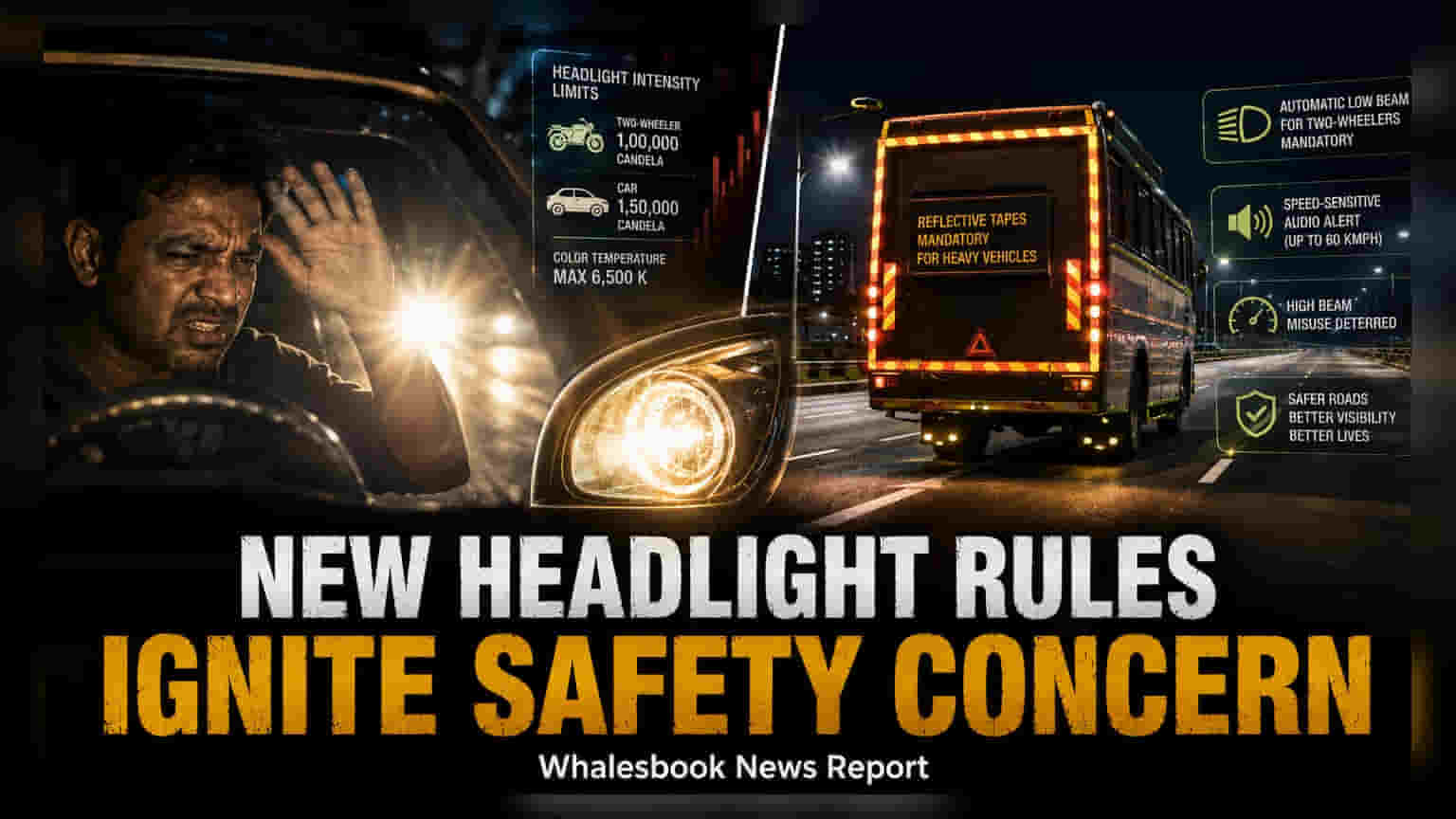
The Ministry of Road Transport and Highways will implement stricter vehicle lighting rules starting April 2027 to improve road safety. These changes include lower maximum brightness, strict color limits, and new high-beam alerts. Automotive companies and parts suppliers will face increased compliance costs, which could impact manufacturing expenses and profit margins for the sector.
The Indian government is preparing to enforce new vehicle safety standards focused on lighting. The Ministry of Road Transport and Highways has proposed changes that will require manufacturers to adjust how they design and produce vehicle headlights and signal systems. These rules, set to take effect from April 2027, aim to reduce blinding glare and improve road visibility at night.
Impact on Manufacturing and Costs
For automotive companies, this transition involves more than just changing a bulb. The new rules require lowering the maximum intensity of headlamps. For two-wheelers, the limit will be set at 1 lakh candela, and for cars, it will be 1.5 lakh candela. Additionally, the government has capped the maximum color temperature for headlights and front fog lamps at 6,500 Kelvin. Manufacturers will need to invest in redesigning their lighting systems to meet these technical limits.
The new regulations also introduce functional changes. New two-wheelers will be required to have automatic headlamp systems restricted to low-beam mode. Furthermore, vehicles will need to incorporate speed-sensitive audio alerts to discourage the misuse of high beams in urban areas, though this will deactivate above 60 kmph. Heavy vehicles will also be mandated to use genuine reflective tapes to improve night-time visibility.
Financial Implications for Investors
These changes bring both operational and financial implications for the automotive sector. For vehicle manufacturers and lighting component suppliers, the new requirements mean higher research and development spending. Designing systems that comply with lower intensity limits while maintaining road safety standards will require technical adjustments.
Investors should consider the impact on profit margins. If companies incur higher costs to comply with these safety norms, they may face pressure on their operating margins unless they can successfully pass these costs on to consumers through higher vehicle prices. However, a significant increase in vehicle prices could potentially slow demand in price-sensitive segments, particularly in the two-wheeler market.
The next important update for investors will be management commentary in upcoming quarterly results, specifically regarding capital allocation toward research and development. Shareholders should monitor how major automakers and component manufacturers plan to fund these upgrades and whether they expect any impact on their near-term profitability as the industry prepares for the April 2027 implementation.