

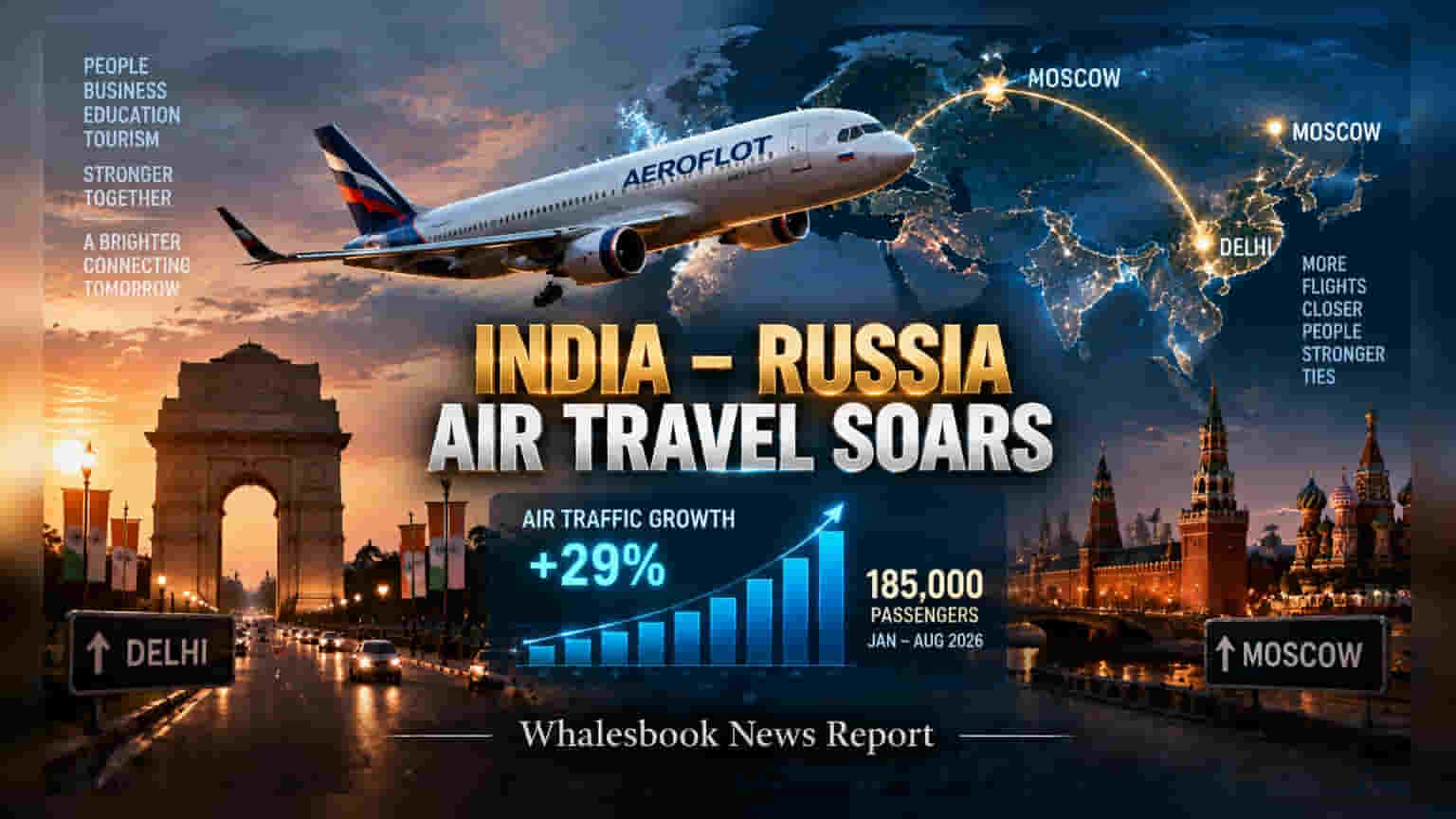
Air traffic between India and Russia increased by 29 percent to 185,000 passengers in the first eight months of 2026. Growth is driven by higher tourism, a large population of Indian students in Russia, and increased business activity. Investors should note how this connectivity influences travel-related services and diplomatic, economic cooperation.
Air passenger movement between India and Russia grew by 29 percent in the first eight months of 2026, reaching 185,000 travelers. This increase reflects stronger bilateral relations and a shift toward closer diplomatic and commercial engagement between the two nations. Much of this traffic is concentrated on the direct route between Moscow and Delhi, which remains the primary gateway for travelers.
Travel Demand and Airline Connectivity
Aeroflot is the lead airline managing this traffic, carrying 131,000 passengers on the Moscow-Delhi route from January to August 2026. This represents a 22 percent increase for the carrier on this specific route. Beyond the main city routes, airlines have been expanding their footprint to secondary destinations, such as operating weekly seasonal flights between Russia and Goa. For investors, this creates potential opportunities in the travel and hospitality sectors, as increased passenger flows often correlate with higher demand for travel tech, booking services, and tourism-related infrastructure.
Non-Seasonal Drivers of Traffic
While tourism provides a seasonal boost, the underlying demand is supported by consistent, non-seasonal factors. Nearly 40,000 Indian students are currently enrolled in Russian universities, primarily focusing on medical and engineering programs. This creates a stable baseline of travel that helps airlines maintain load factors throughout the year. Additionally, India’s participation in major events like the St. Petersburg International Economic Forum has transformed air routes into vital links for bilateral investment discussions, further stabilizing business travel.
Operational and Geopolitical Context
Russian officials, including First Deputy Prime Minister Denis Manturov, have cited the implementation of e-visa programs and the adoption of the 'India Friendly' hospitality standard as key catalysts for this growth. The two nations are also working on integrating cross-border cashless payment systems to make travel easier. However, investors should be aware of the operational challenges facing the Russian aviation sector. Due to international sanctions, Russian carriers like Aeroflot face difficulties in sourcing parts for Western-made aircraft, which can pose risks to long-term flight reliability and service consistency. Furthermore, geopolitical tensions can influence fuel costs and flight path regulations, which directly affect airline operational margins.
What Investors Should Monitor
The trajectory of this travel trend will depend on the sustained success of visa-liberalization policies and the expansion of payment integration systems. Investors should watch for further updates on flight capacity, regulatory ease for Indian travelers, and the performance of tourism and travel companies that serve these specific international corridors. As India continues to chair BRICS, the emphasis on connectivity is expected to remain a central part of the bilateral agenda, which may support consistent demand through 2027.