 Whalesbook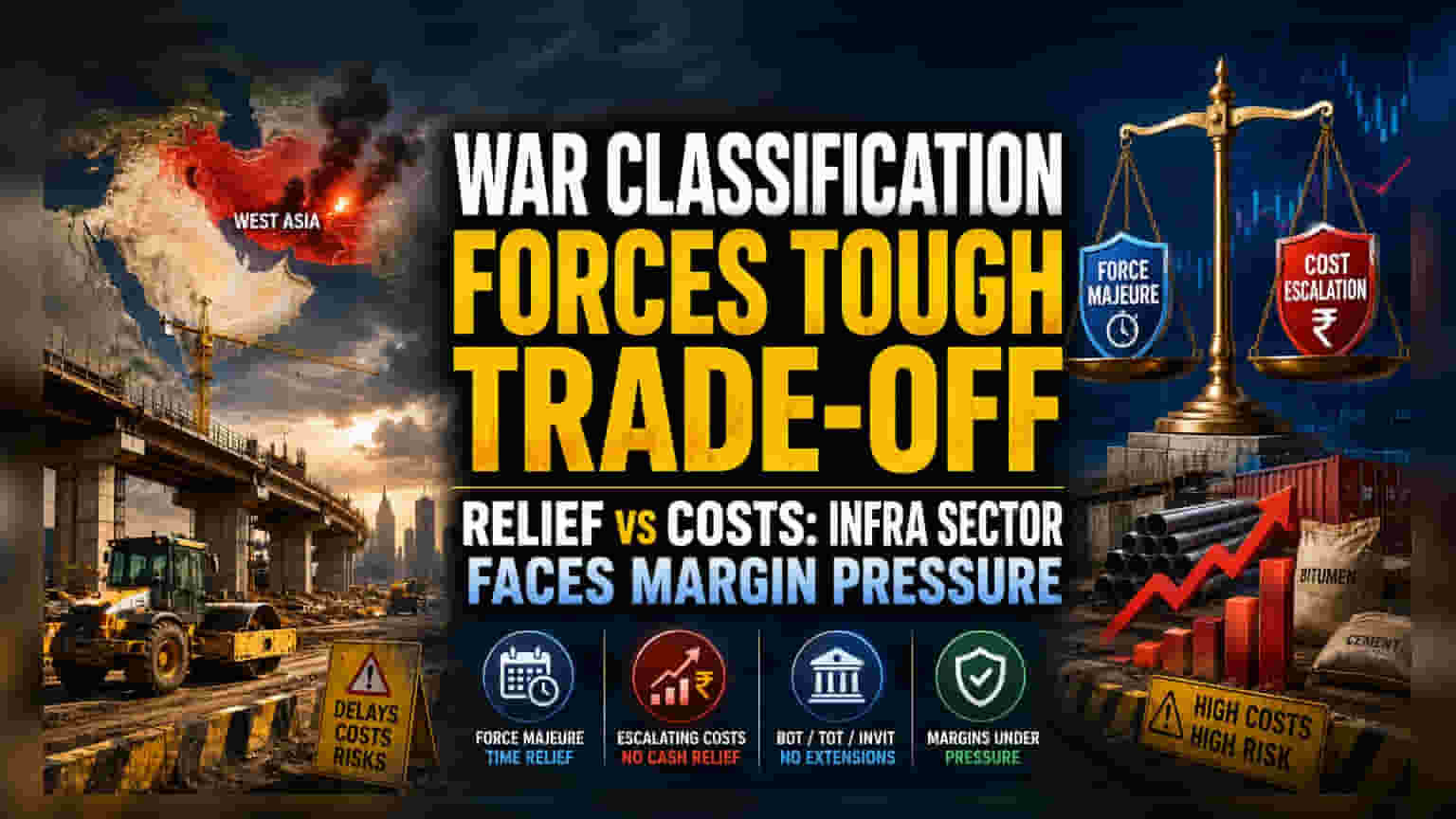


The Ministry of Road Transport and Highways (MoRTH) has sanctioned force majeure relief for contractors stalled by West Asia supply chain disruptions, allowing up to four-month project extensions. However, the mandate forces a choice between this relief or earlier cost-escalation compensations, effectively trapping firms between timeline pressure and margin erosion.
The Trade-Off Trap
The government’s decision to classify the West Asia conflict as a 'war' provides a necessary regulatory shield, yet it creates a complex financial dilemma for India’s infrastructure sector. By mandating that contractors choose between force majeure relief and the April 1 cost-escalation compensation mechanism, the ministry has effectively neutered the ability of firms to hedge against both time delays and runaway material inflation. Those opting for time extensions forfeit direct cash relief for rising costs of bitumen and logistics, a move likely to pressure bottom-line margins for heavily leveraged construction companies.
Sectoral Exposure and Margin Risk
While this directive offers a temporary reprieve for balance sheets by preventing penalty accumulation on delayed project milestones, the exclusion of BOT, TOT, and InvIT projects from concession period extensions signals a firm government stance on revenue continuity. Investors should note that companies with significant exposure to these asset-light or annuity-heavy models are unlikely to see improved cash flow from this relief. Historical precedents suggest that prolonged supply chain volatility often leads to increased working capital requirements, which, in a high-interest rate environment, tends to disproportionately affect mid-cap construction firms compared to larger, diversified players with stronger liquidity buffers.
The Forensic Bear Case
The primary risk here is operational stagnation. Although contractors gain a grace period, the requirement to maintain toll-road stretches under strict Indian Roads Congress standards remains absolute. This creates a high-fixed-cost environment where firms must sustain intensive labor and material spending on existing projects while unable to accelerate new ones. Furthermore, if the West Asia logistical bottleneck persists beyond the June 30 cut-off date, companies that prioritized the force majeure relief over price-escalation compensation will find themselves in a precarious position, facing both higher input costs and potential liquidated damages for future delays. Any further escalation in regional instability could necessitate a second, more expensive round of government intervention, potentially impacting the long-term credit ratings of firms that currently exhibit high debt-to-equity ratios.
Future Outlook and Analyst Sentiment
Market participants are closely monitoring the order books of major infrastructure players as they weigh the trade-off between project timeline safety and cost-mitigation liquidity. Consensus among analysts suggests that while the MoRTH directive prevents a wave of defaults in the short term, it serves more as a defensive stop-gap than a growth catalyst. Long-term performance will likely depend on the stabilization of global commodity prices rather than regulatory relief measures, which remain strictly capped in scope and duration.