 Whalesbook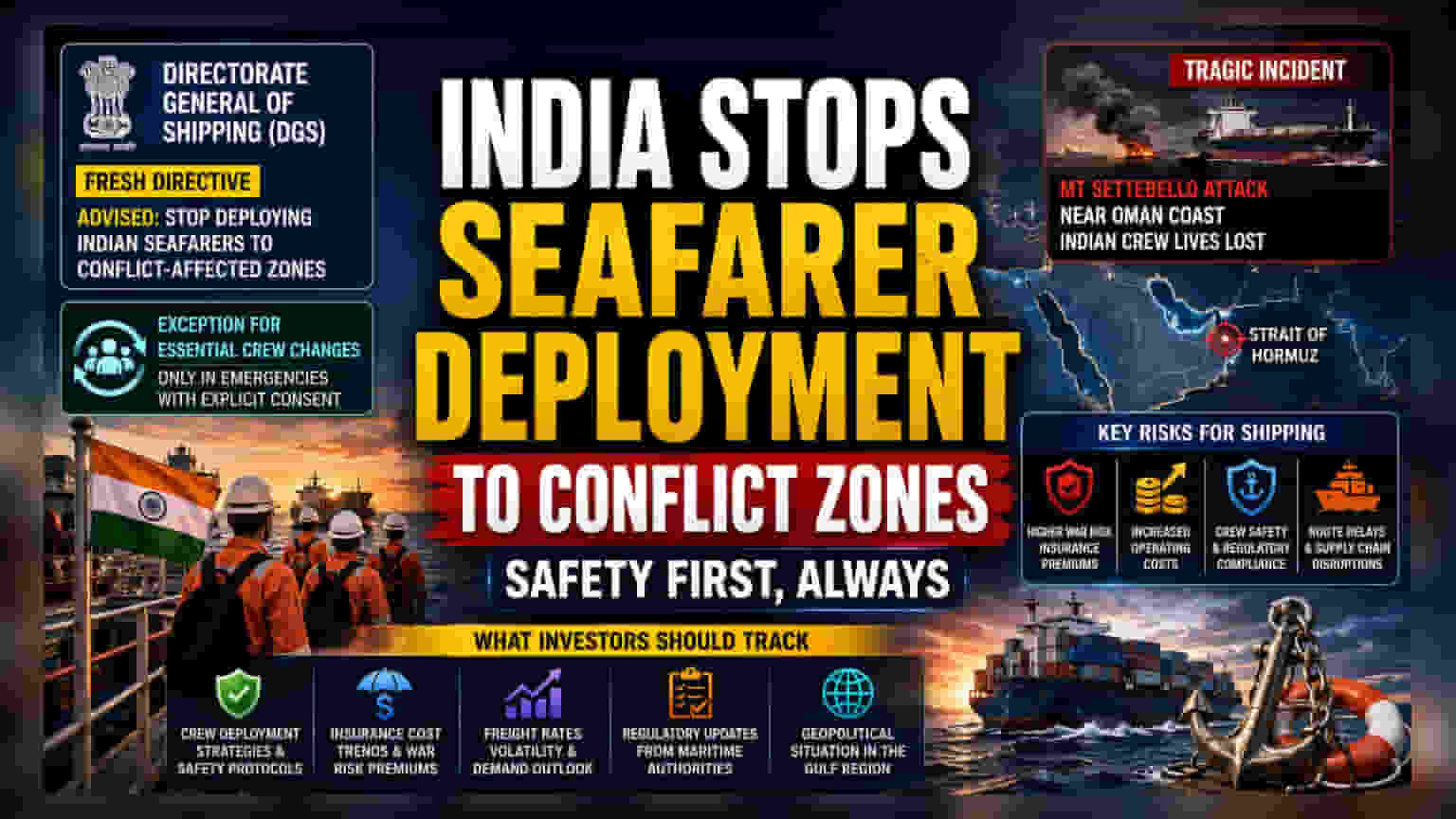


The Directorate General of Shipping has advised against sending Indian crew members to conflict zones following a fatal incident on a merchant vessel. This move is set to impact maritime operations in the Gulf and surrounding waters. Investors in the shipping and logistics sector may monitor how this directive affects operational costs, insurance premiums, and labor availability for Indian shipping firms navigating these high-risk trade routes.
What Happened
The Directorate General of Shipping (DGS), the regulatory body for India's maritime sector, has issued a fresh directive advising all recruitment and placement agencies to stop deploying Indian seafarers to conflict-affected zones. This order comes in the immediate aftermath of a military strike on the commercial vessel MT Settebello near the coast of Oman, which resulted in the loss of Indian crew lives. While the directive advises against new deployments, it allows for essential crew changes in emergency situations, provided the individuals involved give their explicit consent.
Why This Matters For Investors
The shipping and logistics industry relies heavily on the steady movement of personnel. India is a primary supplier of global seafarers, and any restriction on their deployment has ripple effects across the maritime trade ecosystem. For investors, the primary concern lies in the potential impact on operational costs and margins. When shipping routes become high-risk, companies often face increased costs for war risk insurance premiums, security measures, and potentially higher wages for crew members willing to operate in dangerous waters.
Operational and Financial Implications
Shipping companies operating in the Middle East and the Gulf region face a dual challenge. On one hand, they must comply with safety regulations like those recently issued by the Indian authorities, which may limit their labor pool or force them to seek alternative, potentially more expensive manpower sources. On the other hand, the escalation of geopolitical tension in the region, involving incidents on vessels like the MT Settebello, MT Marivex, and MV Jalveer, has historically led to volatility in freight rates and increased insurance costs. These added expenses often put pressure on operating margins for shipping firms if they are unable to pass these costs on to customers.
Sector Context and Risks
Global maritime trade is sensitive to geopolitical stability. The ongoing tensions between nations in the Middle East have created an unpredictable environment for commercial shipping. Beyond the cost of insurance and labor, there is a risk of project delays and supply chain disruptions. If Indian shipping companies—or foreign companies that rely significantly on Indian crews—are unable to transit through these regions, it could lead to vessel rerouting, which increases fuel consumption and transit times, further impacting the profitability of voyages.
What Investors Should Track
Investors may keep an eye on how shipping companies manage their crew deployments and safety protocols in response to these evolving regulations. Key monitorables include updates from shipping lines regarding insurance costs and their ability to maintain operational efficiency in the Gulf region. Furthermore, any additional guidance from maritime regulators regarding high-risk zones or changes in maritime labor laws could signal potential shifts in operational costs. Keeping track of the geopolitical situation in the Strait of Hormuz and surrounding waters remains essential, as any sustained escalation could continue to affect the risk profile of the broader shipping and logistics sector.