

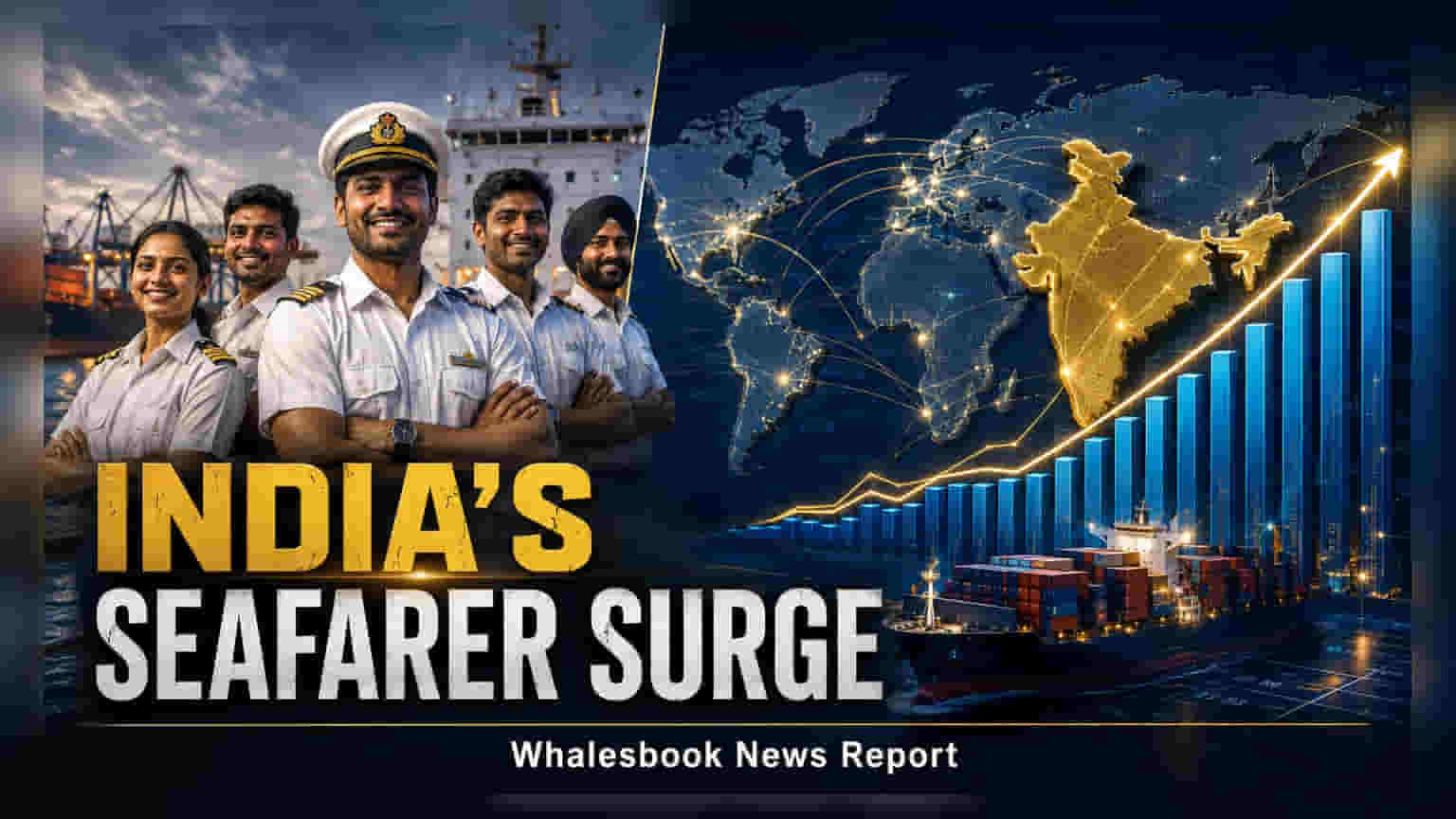
India has become the world's second-largest supplier of seafarers, contributing 12.16% to the global shipping workforce. This rise from 5.2% in 2015 positions the nation to benefit from the growing global demand for skilled maritime personnel. The government is now aiming for a 20% global share through its 'Mission 20 per cent' initiative.
India has officially emerged as the world's second-largest provider of seafarers, marking a major milestone in the country's maritime sector. According to the BIMCO-ICS Seafarer Workforce Report 2026, Indian professionals now account for 12.16% of the global merchant shipping workforce. This represents a significant acceleration in growth, climbing from 5.2% in 2015 to surpass countries like China, Russia, and Indonesia.
Strengthening the Maritime Workforce
The country’s contribution is particularly notable in the highly skilled officer segment. India currently supplies over 140,000 officers, which accounts for 13.41% of the global total. Additionally, India provides over 171,000 ratings, representing 11.29% of the global ratings currently serving on merchant vessels. This growth has been supported by improvements in maritime education infrastructure and adherence to international safety and training standards, which are critical for employability in the global shipping industry.
Impact of Mission 20 Per Cent
The Union Ministry of Ports, Shipping and Waterways has launched 'Mission 20 per cent' to further increase India's presence in the global market. The goal is to reach a 20% share of the global seafaring workforce. This initiative is part of broader long-term strategies, including the Maritime India Vision 2030 and the Maritime Amrit Kaal Vision 2047, which seek to establish India as a global maritime hub. By focusing on training and capacity building, the government aims to capture a larger portion of the demand for maritime professionals as the global shipping industry faces a tight labor market.
Implications for the Maritime Sector
For the domestic economy, the increase in seafarer supply contributes to higher foreign exchange remittances, which is a key source of revenue for the maritime services sector. As India positions itself to meet future global demand, the focus will remain on sustaining the quality of training to remain competitive against the Philippines, which remains the leading supplier. Investors and stakeholders in the maritime education, logistics, and shipping services sectors may look to track the progress of these training infrastructure projects and the success of the 'Mission 20 per cent' in achieving higher international placements for Indian cadets.