

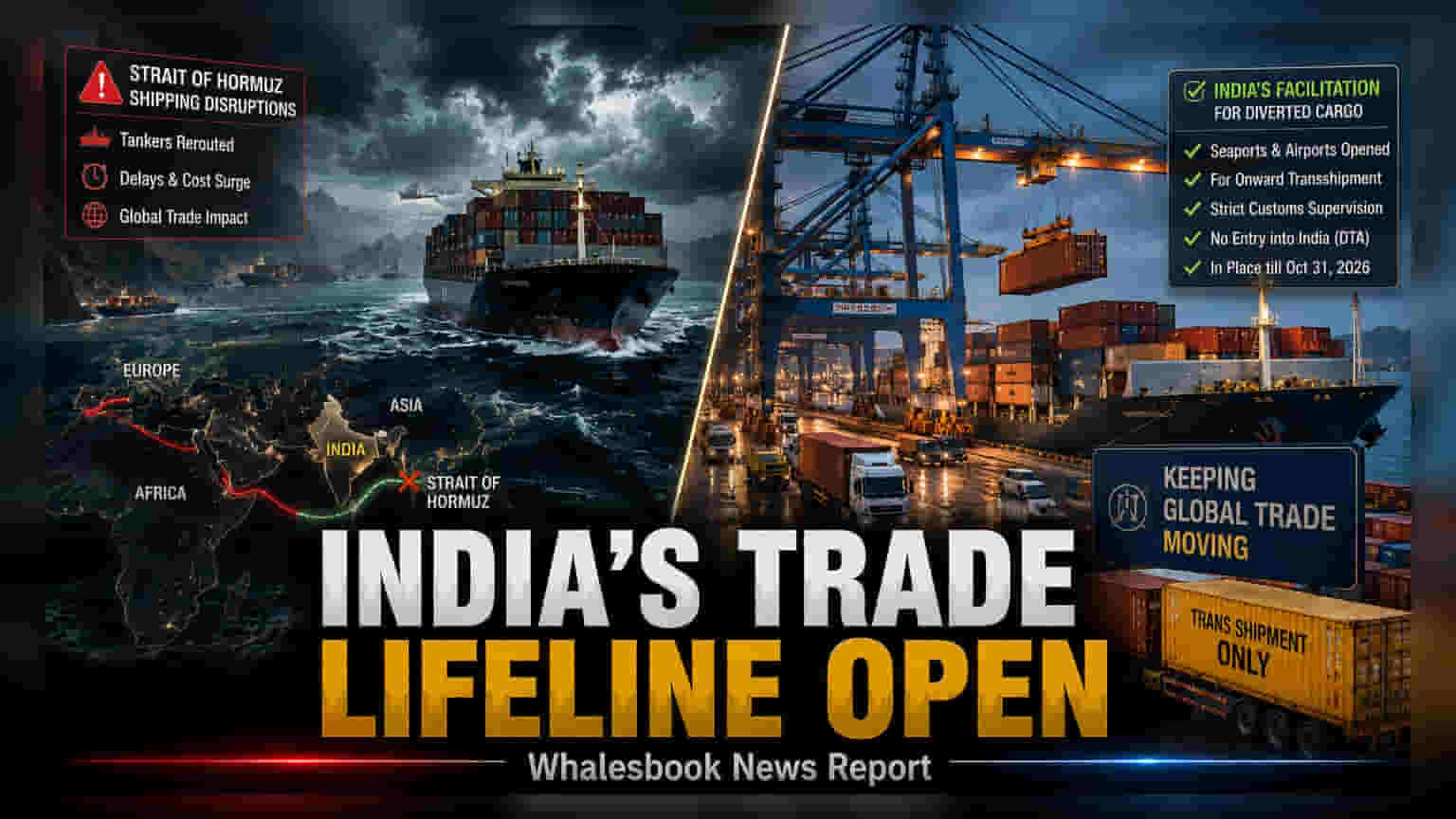
India has opened its seaports and airports to temporarily handle foreign-bound cargo rerouted due to ongoing shipping disruptions in the Strait of Hormuz. Under the new CBIC Circular No. 36/2026-Customs, goods can be stored and transshipped until October 31, 2026. This measure strictly prohibits the sale of such cargo within India, keeping all shipments under tight customs supervision.
India has officially opened its seaports and international airports to handle foreign-bound cargo that has been rerouted due to ongoing shipping disruptions in the Strait of Hormuz. The move follows a directive from the Central Board of Indirect Taxes and Customs (CBIC) issued under Circular No. 36/2026-Customs, dated August 20, 2026. This temporary measure is effective immediately and will remain in place until October 31, 2026, aimed at providing a lifeline to global trade affected by regional instability in West Asia.
The regulatory framework explicitly prohibits these diverted goods from entering the Domestic Tariff Area (DTA). This means the cargo cannot be cleared for sale or consumption within India. Every consignment must remain under strict, continuous customs supervision, and the facility is designed exclusively for onward international transshipment or re-export. The government has included provisions for repackaging on a case-by-case basis to assist in the logistics process.
The scope of this facilitation is broad, covering both Full Container Load (FCL) and Less than Container Load (LCL) shipments. It also extends to liquid, break bulk, and solid or dry bulk cargo. Custodians at the ports are responsible for maintaining secure storage and precise inventory records. If a shipment needs to move between multiple customs stations, nodal officers must coordinate in advance to ensure the receiving port has sufficient infrastructure and logistics capacity to handle the extra load.
For the logistics and port infrastructure sector, this development presents a complex scenario. While it may lead to higher throughput and increased activity at major Indian ports, it also brings logistical risks. Port operators may face sudden congestion or infrastructure strain, requiring efficient management to avoid delays for regular trade. Furthermore, the reliance on strict compliance means that any breach in customs procedure could lead to regulatory hurdles or fines.
Investors monitoring the sector should track whether this influx of diverted cargo leads to meaningful revenue growth for port operators, or if the associated operational costs and compliance demands create pressure on profit margins. The effectiveness of this move will depend on how quickly port operators can adjust their operations to handle the diverted volumes without impacting regular domestic trade. The primary monitorable for stakeholders in the coming weeks will be the volume of diverted cargo handled by major ports and whether the government extends the October 31 deadline if global shipping routes remain constrained.