

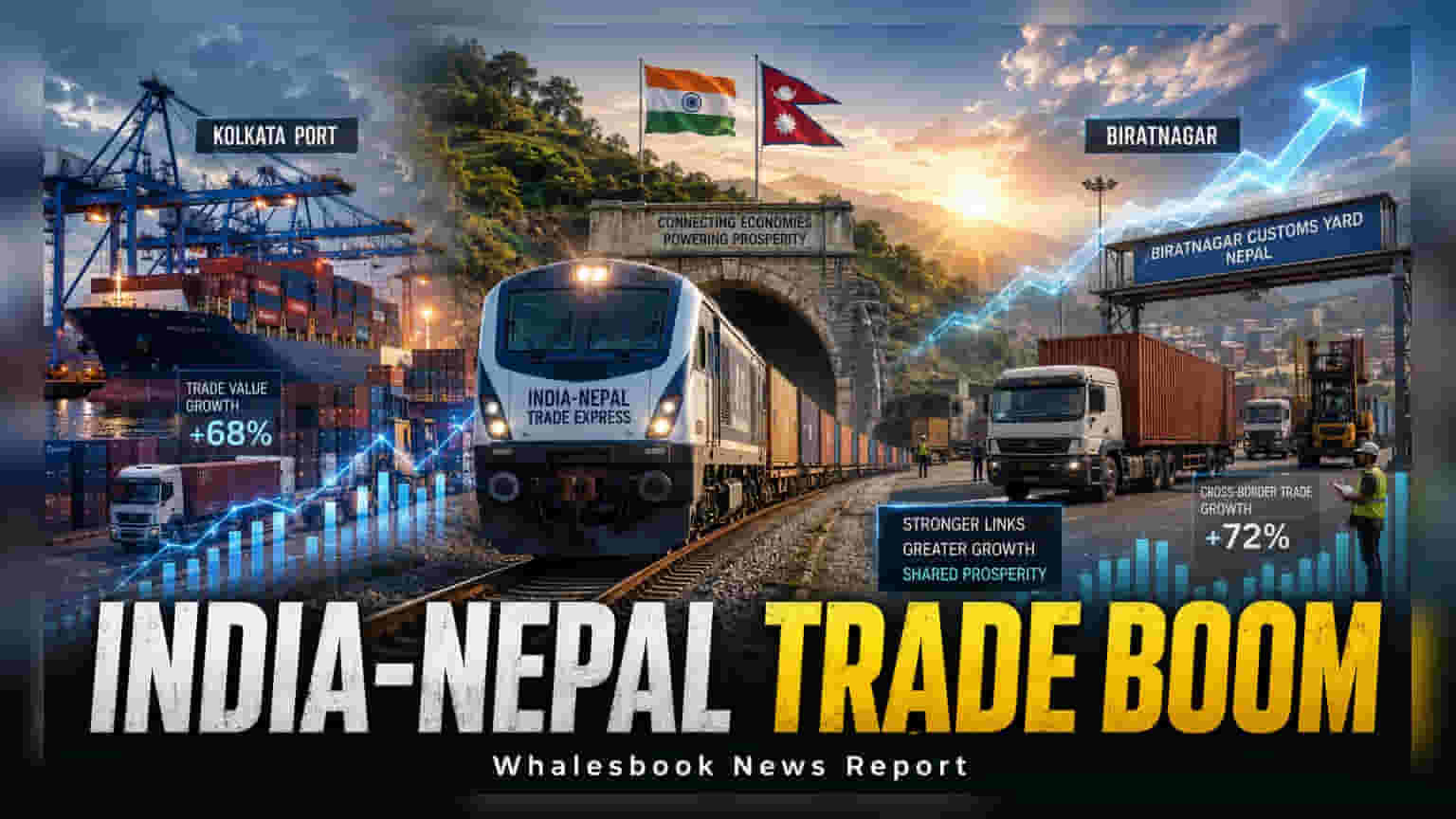
India has launched its first direct commercial container train to Nepal, carrying 1,225 tonnes of canola from Kolkata to Biratnagar. This new rail link eliminates time-consuming border transshipment, offering a more efficient logistics route for trade between the two nations. The project is expected to lower transportation costs and increase cargo handling speeds for businesses operating across these borders.
Detailed Coverage
The recent arrival of a 40-wagon container train at the Biratnagar customs yard in Nepal marks a major shift in how goods move between India and its neighbor. By completing the transit from Kolkata Port directly to Biratnagar on July 23, the Indian railway network has demonstrated the effectiveness of the new broad-gauge connection. This process bypasses the traditional border transshipment stage, where cargo previously had to be moved between different trains or transport modes, a practice that historically added both time and expenses to cross-border logistics.
Impact on Trade and Logistics Efficiency
The ability to move containerized and bulk cargo without stopping for reloading is a significant improvement for companies involved in bilateral trade. The Jogbani-Biratnagar rail link, spanning 18.60 km, was built with financial support from the Indian government and serves as the backbone for this new service. For investors and businesses, the reduction in handling requirements usually leads to lower operational risks and faster inventory turnover. By streamlining the supply chain, this rail connection helps make trade more predictable, which is essential for industries dealing with perishable goods or high-volume raw materials.
Expanding the Transit Network
This initiative is part of a broader strategy to deepen economic ties through infrastructure. The updated India-Nepal Rail Transit Protocol has opened the door for more routes, such as those connecting Kolkata and Visakhapatnam to Nautanwa. These corridors are designed to handle larger volumes of cargo, providing alternative logistical options for importers and exporters. The government is also exploring further connectivity projects, including the Raxaul-Kathmandu broad-gauge link, which could eventually open up more remote regions of Nepal to Indian rail services.
Future Monitorables
While the infrastructure is now operational, the long-term success of this route depends on sustained demand for rail-based logistics over road transport. The key monitorable for investors will be the frequency of these freight services and the adoption rate by private logistics players. Additionally, progress on upcoming projects like the Raxaul-Kathmandu line and the potential expansion of passenger services will signal the pace at which cross-border connectivity is advancing. As trade volumes increase, the ability of these customs yards to handle the cargo load efficiently without creating bottlenecks will be the next important test for the network.