 Whalesbook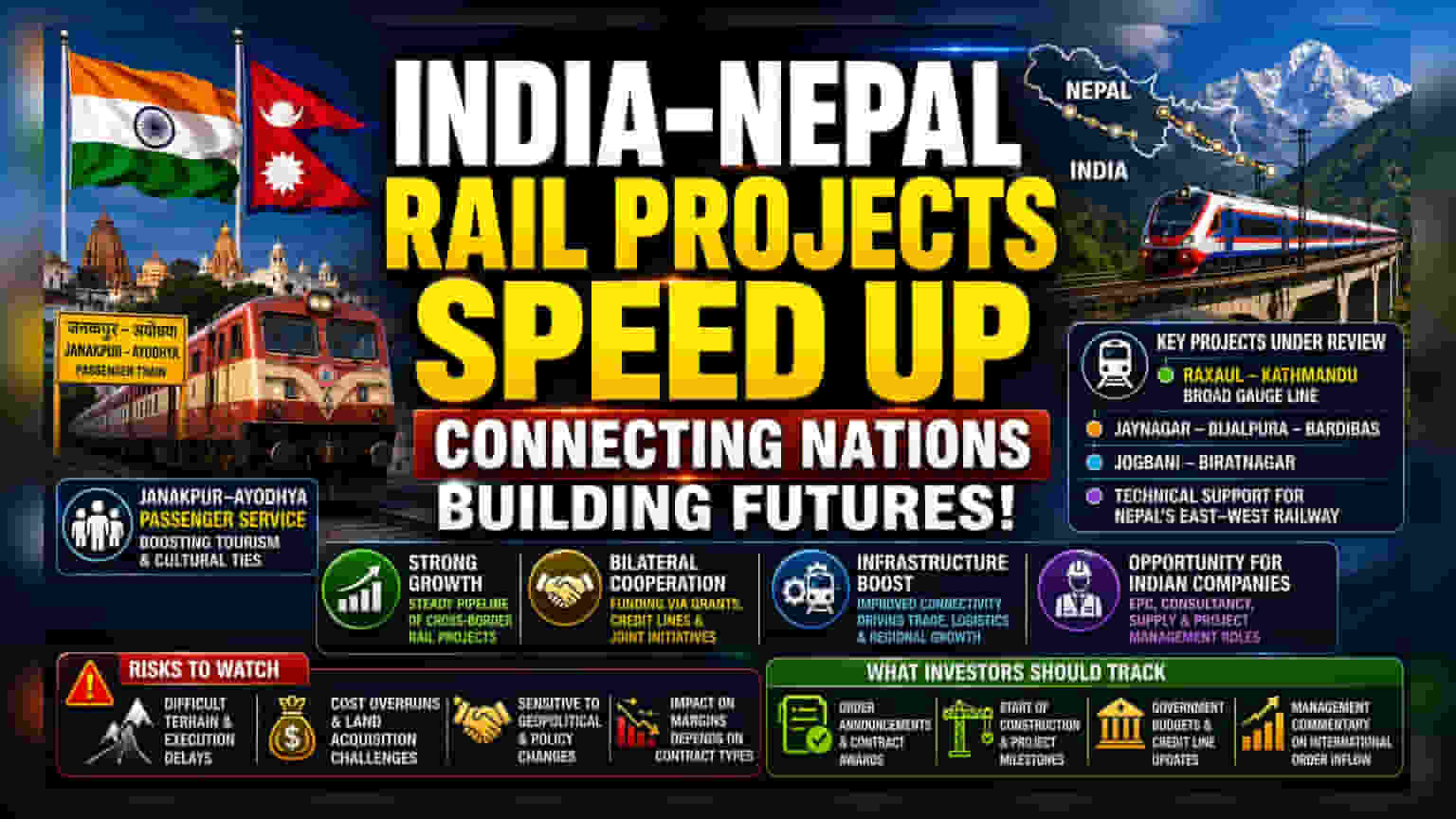


India and Nepal are advancing cross-border rail connectivity, including the Janakpur-Ayodhya service and the Raxaul-Kathmandu link. For investors, these infrastructure initiatives signal potential order opportunities for Indian railway and engineering firms. While the projects strengthen regional trade and tourism, shareholders should monitor execution timelines, government funding support, and the complexities of building in hilly terrain.
What Happened
India and Nepal have held high-level discussions to speed up key cross-border railway projects. The talks focused on operationalizing a passenger train service between Janakpur and Ayodhya, a route significant for tourism and cultural exchange. Additionally, officials reviewed progress on the Raxaul-Kathmandu broad gauge rail line, along with the ongoing development of lines such as Jaynagar-Bijalpura-Bardibas and Jogbani-Biratnagar. The discussions also covered providing technical support for Nepal's planned East-West Railway link.
Why This Matters For Investors
Infrastructure projects involving cross-border connectivity are often executed by specialized Indian engineering, railway, and construction firms. These projects are usually funded through government grants, lines of credit, or bilateral cooperation agreements. For companies in the railway construction and consultancy space, such initiatives represent a steady pipeline of work beyond domestic projects. If a company secures an engineering, procurement, and construction (EPC) contract or a consultancy role for these cross-border lines, it can provide long-term revenue visibility. These projects also signal the government's commitment to boosting regional trade and logistics, which is a broader theme in the current infrastructure spending cycle.
The Infrastructure Context
Developing rail networks, especially in regions like Nepal, is a complex task. Indian public sector undertakings (PSUs) and major private players in the engineering sector often bring the necessary technical expertise for such terrain. For instance, projects like the Raxaul-Kathmandu line require extensive geological surveys and engineering solutions due to the difficult Himalayan topography. When Indian firms manage these projects, it involves not just physical construction but also project management, supply of materials, and technical consultancy. Investors often monitor these developments as they highlight which firms are active in the government’s international infrastructure expansion strategy.
What Could Go Wrong
Investors should be aware of the inherent risks in such large-scale international projects. The most significant challenge is the execution timeline. Projects in hilly or difficult terrain often face delays due to unforeseen geological issues, cost overruns, or land acquisition hurdles. Additionally, since these projects depend on bilateral cooperation, they are sensitive to geopolitical relations. Any change in diplomatic ties or government policy in either nation could impact project progress. Furthermore, while these projects boost order books, their impact on profit margins can vary depending on the contract type and the ability of the company to manage costs in a foreign operating environment.
What Investors Should Track
For shareholders of companies involved in railway infrastructure, the key monitorables are official order announcements and government budget allocations. Investors may watch for news on contract awards, the commencement of actual construction phases, and updates on government credit lines that fund these projects. Understanding whether a company is managing these projects profitably or if they are facing execution delays is crucial. Keeping an eye on management commentary regarding order inflow from international projects will provide better clarity on how these initiatives are contributing to overall business growth.