

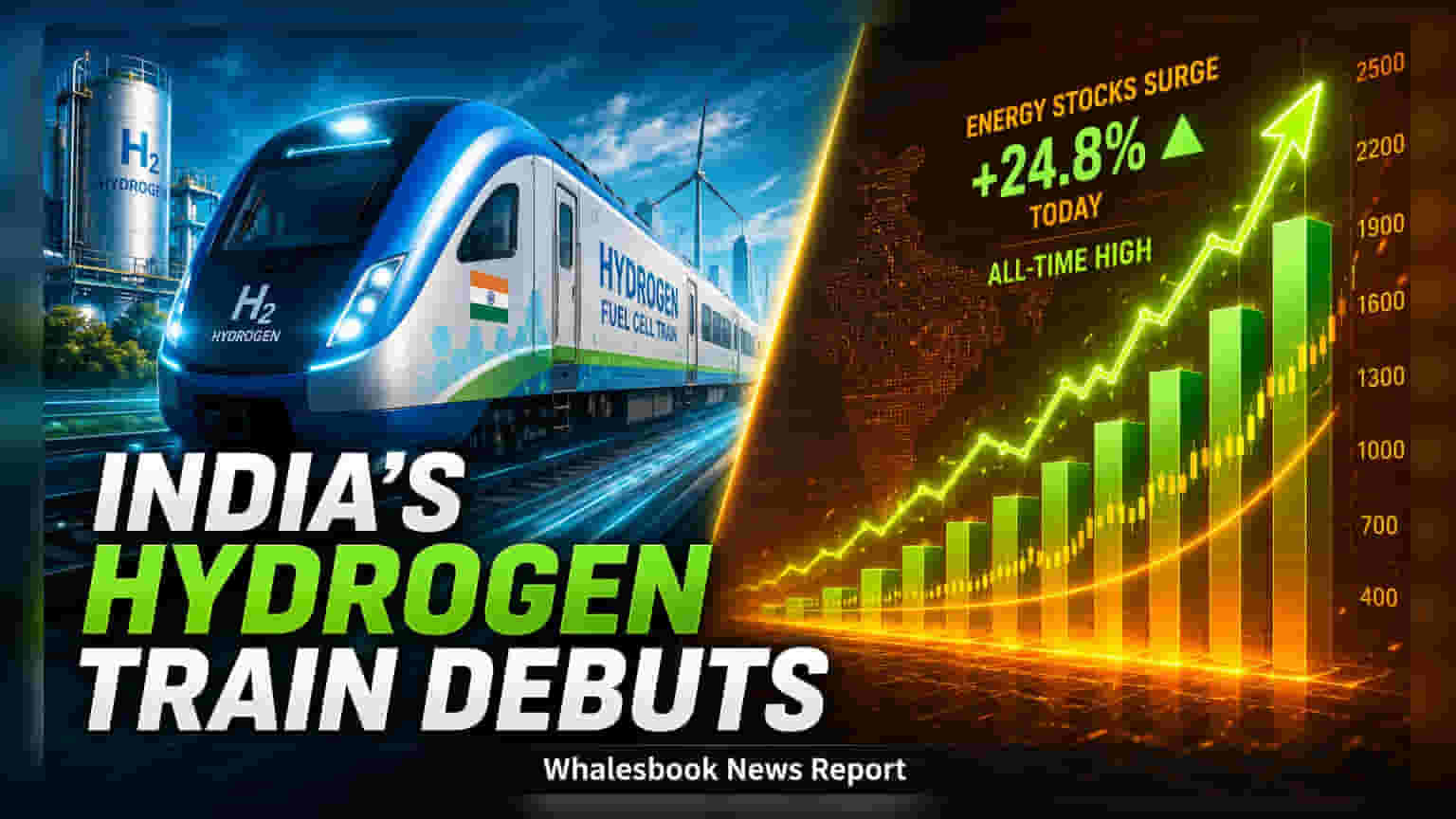
India’s first hydrogen-powered train begins its maiden journey on July 17, operating on the Jind-Sonipat route in Haryana. This indigenous trainset, integrated by Medha Servo Drives, aims to reduce emissions by using hydrogen-based electricity generation. Investors may monitor how this technology performs during initial operations and whether it scales to heritage routes, potentially influencing future railway technology procurement.
Indian Railways is set to launch its first hydrogen-powered train on July 17, marking a shift toward sustainable fuel sources in the national transport network. The train will run on an 89-kilometer route between Jind and Sonipat in Haryana, representing a testing ground for zero-emission technology in the heavy-haulage sector.
The train operates by generating electricity onboard through a chemical reaction between hydrogen and oxygen, with water vapor as the only byproduct. This design moves away from traditional diesel or electric overhead lines, offering a cleaner alternative for non-electrified routes. The train is capable of reaching speeds of up to 110 kilometers per hour, though its operational speed is set at 75 kilometers per hour for this deployment.
Indigenous Technology and Engineering
Unlike initial global pilot projects that often feature shorter rakes, the Indian model consists of 10 coaches, including two hydrogen driving power cars. Each power car generates 1,200 kW, providing the necessary energy to transport approximately 2,600 passengers. The project highlights domestic engineering capabilities, with the Integral Coach Factory handling the structural exterior and Medha Servo Drives managing the complex system integration.
To support this initiative, Indian Railways has commissioned a dedicated hydrogen refueling facility in Jind, currently the largest of its kind within the national railway network. Safety remains a focus of this deployment, with the train equipped with sensors to monitor for hydrogen leaks, flame detection, and heat spikes, creating a multi-layered safety structure for passenger operations.
Strategic Outlook for Indian Railways
While hydrogen technology remains in the early stages of commercial adoption worldwide—with countries like Germany, Japan, and China also testing various configurations—India’s 10-coach configuration is among the larger deployments globally. For investors and industry observers, the primary interest lies in the scalability of this technology. The success of this Jind-Sonipat route will likely influence future plans to introduce similar trains on challenging heritage routes, such as the Kalka-Shimla section.
Financial and operational metrics to track going forward include the cost-efficiency of hydrogen fuel production compared to traditional diesel, the reliability of the refueling infrastructure, and the maintenance requirements for the new power cars. As this is the first deployment of its scale in India, the long-term impact on railway operational expenses and technology procurement will depend on the real-world data gathered from these initial operations.