 Whalesbook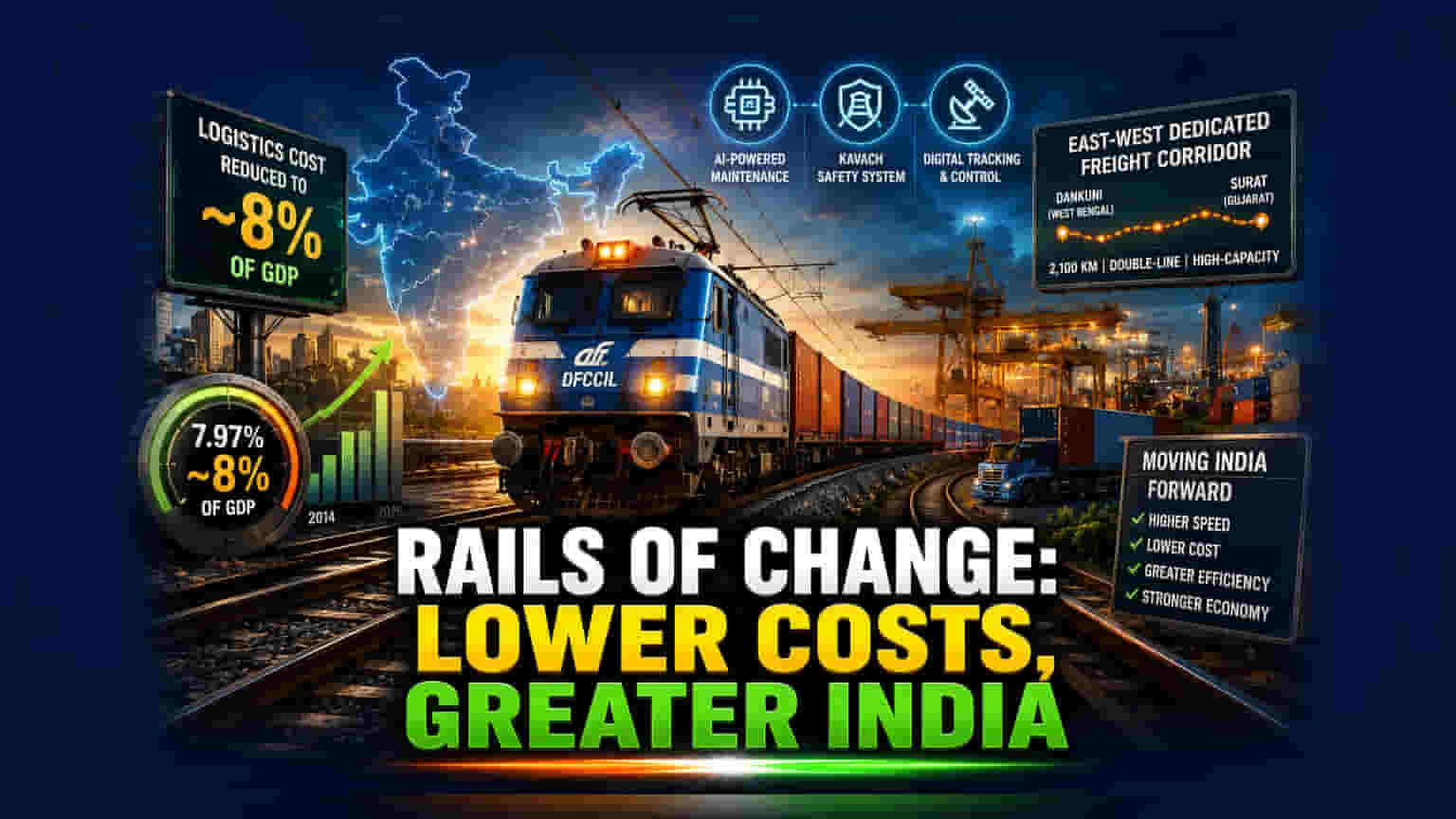


The Shift in Operational Dynamics
The move into heavy-haul rail operations represents a structural evolution in Indian logistics, moving beyond mere capacity expansion to optimized asset utilization. By adopting global standards for axle loads and train lengths, the Dedicated Freight Corridor Corporation of India Limited (DFCCIL) is directly tackling the historical reliance on road transport, which carries the bulk of Indian freight at significantly higher costs. The integration of artificial intelligence for predictive maintenance and advanced signaling systems like Kavach is designed to minimize downtime, ensuring that these high-capacity corridors move goods with precision and speed.
The Logistics Cost Paradigm
For years, the narrative surrounding India’s logistics sector was dominated by the 13–14% of GDP cost figure. However, recent government assessments and industry studies indicate a successful recalibration to approximately 7.97%–8% of GDP. This improvement is not accidental but the result of sustained capital expenditure exceeding $360 billion over the past decade. The operational performance of the Eastern and Western Dedicated Freight Corridors has been central to this trend, consistently facilitating the transfer of record-breaking volumes between the dedicated network and the conventional Indian Railways system. By isolating freight movement from passenger congestion, these corridors have effectively increased average speeds and turnaround times, proving that infrastructure investment, when coupled with digital tracking and multimodal planning, yields tangible economic returns.
The Strategic East-West Corridor
The focus is now intensifying on the East-West Dedicated Freight Corridor, a 2,100 km project connecting Dankuni in West Bengal to Surat in Gujarat. This corridor acts as the missing link in India’s industrial triangle, designed to facilitate a more fluid movement of bulk commodities like coal, steel, and iron ore, alongside high-value containerized goods. Unlike previous projects, this corridor emphasizes high-rise overhead electrification and double-line tracks, positioning it to handle significantly heavier loads and higher traffic densities.
The Forensic View: Operational and Execution Risks
Despite the bullish outlook on infrastructure, critical risks remain. The sector’s dependency on a limited set of bulk commodities—specifically coal and iron ore—poses a long-term challenge to revenue diversification. While rail infrastructure is expanding, the lack of sufficient first- and last-mile connectivity through Multimodal Logistics Parks (MMLPs) continues to limit the total cost advantage over road logistics. Investors should remain cautious regarding the execution pace of the East-West project, as previous corridors have faced significant land acquisition hurdles and cost overruns. Furthermore, smaller players in the rail electrification and EPC space often struggle with thin margins and volatile return on equity, making the sector’s high valuations appear increasingly decoupled from the actual profitability of individual project contractors.