 Whalesbook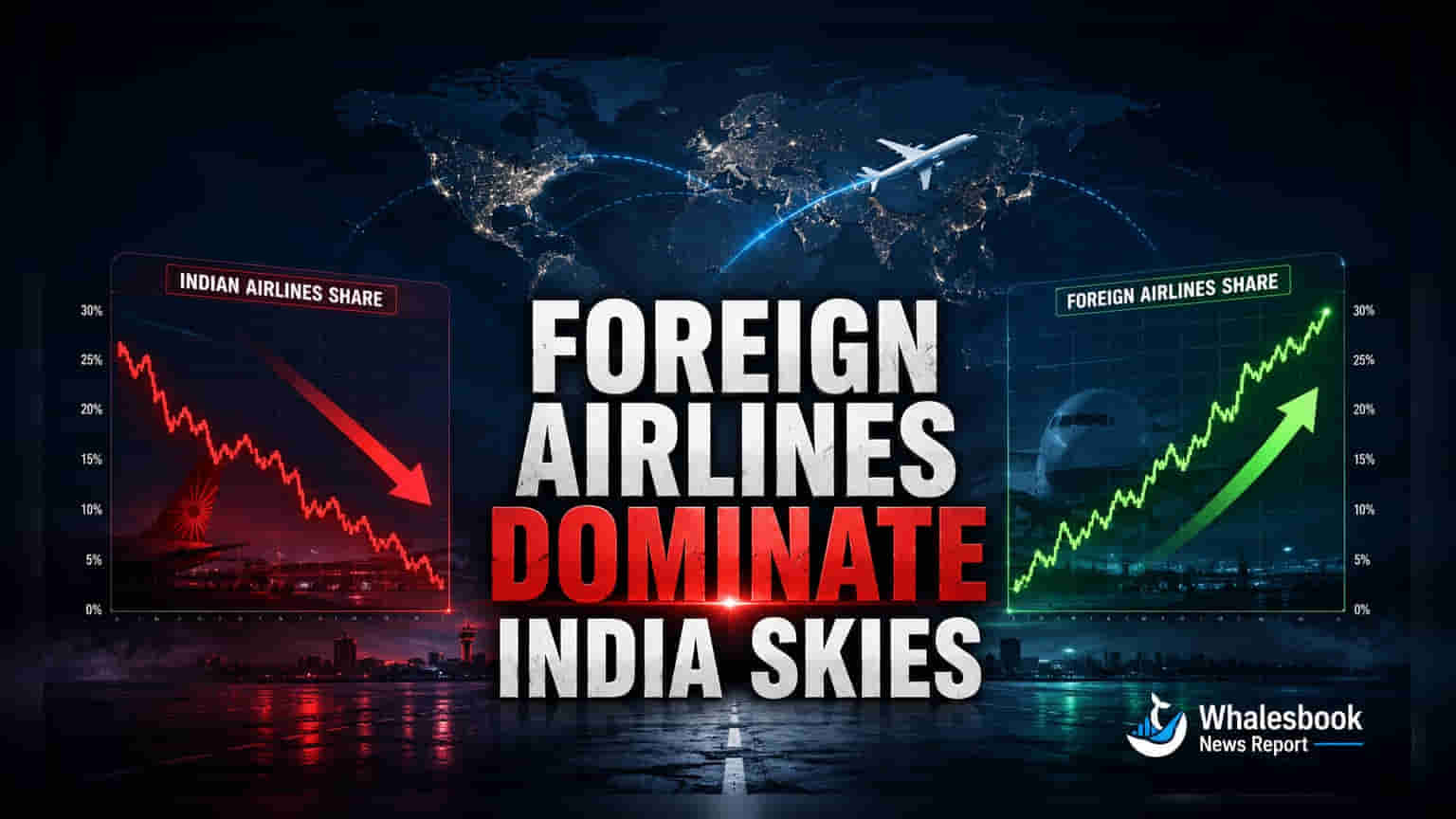


The Competitive Disconnect
The widening gap between domestic and international carrier market share signals a structural vulnerability that fleet expansion alone cannot fix. While Indian airlines have poured capital into wide-body orders and cabin upgrades to capture long-haul demand, the reliance on routes through West Asian corridors has become a strategic liability. The shift in market share to 57.6% for foreign operators reflects a divergence in operational resilience; while domestic airlines grapple with localized airspace constraints and regional conflict, Gulf-based carriers utilize established global hub-and-spoke models that effectively insulate their traffic flow from specific regional flare-ups.
The Operational Cost of Geography
Regional geopolitical volatility has fundamentally altered the economics of long-haul flights departing from India. Persistent Pakistani airspace restrictions, which have remained a constant operational drag since mid-2025, force domestic carriers to adopt circuitous flight paths. These diversions do more than simply increase fuel burn and pilot duty hours; they reduce the daily utilization rates of expensive aircraft assets. When juxtaposed with the six percent growth in passenger throughput seen by foreign competitors, it is clear that the premium on operational flexibility is currently favoring carriers with more diverse, less geographically constrained hub networks.
The Forensic Bear Case: Structural Overreach
The ambition to reclaim international market share faces a significant hurdle: the inherent inefficiency of the current domestic cost structure compared to established international flag carriers. Investors should note that Indian airlines are heavily leveraged to fund their growth, a strategy that requires high load factors and efficient aircraft rotation. As airspace restrictions persist, these companies risk a sustained margin compression, as they are forced to absorb higher fuel surcharges to remain competitive against foreign airlines that benefit from centralized, more efficient transit hubs. Furthermore, the reliance on the Gulf corridor creates a single point of failure that institutional investors have frequently highlighted as a risk factor, especially as regional instability shows few signs of abating in the short term.
Future Outlook and Sector Resilience
Moving forward, market participants remain focused on whether domestic carriers can diversify their route maps away from over-saturated West Asian paths. Analysts suggest that until there is a stabilization in regional airspace access or a successful pivot toward direct long-haul routes that bypass the traditional hub reliance, the current market share split is likely to persist. While long-term demand for Indian international travel remains robust, the ability of local carriers to translate that demand into bottom-line profitability remains contingent on their navigation of these external, non-controllable factors.