

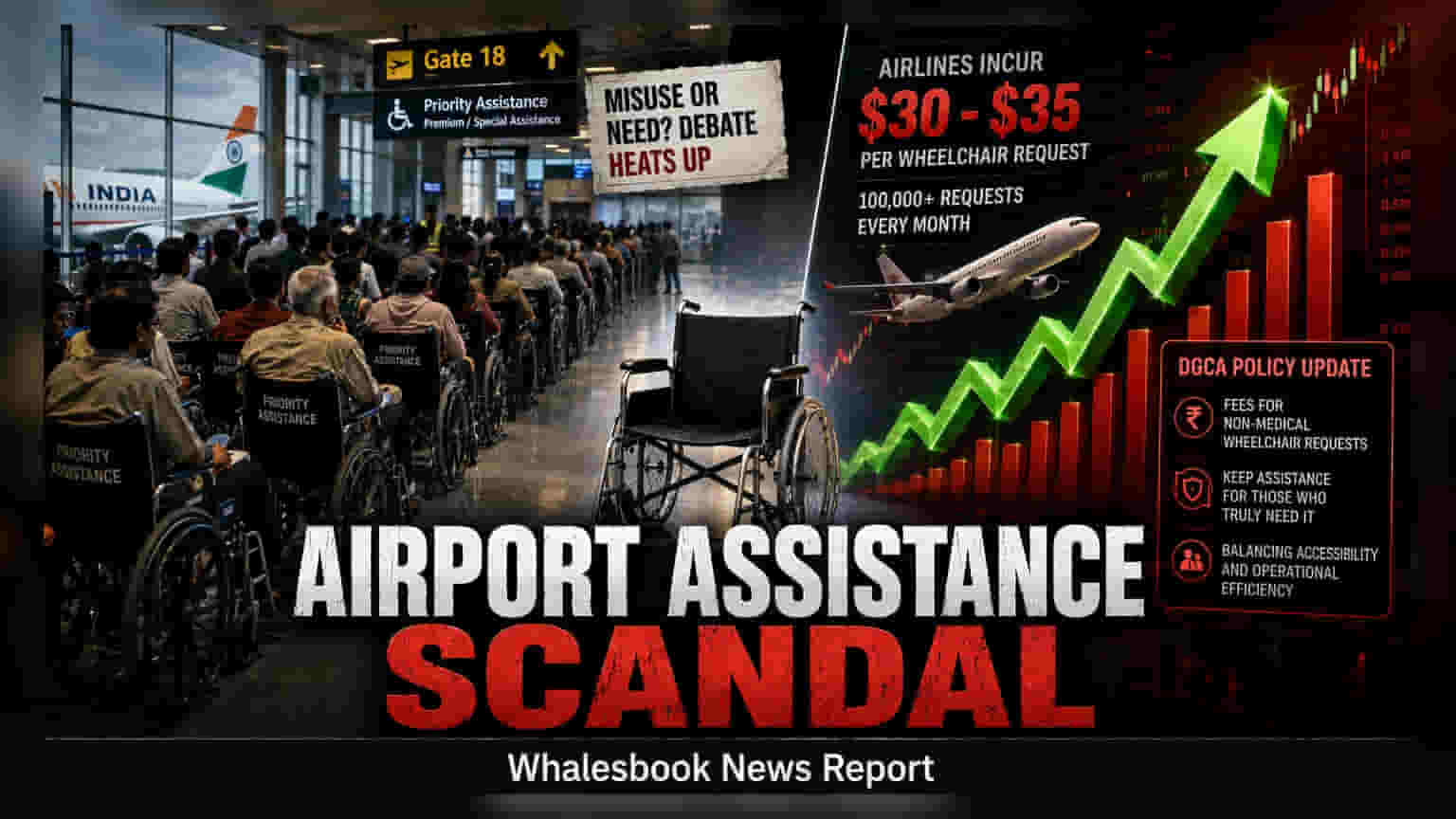
A viral photo of a long wheelchair queue on an India-bound flight has reignited the debate over the alleged misuse of airport assistance. In response to concerns, the DGCA now permits airlines to charge fees for non-medical wheelchair requests to deter potential abuse. This regulatory shift aims to preserve critical resources for passengers who genuinely require mobility support.
A widely shared image showing numerous passengers using wheelchairs on an India-bound flight has sparked a heated public discussion regarding the use of airport assistance services. While some travelers use these services to navigate complex airport procedures, avoid long walking distances, or overcome language barriers, the viral photo has intensified criticism that some passengers may be using the facility as a shortcut to bypass queues and gain faster access through security and boarding.
From an operational standpoint, the situation has become a significant concern for airlines. Industry data suggests that individual wheelchair requests can incur costs between $30 and $35 for airlines. With some carriers processing over 100,000 such requests every month, the logistical and financial strain is substantial. The primary concern is that a surge in demand from non-essential users might stretch available resources, potentially compromising the ability of airport staff to assist passengers with critical mobility issues during emergencies or standard transit.
To manage this rising demand and discourage non-essential usage, the Directorate General of Civil Aviation (DGCA) now permits airlines to levy fees for non-medical wheelchair requests. This policy change gives carriers the discretion to implement charges for services that are not backed by medical necessity. Prominent figures and industry observers have previously advocated for such measures, with some suggestions including fees of up to ₹5,000 per request to ensure that the service remains prioritized for those who truly need it.
However, the move toward charging fees presents a complex balance. While it may discourage the alleged 'hacking' of the system to skip queues, there are risks associated with implementation. Critics and advocacy groups point out that stricter medical requirements or high fees could inadvertently penalize elderly travelers, passengers with non-visible disabilities, or those who are not fluent in the local language and require assistance to navigate large international airports safely.
For investors and industry followers, the key monitorable will be how individual airlines decide to implement these guidelines. Future developments will likely include whether airlines introduce tiered assistance packages or standardized medical verification processes. The effectiveness of these measures in reducing operational costs without negatively impacting the accessibility of air travel for genuine passengers remains the critical factor for both airlines and airport operators.