

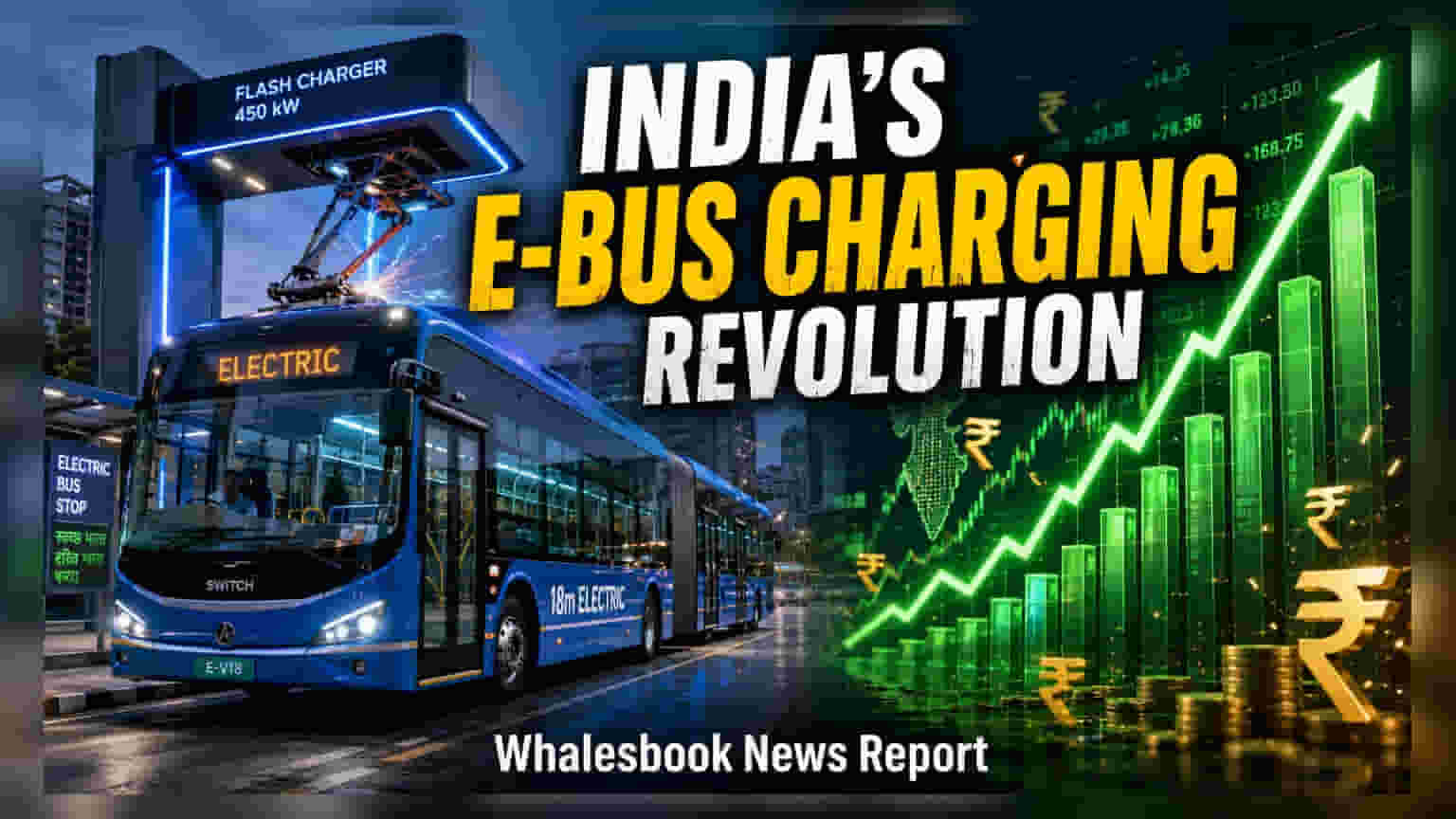
The government is evaluating pantograph-based 'flash charging' for 18-meter articulated electric buses to enable faster, near-continuous operations. While this tech could boost fleet efficiency, high infrastructure costs of ₹25-50 lakh per point pose a significant challenge. Investors should track how the government structures financing for these projects, which could shape the future order pipelines for major e-bus manufacturers.
The Indian government is actively considering the adoption of pantograph-based flash charging systems to support high-capacity electric buses. Led by the Ministry of Heavy Industries, recent high-level discussions included representatives from various key departments and NITI Aayog. The goal is to move beyond traditional depot charging, which often requires buses to stay idle for hours. Instead, this system uses overhead pantograph equipment at strategic locations to charge buses during brief operational stops.
The proposed model centers on 18-meter articulated buses, which can carry approximately 130 passengers. By enabling 'opportunity charging,' the system aims to keep these larger vehicles on the road for more hours per day. Theoretically, this shift could improve fleet utilization and allow for smaller, lighter battery packs, potentially reducing the overall vehicle weight. However, the move involves significant changes in how public transport infrastructure is funded and managed.
For investors, the primary concern lies in the economics of this transition. While conventional fast-charging stations cost between ₹7 lakh and ₹12 lakh, high-capacity 400-600 kW pantograph systems are significantly more expensive, estimated at ₹25-50 lakh per point. This does not account for the additional costs of grid upgrades required to handle such heavy power loads. Furthermore, the specialized 18-meter buses themselves command a price tag of ₹2 crore to ₹3.5 crore, which is notably higher than the standard 12-meter buses currently common in Indian cities.
The government is currently reviewing financing frameworks, including public-private partnerships and central support, to bridge this cost gap. The viability of these projects will likely depend on these financial mechanisms. If the upfront costs remain high without sufficient support, it could pressure the margins of bus manufacturers.
The Indian e-bus market is currently dominated by players such as Tata Motors, Olectra Greentech, JBM Auto, and Ashok Leyland through its subsidiary Switch Mobility. These companies are already competing in government tenders under schemes like PM E-DRIVE and PM e-Bus Sewa. The introduction of pantograph-based high-capacity buses could create a new niche in the market. However, the sector is already facing pressure from aggressive bidding, where firms have quoted low prices to win tenders. Investors should watch whether this new technology leads to more sustainable contract structures or further intensifies competition.
The immediate next steps for the market involve the announcement of a formal procurement program or financing framework. Investors should monitor future government tenders for clauses regarding pantograph infrastructure and whether these projects attract significant capital expenditure commitments from the participating companies.