 Whalesbook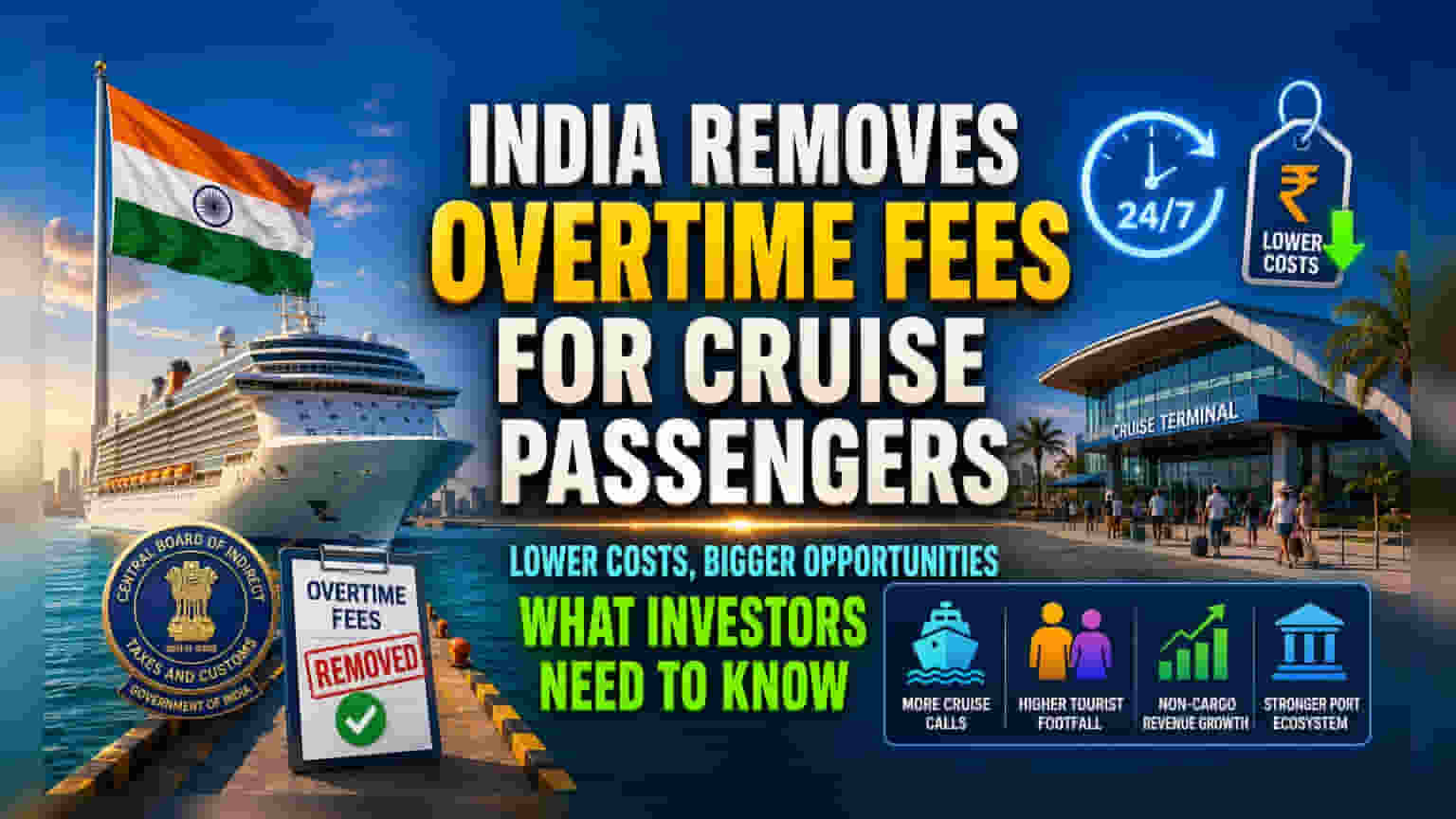
The government has removed customs overtime charges for international cruise passengers to lower operational costs at major ports. This policy shift aims to make Indian destinations more attractive for global cruise lines. For investors, this represents a minor positive for maritime and port operators by improving service competitiveness, though cruise business remains a small part of overall port revenue compared to cargo operations.
What Happened
The Indian government, through a notification by the Central Board of Indirect Taxes and Customs (CBIC), has removed overtime fees charged by customs officials for processing international cruise passengers. Previously, port operators and cruise lines had to pay additional levies if customs clearance occurred outside of standard working hours. By making these services available around the clock at designated ports without the extra cost, the government aims to reduce the operational expenses for cruise companies docking in India.
Why This Matters For Investors
For major port operators and maritime infrastructure companies, this move is a small but helpful step toward improving the 'ease of doing business.' While cruise tourism does not typically form the bulk of revenue for large commercial ports—which rely heavily on container, coal, and oil cargo—the policy reduces administrative hurdles. For cruise lines, lower port charges mean India becomes a more cost-effective stop on their routes. Investors may view this as part of a broader government effort to support the tourism and maritime sectors, though the immediate financial impact on the balance sheets of listed port companies is expected to be modest.
The Bigger Business Context
Cruise tourism is often a diversification strategy for major ports rather than a primary revenue driver. Companies like Adani Ports and various state-run port authorities manage the infrastructure where these ships dock. The profitability of cruise operations depends more on passenger volume, port tariffs, and the availability of world-class facilities rather than just the removal of overtime fees. While this change is a positive step to attract more ships, the long-term benefit for investors depends on whether these ports can upgrade their terminals to handle higher passenger footfalls and offer a premium experience that global tourists expect.
What Could Go Wrong
Investors should keep in mind that the cruise industry in India faces several challenges that a single fee waiver cannot fix. Port infrastructure remains a bottleneck in some locations, with limited deep-draft berths or modern passenger terminals. Furthermore, cruise demand is highly seasonal and sensitive to global economic conditions. If the domestic tourism sector does not see a significant rise in international interest, the waiver may have a limited effect on total port revenues. The reliance on foreign cruise operators means the business is also susceptible to global shipping trends, geopolitical events, and competition from other regional cruise hubs in Southeast Asia or the Middle East, which may offer similar or better infrastructure.
What Investors Should Track
For those monitoring the sector, the key will be to track whether this policy leads to a tangible increase in the number of cruise ships calling at Indian ports over the next few quarters. Investors may watch management commentary from port operators regarding new tie-ups with cruise lines or investments in passenger terminal infrastructure. The focus should remain on whether the company can increase its non-cargo revenue streams, of which cruise services are a small part, and whether the overall port efficiency improves to support long-term traffic growth.

