

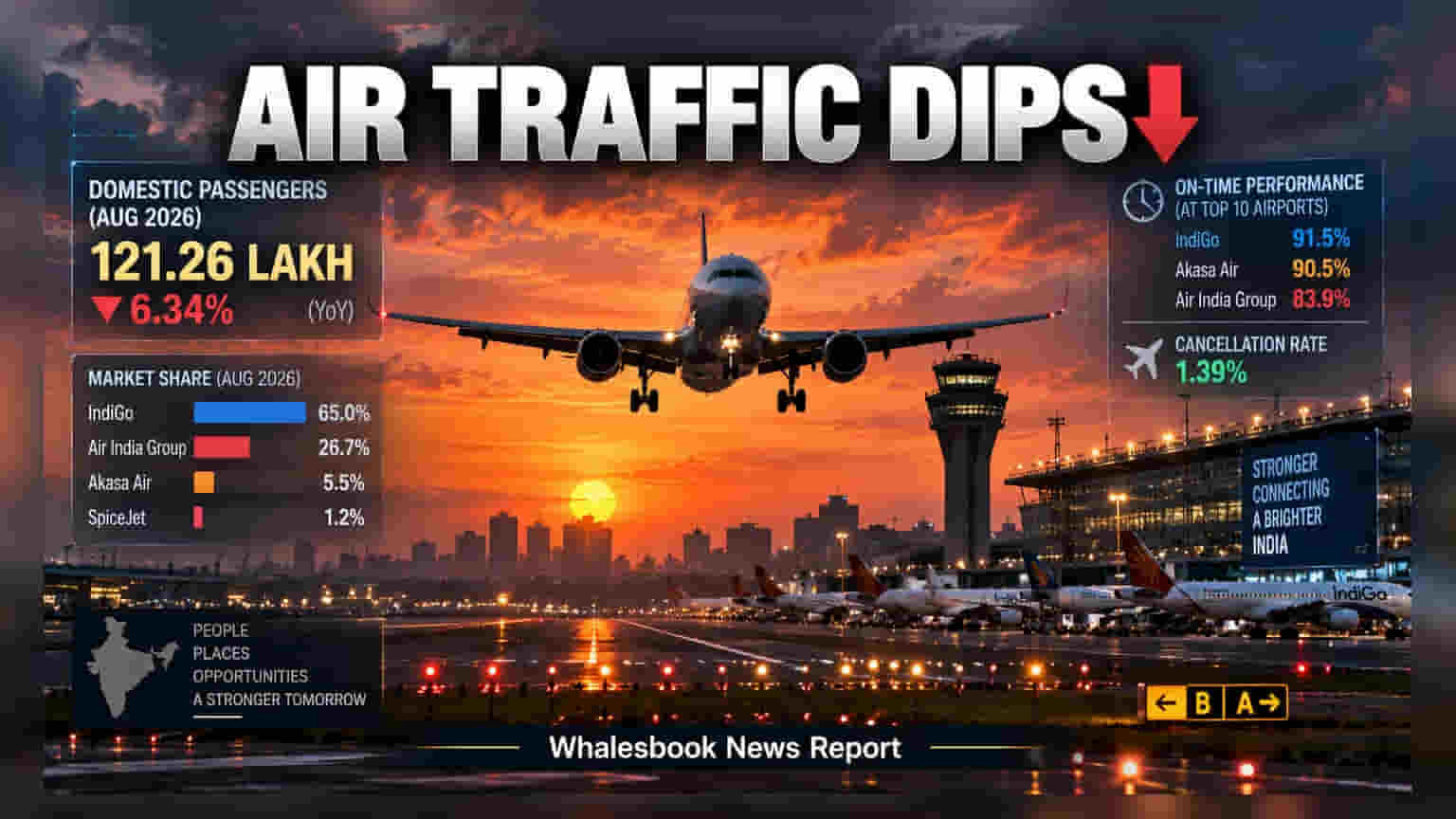
Domestic air passenger traffic in India fell by 6.34% to 121.26 lakh in August 2026. As the sector faces a cooling demand cycle, the Air India Group has captured more market share, while IndiGo’s lead moderated and smaller carriers like SpiceJet saw their presence decline further.
The Indian aviation sector experienced a noticeable slowdown in August 2026, with domestic passenger numbers falling to 121.26 lakh. This represents a 6.34% decline compared to the same month last year. According to the latest data released by the Directorate General of Civil Aviation (DGCA), the cumulative traffic for the first eight months of 2026 stands at 1,105.30 lakh, a slight contraction from the 1,107.26 lakh recorded in the same period of 2025.
Market Share Realignment
The competitive landscape among major airlines saw notable shifts during the month. IndiGo, while retaining its status as the market leader, saw its share dip to 65% in August from 67.4% in July. In contrast, the Air India Group continued its push to capture more passengers, rising to a 26.7% market share, an increase of 2.7 percentage points over the previous month.
For smaller players, the environment remains difficult. SpiceJet saw its market presence slip further to 1.2% in August, down from 1.6% in July, reflecting ongoing operational and financial constraints. Akasa Air remained consistent, maintaining its 5.5% market share during the same period.
Operational Efficiency Amid Softer Demand
Despite the decline in total passenger volume, airlines maintained high standards of operational reliability. IndiGo led the industry in On-Time Performance (OTP) at the ten major airports with a 91.5% success rate. Akasa Air followed closely at 90.5%, while the Air India Group reported an OTP of 83.9%. The industry-wide cancellation rate for scheduled domestic flights remained low at 1.39%, suggesting that carriers are prioritizing schedule stability even as demand moderates.
Investor Context and Outlook
The 6.34% drop in August traffic is a signal of a cooling cycle in domestic air travel. For investors, this trend is a key monitorable to assess whether the decline is a temporary seasonal dip or a sign of reduced consumer discretionary spending. In a softer demand environment, airlines face pressure to manage profit margins, as they may have to balance pricing power against the need to maintain load factors.
Looking ahead, the market will likely track how these major carriers adjust their capacity and pricing strategies to navigate the current demand environment. Investors should monitor quarterly performance updates for signs of how yield—the average fare paid per passenger—is holding up across the sector. Additionally, the continued consolidation of market share by the Air India Group and the struggles of smaller carriers like SpiceJet remain critical factors to watch, as they define the competitive structure of the Indian aviation industry.