

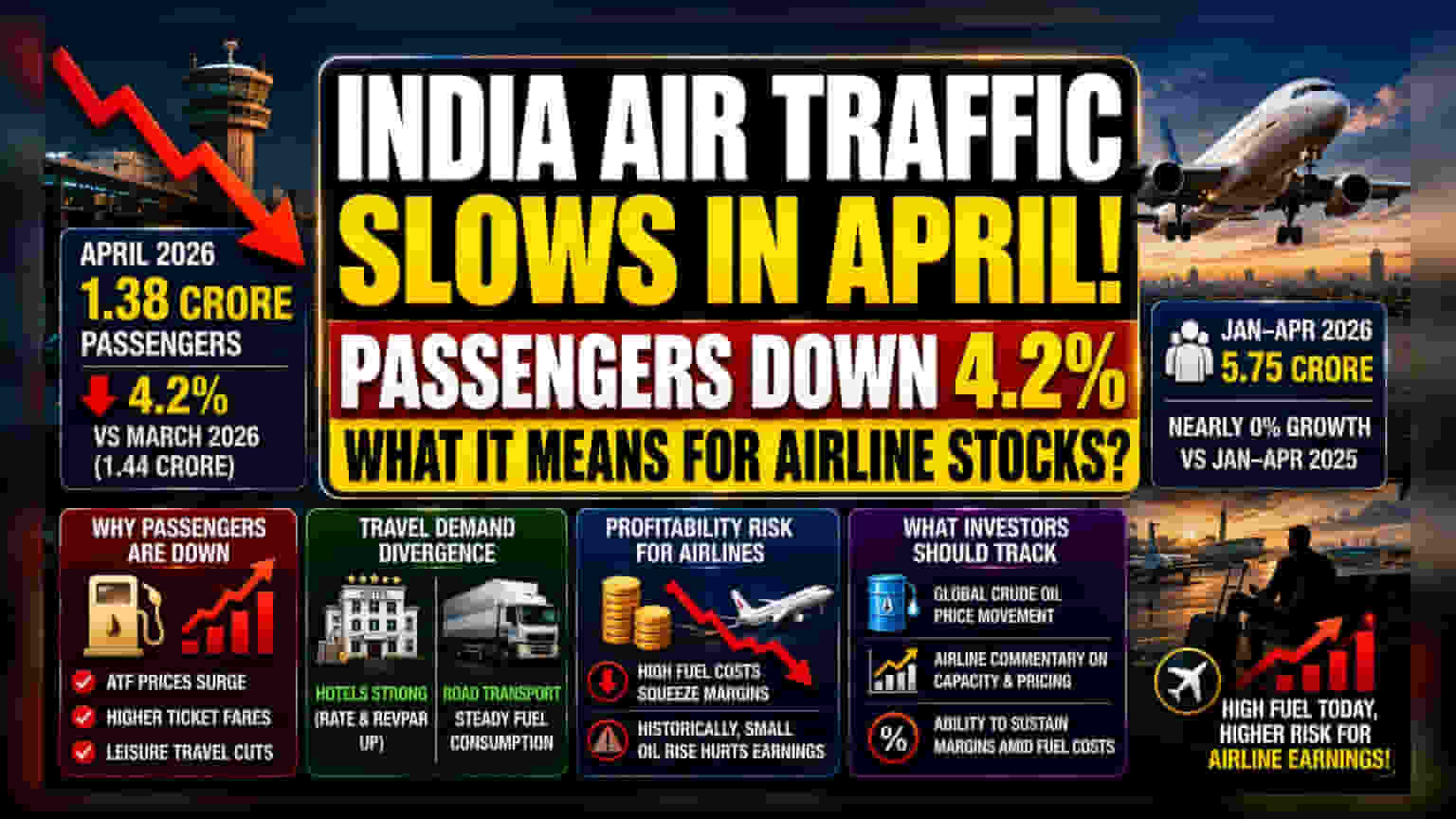
India’s domestic air passenger traffic fell 4.2% to 1.38 crore in April 2026, marking a continued slowdown. Rising jet fuel costs have pushed airfares higher, leading to a dip in demand. Investors are closely watching how these higher operational costs may impact the profit margins of airline companies.
What Happened
India’s domestic air passenger traffic slowed down in April 2026, with airlines transporting approximately 1.38 crore passengers. This is a 4.2% decline from the 1.44 crore passengers recorded in March 2026. The data, released by the Directorate General of Civil Aviation, shows that the year-on-year growth has stalled significantly. Cumulative traffic for the first four months of 2026 (January to April) stood at 5.75 crore, showing nearly zero growth compared to the same period in 2025.
Why High Fuel Costs Matter
The decline in passenger numbers is directly linked to rising operational expenses for airlines. Aviation Turbine Fuel (ATF) costs have surged due to higher global crude oil prices, even with government excise duty adjustments. When airlines face high fuel costs, they often pass these expenses to consumers through higher ticket prices. Because air travel is a discretionary expense, many passengers are choosing to cut back on leisure trips when fares rise.
Divergence In Travel Demand
While the aviation sector is facing a slowdown, other parts of India's travel and hospitality industry remain resilient. Hotels have seen a rebound in room rates and revenue per available room, driven by corporate travel and wedding season demand. Similarly, the road transport sector continues to report steady fuel consumption for petrol and diesel. This suggests that the current weakness in air travel is more related to the specific cost structure of airlines rather than a total decline in consumer mobility.
The Profitability Risk For Airlines
For investors, the direct correlation between oil prices and airline earnings is a critical area to monitor. High fuel prices squeeze operating margins, as airlines struggle to balance ticket pricing to maintain demand while covering costs. Historical data suggests that even small increases in crude oil prices can significantly impact the earnings of major Indian carriers. If fuel prices remain elevated, airlines may face continued pressure on their bottom lines, making cost management a key factor for the coming quarters.
What Investors Should Track
Investors may monitor a few specific indicators in the coming months. First, any further movement in global crude oil prices will directly influence future jet fuel costs. Second, airline companies will provide commentary in their quarterly reports on how they are managing capacity and ticket pricing in response to the softening demand. Finally, the ability of airlines to sustain their margins while managing these fuel-linked challenges will be a primary focus for shareholders.