

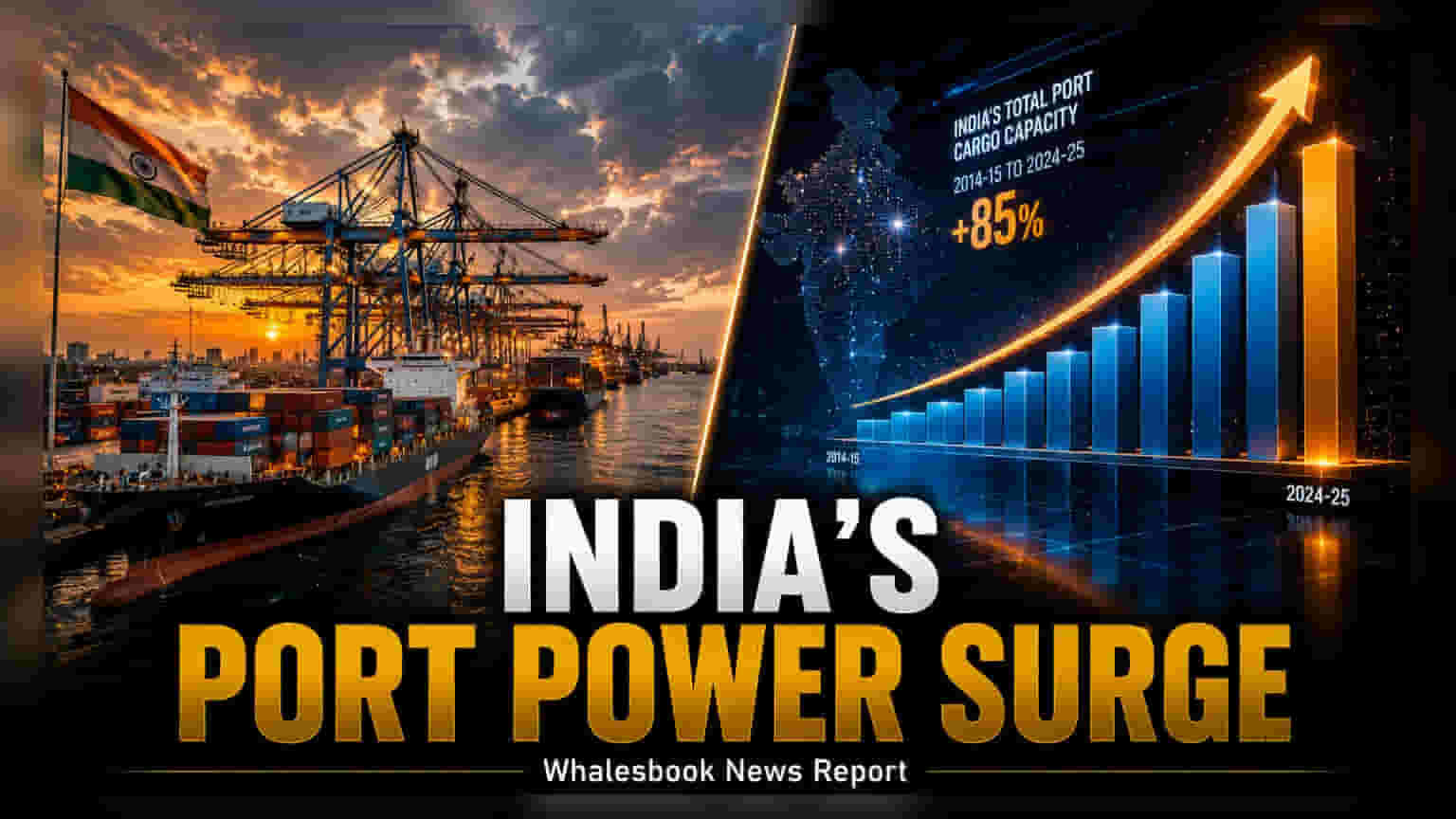
India has finalized 75 infrastructure projects under the PM Gati Shakti plan to boost maritime efficiency. These upgrades have raised major port cargo capacity to 1,728 million tonnes per annum. The developments aim to lower logistics costs and improve multimodal connectivity for trade.
Detailed Coverage
India has achieved a significant milestone in its maritime logistics sector with the completion of 75 infrastructure projects under the PM Gati Shakti National Master Plan. These initiatives, which involved a total investment of ₹31,967 crore, were executed by major ports, State Maritime Boards, and various Union Territories. This development is part of a broader push to modernize India’s supply chain and reduce the country's relatively high logistics costs, which have historically impacted the competitiveness of Indian exports.
Expanding Trade and Logistics Capacity
The impact of these completed projects is visible in the increased cargo handling capacity of India’s major ports, which reached 1,728 million tonnes per annum (MTPA) by March 2026. This expansion was achieved through a mix of berth mechanization, which speeds up the loading and unloading of ships, and capital dredging, which allows larger vessels to dock at ports. These improvements are critical for handling higher trade volumes and reducing the turnaround time for ships, which directly affects the efficiency of manufacturing and commodity sectors that rely on maritime transport.
Beyond the Gati Shakti framework, the government has also finalized 25 additional projects worth ₹1,178.5 crore under the Sagarmala Programme, focusing specifically on coastal shipping and inland waterways. Furthermore, out of 294 identified gaps in road and rail connectivity, 84 projects have been completed to ensure seamless movement of goods from ports to inland markets. This is a vital development for companies in sectors like steel, cement, and coal, which depend on these logistics links to manage raw material costs and distribution efficiency.
Sustainability and Future Requirements
Alongside capacity expansion, the Ministry of Ports, Shipping and Waterways is implementing the Harit Sagar Green Port Guidelines to modernize operations. This includes the Green Tug Transition Programme, which aims to shift tugboat fleets toward electric and hybrid power, and the installation of Onshore Power Supply systems, allowing ships to use electricity instead of diesel generators while docked. These initiatives are designed to help ports meet stricter environmental standards, which are increasingly important for global trade compliance.
The next phase for investors and industry stakeholders will be to monitor the utilization levels of this new capacity. While the infrastructure is now in place, the actual economic benefit will depend on whether domestic and global trade demand remains strong enough to fully use these expanded facilities. Future updates will likely center on the execution speed of the remaining 100-plus projects planned under the initial ₹1.09 lakh crore investment roadmap.