
Domestic Flights Get Fuel Price Shield, International Flights Don't
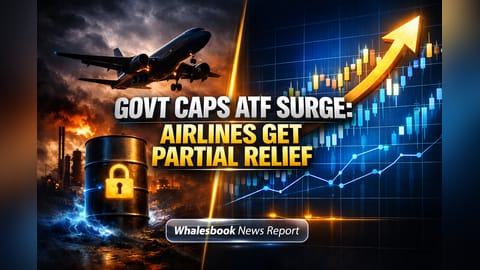
India's Ministry of Petroleum and Natural Gas, working with the Ministry of Civil Aviation, has capped price increases for Aviation Turbine Fuel (ATF) for domestic airlines. This decision follows disruptions at the Strait of Hormuz, which have sent global fuel prices soaring by over 100%. Effective April 1, 2026, domestic carriers will see ATF price hikes limited to 25%. This aims to keep domestic airfares from spiking due to extreme global price swings. As of April 1, 2026, ATF prices in Delhi reached ₹1,04,927 per kilolitre. However, this price cap does not apply to international flight operations, which must pay the full market rate. This creates a split in fuel costs for airlines operating both types of routes. Global jet fuel prices have more than doubled in four weeks, with Brent crude oil peaking at $126 per barrel in March 2026.
Aviation Sector Faces Mounting Pressures and Losses
The Indian aviation industry is under severe pressure from rising costs. Rating agency ICRA has downgraded its outlook for the sector to "Negative." This is due to worsening geopolitical tensions, a falling Indian rupee, and surging ATF prices. Domestic passenger traffic growth for fiscal year 2026 is now expected to be only 0-3%, a significant drop from earlier forecasts, while international traffic is projected to grow 7-9%. The industry is predicted to face net losses between ₹17,000 crore and ₹18,000 crore in FY2026. Fuel costs account for 30-40% of operating expenses, and 35-50% of other costs are paid in US dollars. This makes airlines highly vulnerable to currency drops and global price shocks. Compounding these issues, about 13-15% of airline fleets are grounded due to supply chain and engine problems, hindering operations.
Price Disparity Adds to Airline Woes
While the government's fuel price cap offers some relief for domestic flights, the difference between domestic and international ATF costs creates new challenges. Airlines with extensive international routes will face higher fuel expenses per litre than those focused only on domestic travel, potentially widening the competitive divide. The ongoing disruption at the Strait of Hormuz, a key route for about 20% of global oil, has caused the biggest energy supply shock since the 1970s. Global jet fuel prices have doubled in just four weeks. This price volatility squeezes airline profits, especially for carriers like SpiceJet. SpiceJet has weaker financial resilience and limited fuel hedging, covering only about 15% of its needs. The sector’s reliance on dollar-based costs means a weaker rupee further hurts profits. With analyst forecasts turning negative and large projected losses, further geopolitical escalation could force airlines into aggressive cost cuts, such as cancelling flights or raising fares, which might hurt already fragile demand. Airlines are discussing with oil companies ways to cap the "crack spread" — a part of ATF pricing — to prevent extreme cost spikes and further financial damage.
Outlook Remains Uncertain Amid Volatility
The Indian aviation sector faces a period of high uncertainty, shaped by volatile global energy prices and ongoing geopolitical tensions. ICRA expects domestic traffic to grow slowly at 0-3% for FY2026, with international traffic at 7-9%. How well airlines can pass on higher fuel costs to passengers through fares will be crucial, though this risks slowing down demand in a price-sensitive market. Airlines will likely adjust capacity, and there's a focus on potential changes to ATF pricing models, such as capping the crack spread. Market leader IndiGo, with its strong operations and finances, seems better equipped to handle these challenges than its more financially strained competitors.