 Whalesbook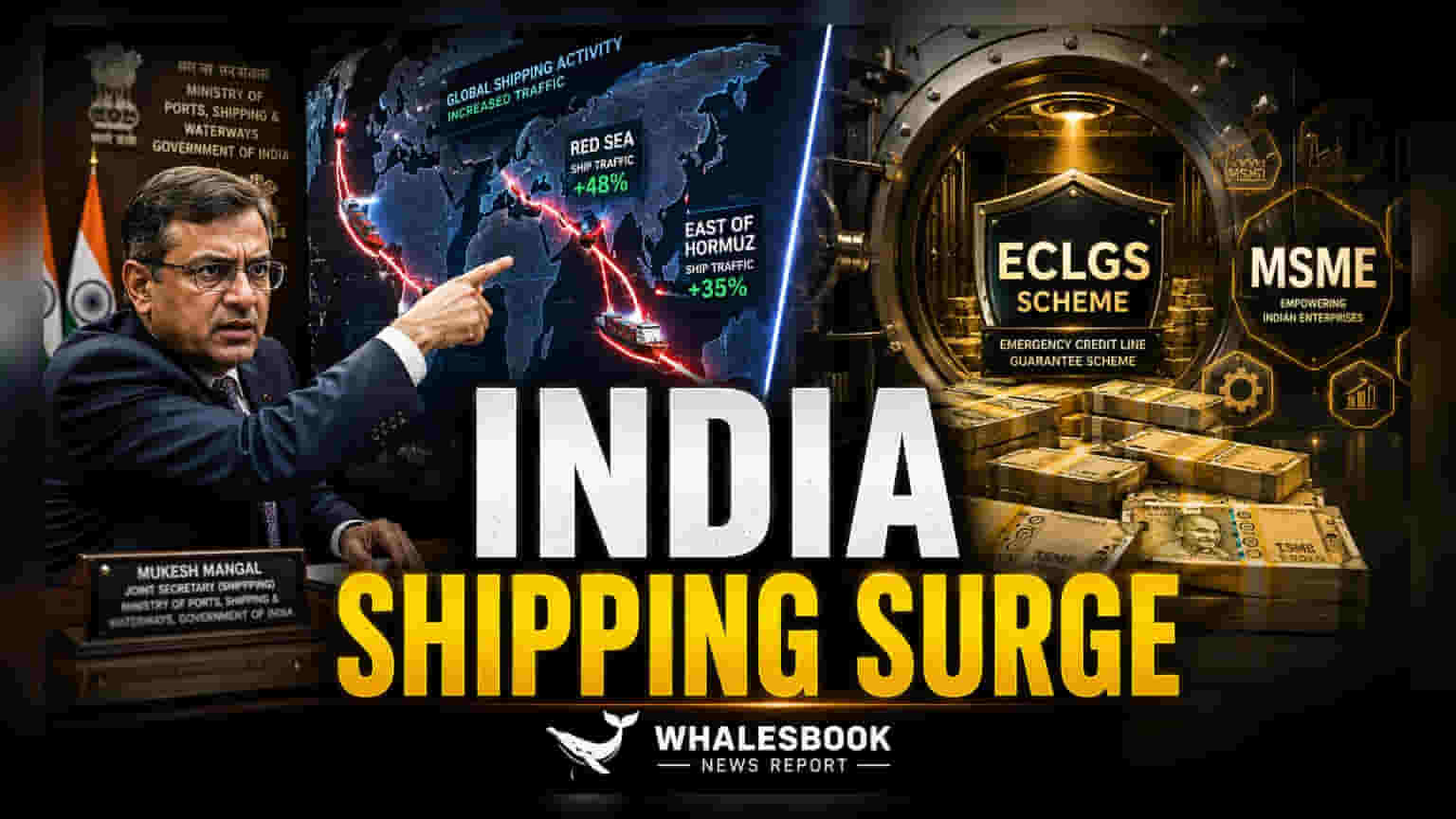


The Strategic Maritime Expansion
The rapid acceleration of maritime connectivity through the Red Sea and East of Hormuz corridors represents a calculated pivot to bypass logistical bottlenecks caused by persistent West Asian regional volatility. By scaling service frequency from 127 monthly sailings in February to roughly 250 by May, the Ministry of Ports, Shipping, and Waterways is prioritizing trade continuity over cost-efficiency. This surge in throughput capacity aims to mitigate the risk of supply chain fragmentation that has historically penalized emerging market exports during periods of heightened military tension in the Suez transit zone.
Sovereign Backing as a Risk Buffer
The introduction of the Bharat Maritime Insurance Pool marks a departure from reliance on international Protection and Indemnity (P&I) clubs that have increasingly factored war-risk premiums into their pricing structures. With ₹12,980 crore in sovereign guarantees, the pool effectively socializes the operational risks inherent in navigating high-tension maritime corridors. While the issuance of 26 initial policies suggests a measured adoption phase, the facility is designed to prevent the total withdrawal of commercial shipping lines from key trade routes. By providing localized coverage for Hull, Machinery, and War risks, the state is insulating domestic trade flows from the sudden volatility spikes typically seen in private reinsurance markets.
The MSME Credit Crunch vs. Policy Support
The efficacy of these maritime efforts is tethered to the financial health of the export-oriented MSME sector, which remains the primary beneficiary of the latest Emergency Credit Line Guarantee Scheme iteration. Despite the allocation of ₹35,194 crore in sanctioned credit, the sheer volume of applications—exceeding ₹1.71 lakh crore—suggests deep-seated liquidity stress rather than mere capital expenditure demand. The administrative focus on ensuring these credit facilities do not translate into future non-performing assets reveals a fragile balancing act; the government is simultaneously underwriting maritime logistics risk and subsidizing the working capital of smaller firms susceptible to global supply shocks.
Structural Risks and Financial Stability
Critics argue that heavy reliance on sovereign-backed insurance pools may eventually distort market-based risk pricing. If regional tensions persist, the potential for claims could outpace the capitalized reserves of the new insurance pool, necessitating further budgetary outlays. Furthermore, the reliance on state-mandated credit schemes to sustain MSME output creates a hidden dependency loop. If shipping insurance premiums rise globally due to persistent geopolitical friction, Indian exporters may find that logistical insurance support is insufficient to offset the broader rise in freight costs and import inflation. The long-term solvency of this model depends on the ability of domestic manufacturers to absorb external shocks without permanent access to subsidized debt.