

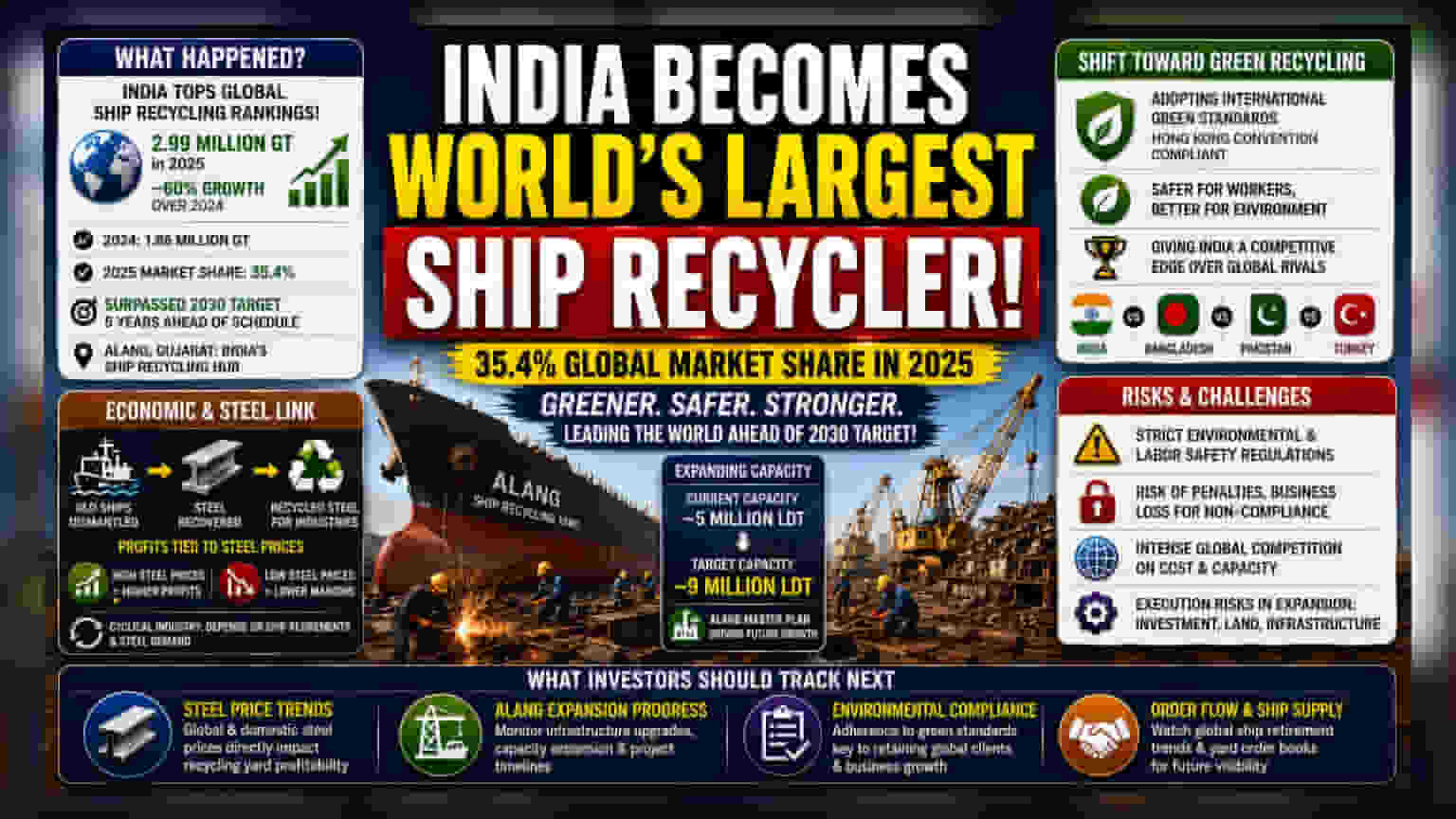
India has emerged as the global leader in ship recycling, processing 2.99 million gross tons in 2025. With plans to double capacity at the Alang yard, the sector is shifting toward more sustainable practices. Investors should balance this growth potential with risks related to environmental regulations, volatile steel prices, and global competition.
What Happened
India has officially become the world's largest ship recycling nation, according to recent data from the United Nations Conference on Trade and Development (UNCTAD). The country recorded a recycling volume of 2.99 million gross tons (GT) in 2025, marking a nearly 60% increase from the 1.86 million GT recorded in 2024. This growth has helped India secure a 35.4% share of the global ship recycling market, surpassing its 2030 target well ahead of schedule. The government now plans to nearly double the nation's recycling capacity to approximately 9 million light displacement tons (LDT), with the Alang Ship Recycling Yard in Gujarat acting as the primary hub for this expansion.
The Shift Toward Sustainable Recycling
For years, the global ship recycling industry faced criticism over safety and environmental concerns, particularly in South Asia. India’s recent ascent is partly attributed to its shift toward "green" or safe recycling practices. By adopting international standards, such as the Hong Kong International Convention for the Safe and Environmentally Sound Recycling of Ships, Indian yards have become more attractive to global shipowners. This shift is a strategic move to differentiate India from competitors in Bangladesh, Pakistan, and Turkey, who also dominate the shipbreaking landscape. The government’s master plan for Alang aims to modernize infrastructure to maintain this competitive edge.
The Economic And Steel Link
The ship recycling industry is essentially a metal recovery business. The ships are dismantled to extract steel, which is then recycled and sold for construction and manufacturing use. Consequently, the profitability of Indian ship recycling yards is closely tied to global and domestic steel prices. When steel prices are high, ship recycling becomes a lucrative activity. Conversely, a drop in steel prices can pressure profit margins for recycling yards. Investors should view this industry as cyclical, as it depends heavily on the volume of ships being retired by global shipping companies and the prevailing demand for scrap steel.
Risks And Challenges
While the industry is expanding, it faces significant risks. The sector is highly sensitive to environmental and labor safety regulations. Any lapse in safety or environmental norms can lead to regulatory action or loss of business from international shipping lines that prioritize green recycling. Furthermore, the industry operates in a competitive environment where other nations may lower costs to capture market share. There is also the challenge of execution risk regarding the proposed expansion. Upgrading infrastructure at Alang requires significant investment and land management, which can face delays or cost increases.
What To Track Next
Investors tracking this space should watch for two main factors. First, keep an eye on domestic and global steel price trends, as they directly impact the revenue of recycling yards. Second, monitor the progress of the Alang infrastructure expansion. The timeline for capacity upgrades and the ability of the yards to maintain high environmental compliance standards will determine if India can sustain its leadership position in the global market.