

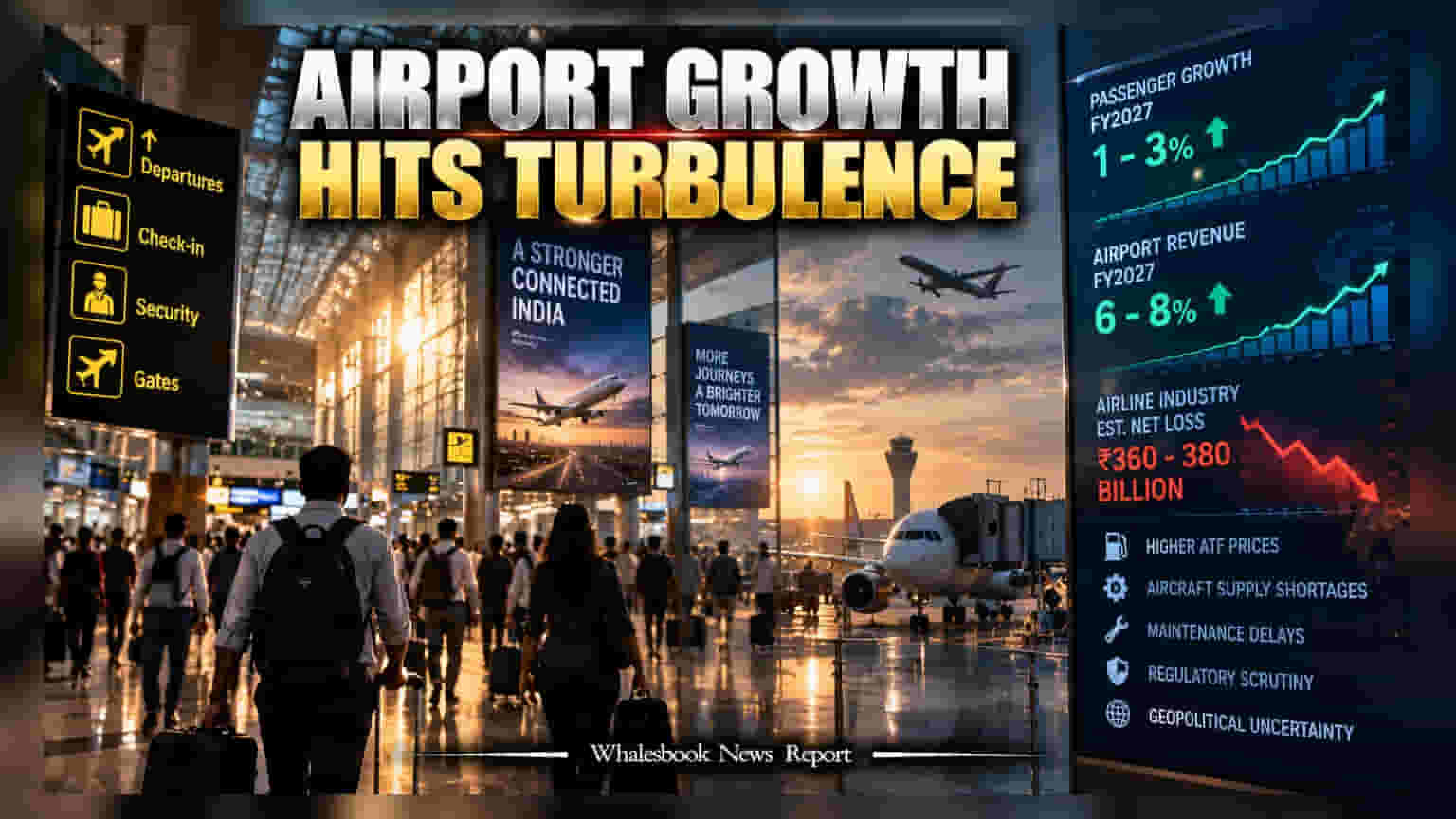
India's aviation sector faces a cooling period, with passenger traffic growth expected to slow to 1-3% in FY2027. While airport operators rely on tariff hikes and non-aviation income to boost revenue, the airline industry is struggling with heavy losses, high fuel costs, and increased regulatory scrutiny.
The Indian aviation sector is entering a phase of caution as growth projections for passenger traffic in FY2027 have been revised downward to a modest 1-3%. This expects total passenger volume to reach approximately 424-432 million, showing only a slight increase from the previous year. This deceleration marks a shift from the rapid expansion the industry experienced in recent years, as the sector struggles to maintain momentum.
While the number of travelers is not growing quickly, airport operators are finding ways to protect their financial health. Revenue for airport companies is still expected to climb by 6-8% in FY2027. This disconnect between stagnant traffic and rising revenue is largely supported by two factors: revisions in airport fees and an increased focus on non-aeronautical income. By leaning on retail, commercial property development, and other services at transit hubs, airport operators are insulating their balance sheets from the slowdown in actual flight passenger numbers.
However, the broader airline industry is under significant financial pressure. Industry estimates suggest that airlines may face net losses between Rs 360 billion and Rs 380 billion for the fiscal year. This financial strain is worsened by several external and operational hurdles. Geopolitical tensions in West Asia continue to disrupt international routes and create volatility in global markets. Additionally, elevated aviation turbine fuel (ATF) prices, aircraft supply shortages, and maintenance delays are limiting the capacity of airlines to fly more frequently.
Operational risks have also drawn attention from regulators. Recent safety audits by the Directorate General of Civil Aviation (DGCA) have flagged serious concerns across several leading carriers, including IndiGo, Air India, Akasa Air, and SpiceJet. These regulatory findings may lead to higher compliance costs or operational restrictions, adding another layer of difficulty for airlines already managing thin profit margins.
Despite these immediate challenges, the long-term infrastructure plans for the Indian aviation ecosystem remain unchanged. Approximately Rs 1 lakh crore is planned for investment in airport projects over the next five years. This capital spending is aimed at developing greenfield airports and expanding existing facilities, reflecting confidence that the current turbulence is a temporary cycle rather than a permanent trend.
For investors and market participants, the focus in the coming months will be on how airlines manage these mounting losses and whether passenger demand picks up in the later quarters of the fiscal year. Monitoring regulatory updates from the DGCA and tracking fuel price volatility will be essential to understanding the near-term health of the sector.