

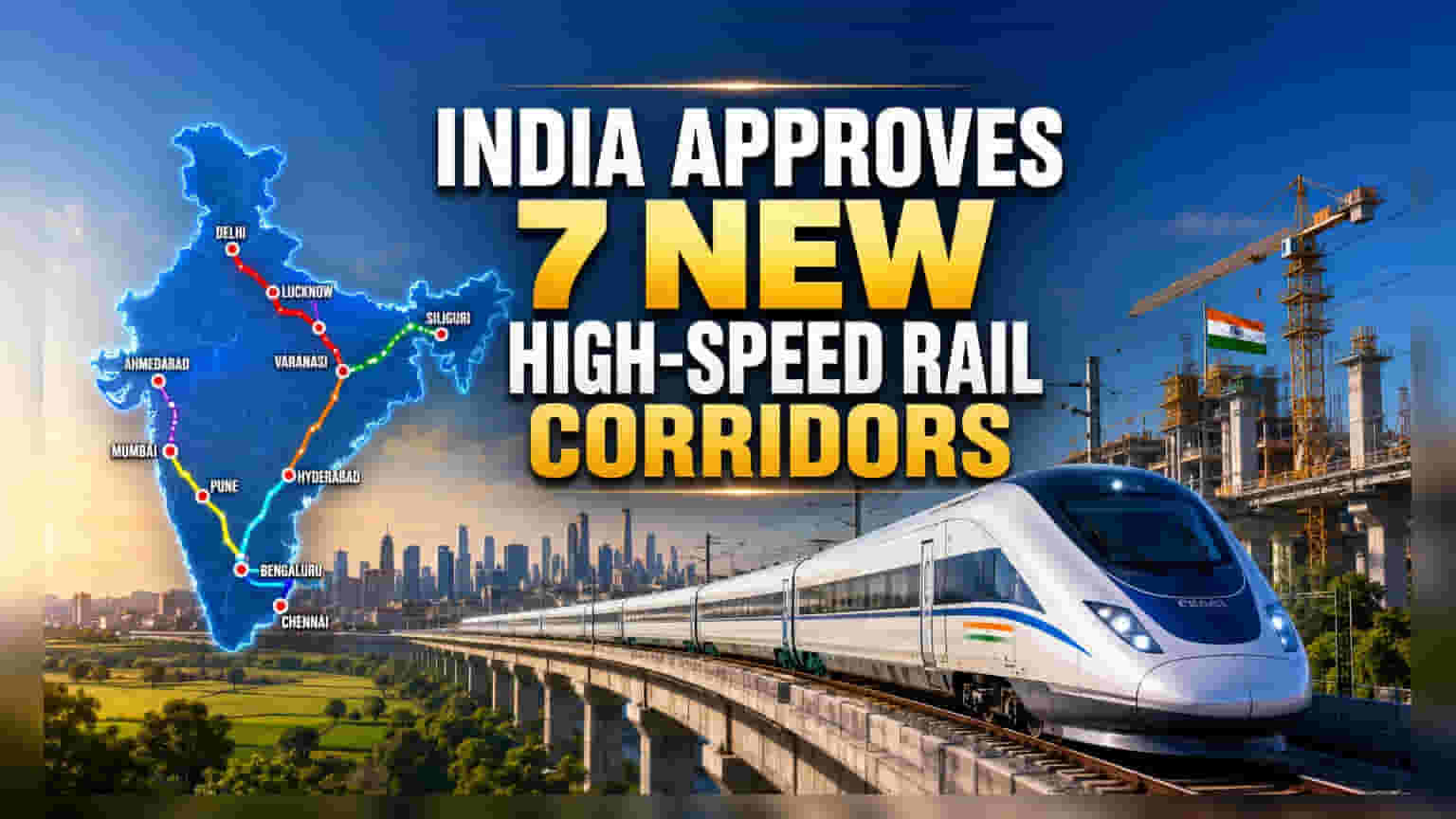
The government has approved seven new high-speed rail corridors connecting major cities across India, including Mumbai, Delhi, Bengaluru, and Chennai. This infrastructure expansion signals a long-term capital spending push for the railway sector. Investors may track potential order inflows for construction, engineering, and rolling stock firms, alongside execution risks such as land acquisition and financing challenges common in large-scale infrastructure projects.
What Happened
The Indian government has officially approved the development of seven new high-speed rail (HSR) corridors. This decision marks a significant step in the national effort to upgrade railway infrastructure, reduce intercity travel times, and improve connectivity. The approved network includes key routes such as Mumbai to Ahmedabad and Pune, Bengaluru to Chennai and Hyderabad, and a northern network linking Delhi to Lucknow, Varanasi, and eventually Siliguri. These projects are intended to act as catalysts for regional economic integration by drastically cutting travel times between major industrial and urban hubs.
The Infrastructure Investment Cycle
For stock market investors, these projects represent a massive, multi-year capital spending cycle. Large infrastructure projects typically create business opportunities across the entire supply chain. Companies involved in Engineering, Procurement, and Construction (EPC), civil works, signaling systems, electrical components, and rolling stock manufacturing often see long-term revenue visibility from such government initiatives.
While the government has not allocated specific individual contract values for these new routes yet, the scale of such corridors—similar to the ongoing Mumbai-Ahmedabad project—suggests that the total capital requirement will be substantial. The market often views such announcements as a tailwind for companies that specialize in heavy construction, bridge building, and rail-specific technology.
Execution And Funding Risks
Large-scale rail projects in India carry inherent risks that investors should understand. The most common challenges include land acquisition difficulties, which can lead to project delays and cost overruns. Furthermore, high-speed rail requires advanced technology, often involving foreign collaborations or high-value imports, which can influence project costs and timelines.
Another point for investors to consider is the funding model. These projects are capital-intensive. Whether the funding comes primarily through government budget allocations, multilateral loans, or public-private partnerships will influence the financial impact on the national exchequer and, by extension, the broader economic sentiment. Historically, projects of this magnitude have faced hurdles related to environmental clearances and complex logistics, which can stall the pace of work.
Sector Context
This move follows the government's broader focus on railway modernization, including the expansion of Vande Bharat services and the Gati Shakti master plan. The railway sector has been a key area of focus for capacity building, with significant investments already allocated for rolling stock and infrastructure upgrades in various states. Investors generally watch how these projects influence order books of listed infrastructure and industrial firms. However, it is important to note that the timeline for these HSR projects is likely to be long, and revenue recognition for private contractors will depend on the actual progress of construction and commissioning milestones.
What Investors Should Track
Investors may monitor the following updates as these projects move from approval to implementation:
- Project Timelines: Watch for official commencement dates and phased completion targets for each corridor.
- Order Inflows: Look for announcements regarding tenders and contract awards to engineering, construction, and rolling stock companies.
- Funding Mechanism: Clarity on how the government plans to finance these projects will be crucial for understanding fiscal impact.
- Land Acquisition Progress: Updates on state-level land acquisition are often early indicators of potential delays or smooth execution.
- Technological Partnerships: Given the reliance on advanced systems like the Shinkansen technology for existing corridors, watch for similar collaborations or domestic technology localization efforts.