

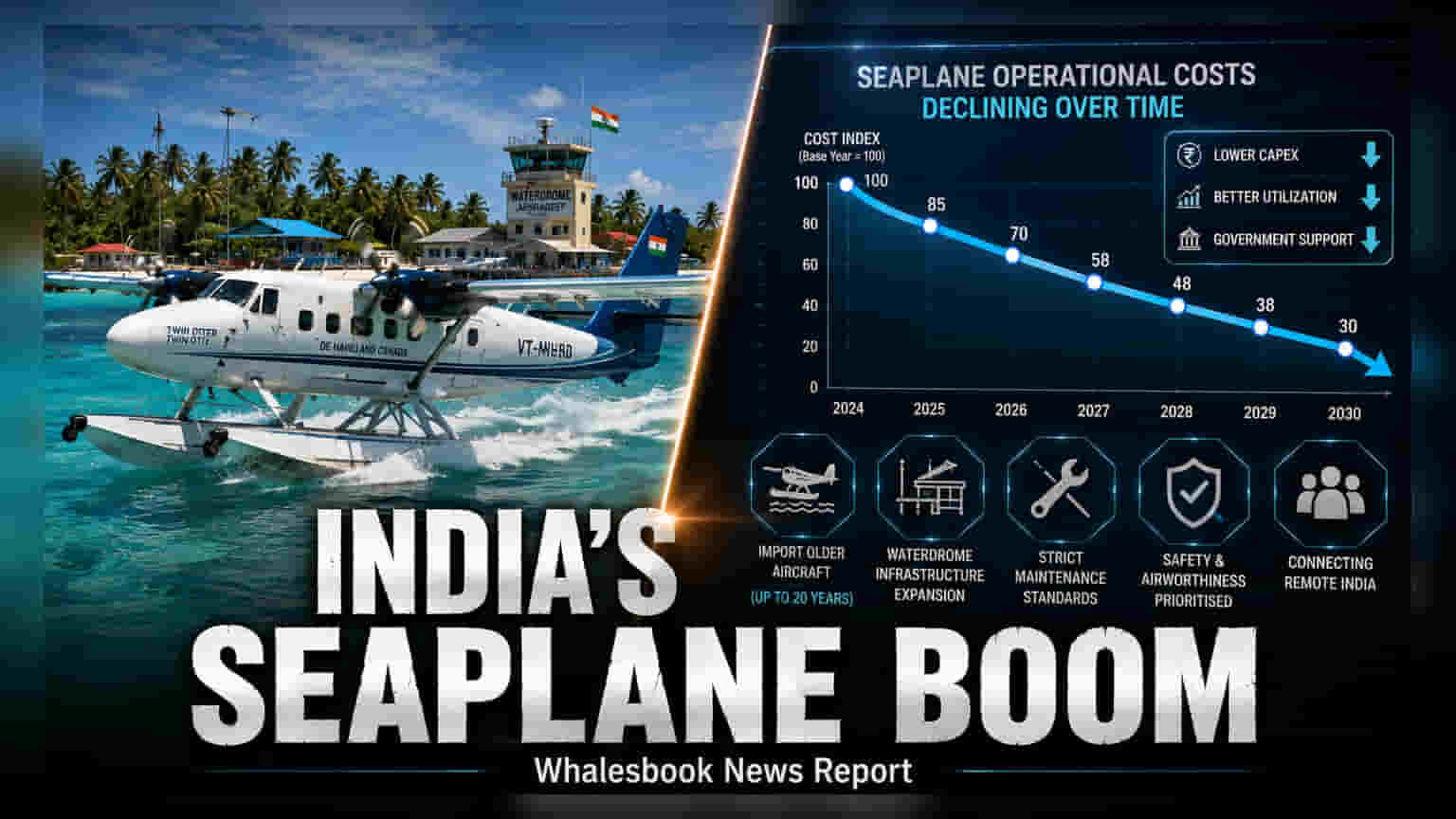
India’s decision to allow the import of 20-year-old seaplanes aims to accelerate regional aviation growth and lower entry costs for operators. While manufacturers like De Havilland Canada view this as a positive step, the sector faces challenges regarding specialized maintenance, infrastructure, and reliance on government subsidies. Investors should track the operational success of new routes.
India has taken a key step to encourage the use of seaplanes by allowing the import of aircraft up to 20 years old. This policy shift is designed to help airline operators grow their fleets faster and reduce the initial money needed to start services. De Havilland Canada, a leading manufacturer of the popular DHC-6 Twin Otter aircraft, has described this as a practical move for India's emerging water-based aviation industry.
For operators, the ability to bring in older, well-maintained aircraft offers a way to build capacity without the heavy upfront cost of brand-new planes. This is particularly important for India's nascent seaplane sector, where companies are still working to prove that routes connecting remote areas like the Lakshadweep islands can be profitable and sustainable. With SkyHop Aviation having recently received its air operator certificate in early 2026, the industry is moving from planning to actual execution.
However, bringing in older aircraft comes with significant technical responsibilities. Operating planes in water environments creates unique challenges, such as salt-water corrosion, which can damage aircraft parts quickly. De Havilland Canada has emphasized that while the policy helps with fleet availability, it does not lower the bar for safety. These older machines require strict adherence to maintenance standards, rigorous airworthiness checks, and constant monitoring to prevent wear and tear from impacting flight operations.
Beyond the aircraft themselves, the industry requires massive support in terms of ground infrastructure. A seaplane cannot operate without dedicated waterdromes, floating docks, and reliable weather monitoring systems designed specifically for water landings. The government’s Modified UDAN scheme is intended to provide some of this support, including subsidies and help with operations. However, the sector’s long-term health will depend on how effectively these facilities are built and maintained.
The reliance on government aid, such as viability gap funding, is a common feature in regional aviation schemes, but it also carries risks. If these subsidies were to be reduced or if demand on remote routes does not grow as expected, the financial model for operators could come under pressure. Success in this sector will likely depend on the ability of operators to manage these high maintenance costs while keeping ticket prices attractive enough for travelers.
For those tracking the aviation sector, the most important updates will be the actual commissioning of new waterdrome projects and the operational track record of the first commercial services. Observers will be watching to see if operators can maintain these older fleets effectively over time, as this will determine whether the current push leads to a long-term network or remains a pilot project with limited scale.