 Whalesbook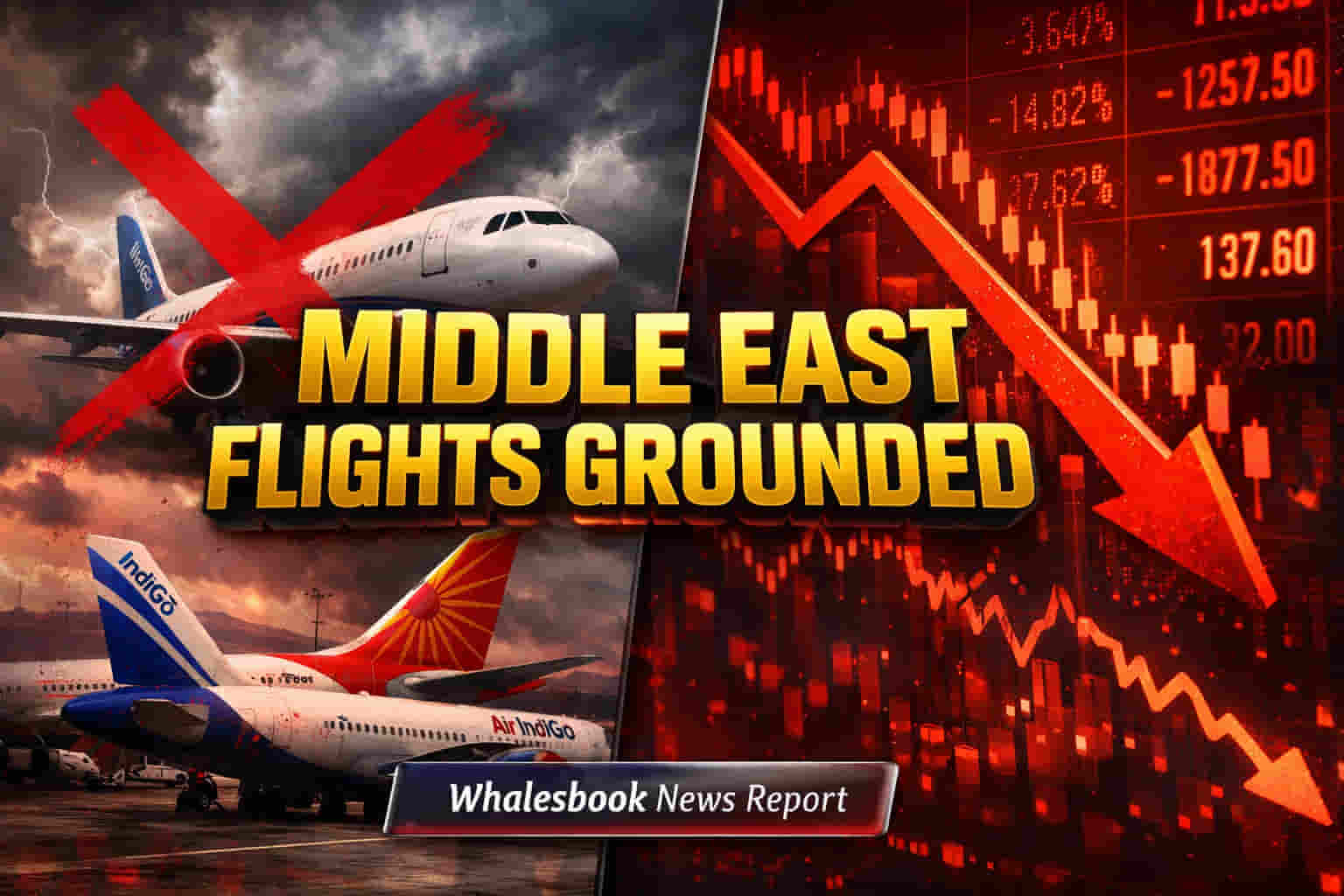


### The Cost of Conflict: Mideast Airspace Curbs Hit Indian Carriers
The eruption of hostilities in the Middle East has triggered widespread flight suspensions by major Indian airlines, including IndiGo, Air India, and SpiceJet, directly impacting thousands of passengers and airline operations. This preemptive measure, driven by evolving airspace restrictions around Iran and neighboring territories, signifies a substantial operational pivot and carries significant financial implications for an already sensitive industry. The closures are not merely a temporary inconvenience but a stark reminder of the economic vulnerability inherent in operating critical international routes through volatile geopolitical zones.
### Revenue and Route Disruptions Mount
For IndiGo, India's dominant carrier by market share, the suspension of Middle East operations represents a direct hit to a crucial segment of its international network. The airline, which operates as a low-cost carrier and prioritizes efficiency, now faces the prospect of lost ticket revenue, passenger compensation costs, and the challenge of reallocating capacity. Similarly, Air India's turnaround strategy is tested as it navigates these disruptions, impacting its ambitions for global connectivity. SpiceJet, already operating under considerable financial strain, faces compounded challenges. With a market capitalization of approximately ₹2,454 crore and a negative P/E ratio indicative of its financial struggles, further revenue loss and increased operational expenses could significantly strain its balance sheet. Its P/E ratio, variously reported as -3.13x or -5.95x, highlights its current unprofitability. IndiGo, conversely, exhibits a higher valuation, with its P/E ratio around 41.2 as of February 2026, but even it must contend with the economic fallout. The cost of rerouting flights, particularly for long-haul sectors, can add between $6,000 to $7,500 per flight hour for wide-body aircraft due to increased fuel burn and extended crew duty times. Indian carriers collectively face an estimated daily rerouting cost exceeding $1.6 million, with Iran alone losing around $2.2 million daily in overflight fees.
### Sector-Wide Headwinds and Historical Parallels
These disruptions compound existing pressures on the Indian aviation sector, which ICRA projects will incur net losses of ₹11,000-12,000 crore in FY27. The sector grapples with substantial debt, dollar-denominated expenses, and volatile Aviation Turbine Fuel (ATF) prices, exacerbated by currency fluctuations. Geopolitical flare-ups have a proven track record of negatively impacting air travel demand and airline profitability; past events, such as the Israel-Hamas conflict in late 2023, led to a global slowdown in flight bookings and confidence. The current situation mirrors broader trends where conflicts globally force airlines to avoid entire airspaces, leading to longer routes and increased costs, a dynamic seen following the Ukraine war and other regional tensions. Competitors in the region, including Qatar Airways and Emirates, have also faced suspensions and diversions, demonstrating the widespread nature of the operational challenges.
### The Forensic Bear Case: Fragility in the Skies
The sustained geopolitical instability in the Middle East poses a structural risk to the profitability and operational stability of airlines relying on these corridors. For Indian carriers, the impact is amplified by their inherent financial vulnerabilities. SpiceJet's weak net cash flows of -₹169.95 crore over the past year and a high debt-to-equity ratio of 1.60 make it particularly susceptible to prolonged disruptions. The company's negative book value per share (-₹2.92) further underscores its precarious financial standing. While IndiGo, with its dominant market share of approximately 62% and robust financials, is better positioned, even its profit margins are likely to be tested by rising operational costs. Analyst reports from ICRA have previously tempered growth forecasts for the Indian aviation sector due to cross-border escalations and other operational headwinds, highlighting the sector's sensitivity to such external shocks. The forced rerouting over months, rather than days, implies a permanent increase in operational costs and a potential reduction in fleet utilization, impacting overall capacity and profitability.
### Future Outlook: Navigating Uncertainty
While the Indian aviation sector anticipates a gradual reduction in losses driven by recovering domestic traffic, the ongoing geopolitical volatility in the Middle East introduces a significant element of uncertainty. The ability of carriers to adapt their networks, manage escalating costs, and maintain passenger confidence will be critical. As the situation evolves, airlines will continue to recalibrate operations, balancing safety imperatives with the economic necessity of maintaining route connectivity, a delicate act in an increasingly unpredictable global aviation environment.