

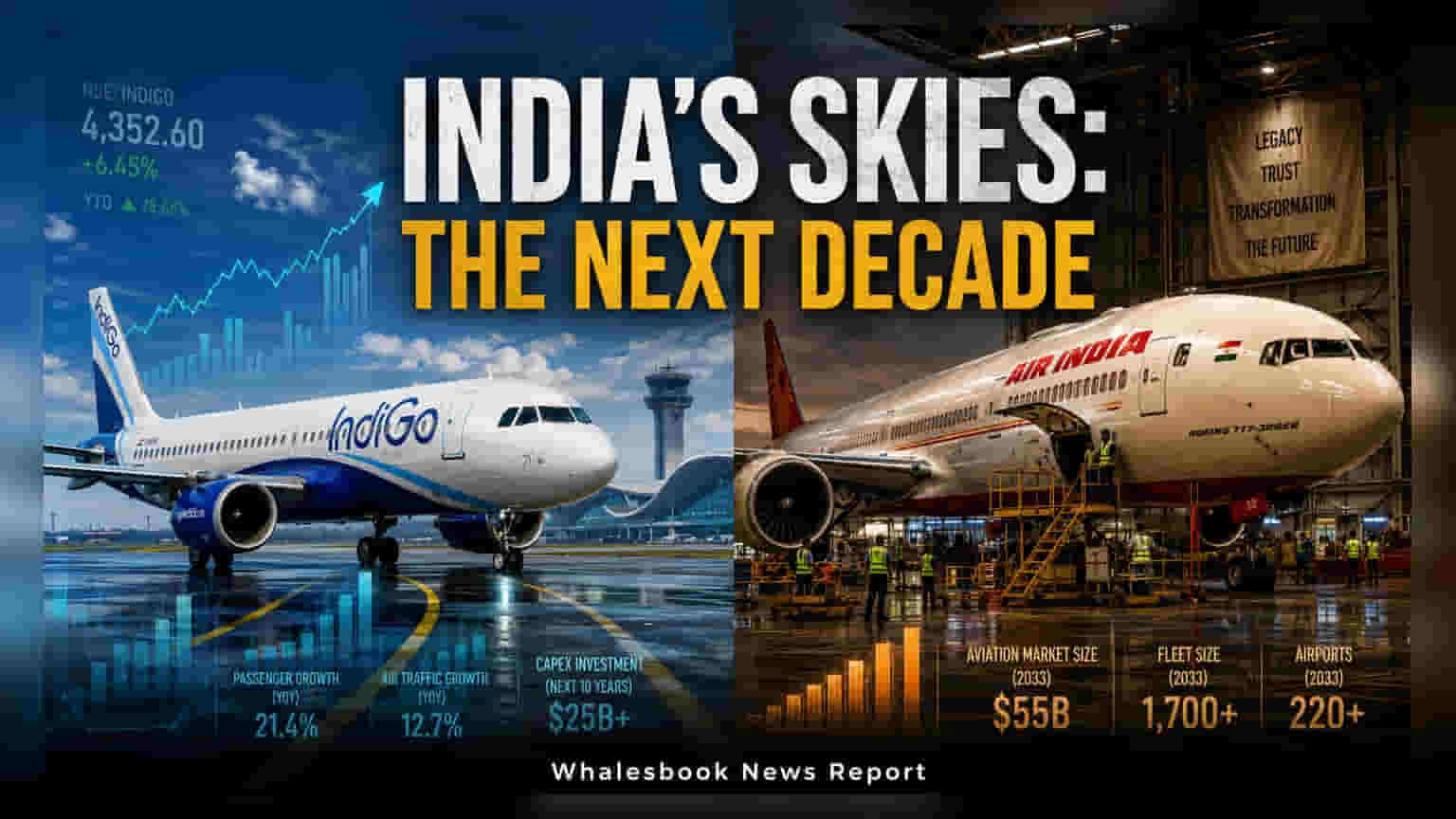
IndiGo and Air India are aggressively expanding fleets to capture growth in the Indian aviation market. While IndiGo leverages its strong profitability and market share, Air India is executing a complex long-term turnaround strategy. Investors should monitor how intense competition and potential new market entrants impact future profit margins and capacity utilization.
The Indian aviation sector is entering a period of significant change as the two largest carriers, IndiGo and Air India, accelerate their expansion plans. IndiGo, operated by InterGlobe Aviation, continues to focus on strengthening its international network. The company reported strong financial performance with profits of ₹7,253 crore and revenue surpassing ₹80,800 crore in its most recent annual cycle, supported by a business model that emphasizes fleet efficiency and cost control. Its consistent market share growth has been aided by the exit of smaller rivals from the domestic space.
Air India’s Turnaround and Integration Efforts
Air India, under the Tata Group, is midway through its multi-year transformation plan known as Vihaan.ai. The airline is currently navigating the operational challenges of merging multiple entities, including the integration of Vistara into the Air India brand and the consolidation of its budget arms. While the airline has committed to a massive order of 470 aircraft to modernize its fleet, it continues to face financial pressure and a competitive struggle to regain domestic market share. For investors, the primary monitorable for Air India’s parent company remains the timeline for operational profitability and the successful integration of its various business units.
Competitive Pressures and Market Changes
Adding to the sector's dynamic is the potential entry of the Adani Group. As the largest private airport operator in India, the group’s entry could alter the competitive balance. Any move by the conglomerate into the airline business would likely require significant regulatory navigation and capital allocation. The sector is also sensitive to global supply chain disruptions, which have impacted aircraft delivery schedules and maintenance costs for all major carriers.
Investors should track how these companies manage their capital spending on new aircraft against the backdrop of potential industry-wide margin pressure. While IndiGo has historically maintained a stronger financial cushion, the ability of both carriers to maintain high capacity utilization—the percentage of available seats actually filled by passengers—will be a key factor in their long-term performance. Future updates on aircraft induction timelines, fuel cost volatility, and any shifts in market share will be critical for understanding the health of the aviation sector.