 Whalesbook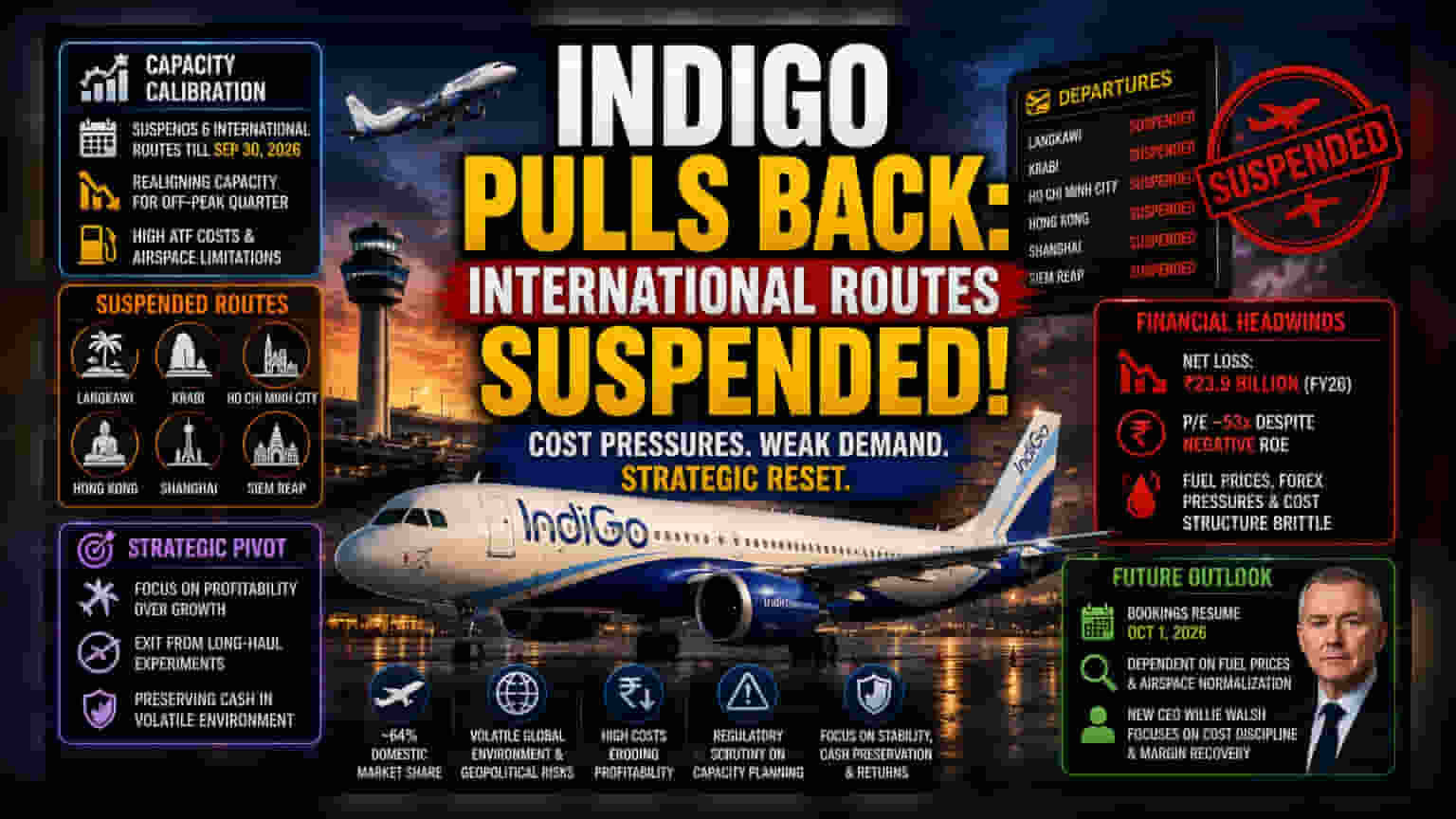


The Capacity Calibration
InterGlobe Aviation is pulling back from its international expansion, announcing the suspension of services to Langkawi, Krabi, Ho Chi Minh City, Hong Kong, Shanghai, and Siem Reap. Effective early July through the end of September 2026, the temporary withdrawal reflects a calculated attempt to stabilize operational performance during a traditionally quiet travel quarter. By realigning capacity, the airline hopes to mitigate the impact of persistent airspace limitations and elevated aviation turbine fuel costs that have compressed profitability across the sector.
Strategic Pivot Amid Sector Volatility
This decision stands in stark contrast to the carrier’s recent trajectory, where it had successfully overtaken the Air India group in both seat capacity and scheduled international flights. However, the external environment has soured; global aviation is currently grappling with heightened geopolitical tensions, particularly in West Asia, which have rendered several long-haul and regional routes commercially unsustainable. This follows the airline's recent discontinuation of its Delhi-Manchester service, which involved the return of leased wide-body Boeing 787-9 Dreamliner aircraft—a clear signal that the capital-intensive experiment into long-haul European markets is being deprioritized in favor of financial preservation.
The Forensic Bear Case
The market’s optimism for the carrier is being tested by a deteriorating financial backdrop. While IndiGo maintains a commanding ~64% domestic market share, its recent fiscal reports revealed a consolidated net loss of ₹23.9 billion for FY26. The stock is currently trading at a high price-to-earnings multiple of approximately 53x, yet the return on equity has dipped into negative territory, highlighting the difficulty of maintaining growth in a high-cost environment. Analysts have expressed concern over the company’s reliance on aggressive expansion to drive revenue when the underlying cost structure—inflated by foreign exchange volatility and rising fuel prices—remains brittle. Unlike smaller, more nimble competitors, IndiGo’s massive scale makes it vulnerable to sudden operational disruptions, and the recent regulatory scrutiny regarding capacity planning adds another layer of risk for shareholders.
Future Outlook
Management has signaled that these suspensions are precautionary, with bookings for the impacted routes scheduled to resume on October 1, 2026. Whether these services return depends entirely on the stabilization of fuel prices and the resolution of airspace bottlenecks. Investors remain focused on the leadership transition to new CEO Willie Walsh, whose mandate will likely prioritize cost discipline and margin recovery over the rapid, capacity-heavy growth strategy of the past. Until global operating conditions improve, the airline’s international footprint will remain under a microscope.