

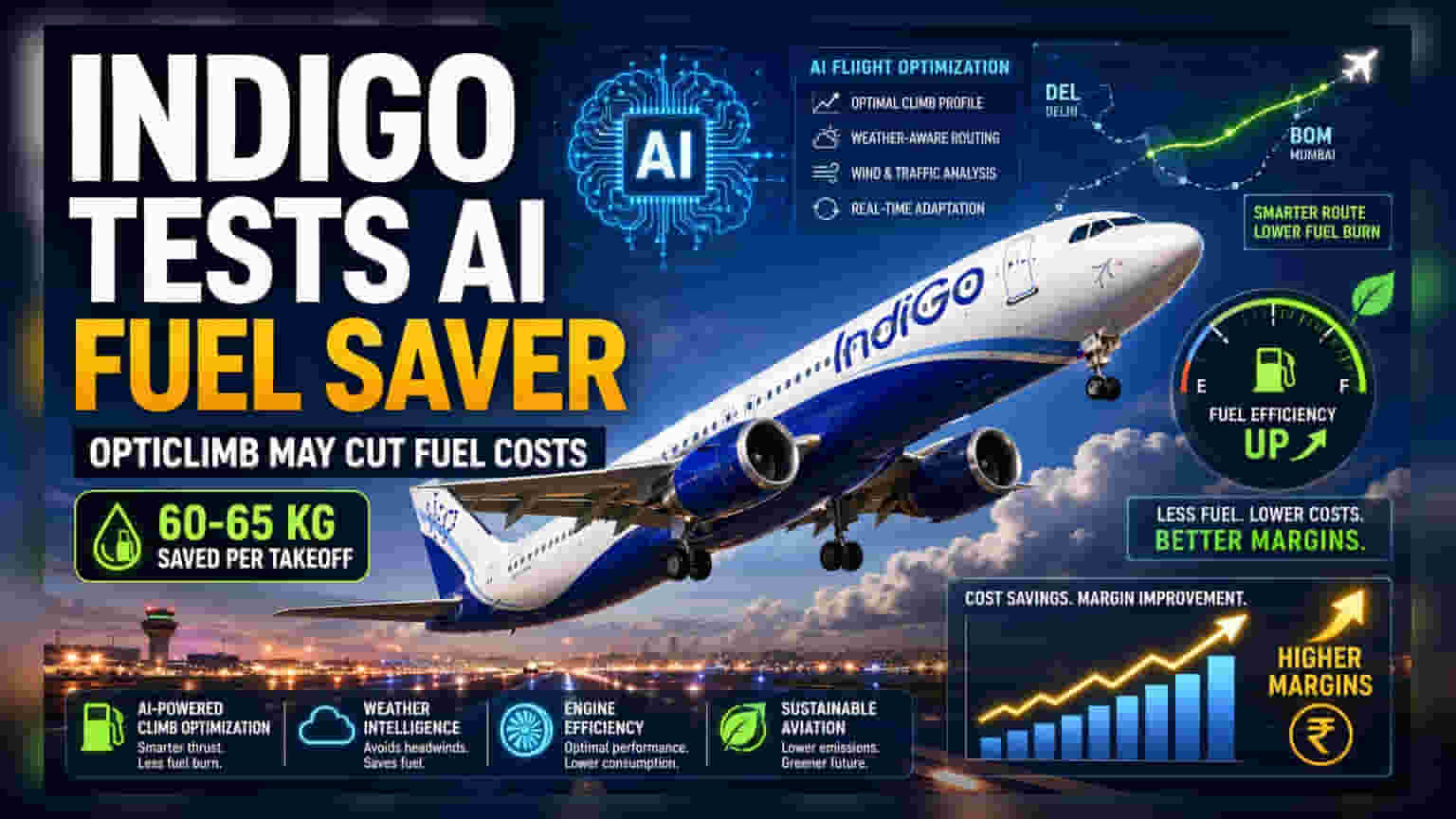
IndiGo has begun testing an AI-based system, OptiClimb, to optimize flight ascent speeds and reduce fuel burn by 60-65 kg per takeoff. This operational update aims to lower fuel costs, which typically account for a significant portion of an airline's total operating expenses. Investors will monitor whether the trial successfully scales across the carrier's large Airbus fleet to help protect profit margins.
What Happened
IndiGo, India’s largest airline by market share, has initiated trials for 'OptiClimb,' an artificial intelligence solution designed to improve fuel efficiency during the climb phase of its flights. Developed in collaboration with SITA, an aviation technology provider, the system analyzes flight data—including aircraft performance, weight, and weather conditions—to recommend optimal ascent speeds. The carrier aims to conserve 60-65 kilograms of fuel per takeoff. The trial is currently focused on its Airbus fleet, which constitutes the bulk of the airline's operations.
Why Fuel Efficiency Matters for Investors
For Indian airlines, aviation turbine fuel (ATF) costs typically represent between 35% and 40% of total operating expenses. Even a small percentage reduction in fuel consumption, when multiplied across thousands of daily flights, can translate into meaningful savings. Investors often view fuel efficiency as a key indicator of operational discipline. By optimizing the energy-intensive climb phase, the airline is attempting to manage one of its largest and most volatile cost drivers. If the system is rolled out widely, it could help the company lower its break-even point, especially during periods of high crude oil prices.
The Strategic Operational Focus
IndiGo has historically maintained a low-cost business model by focusing on operational efficiencies and fleet standardization. This trial aligns with that strategy. Rather than relying solely on passing higher costs to passengers, which can impact demand, the company is seeking technology-driven solutions to manage expenses internally. The success of this initiative will depend on the system's ability to consistently deliver these savings across different routes, weather patterns, and flight loads without compromising safety or turnaround times.
Potential Risks and Challenges
While the technology offers a potential boost to margins, there are inherent risks to consider. The efficiency gains are contingent on pilots consistently following AI-generated recommendations. Additionally, the airline sector faces significant external pressures, including the volatility of global crude oil prices, which can negate fuel-saving efforts regardless of operational efficiency. The company must also manage the complexity of integrating new software across a massive fleet. Furthermore, the aviation industry in India remains highly competitive, and peers are also investing in similar technological upgrades to control costs, which may limit the relative competitive advantage of any single airline.
What Investors Should Track
Investors may look for updates on the trial's completion and the decision to roll out the system across the entire fleet. The most direct impact for shareholders would be visible in the 'fuel costs' line item within the company's future quarterly financial results. Additionally, management commentary regarding sustainability goals and cost-reduction initiatives will be important monitorables to gauge how effectively the airline is executing its efficiency strategy compared to its peers.