 Whalesbook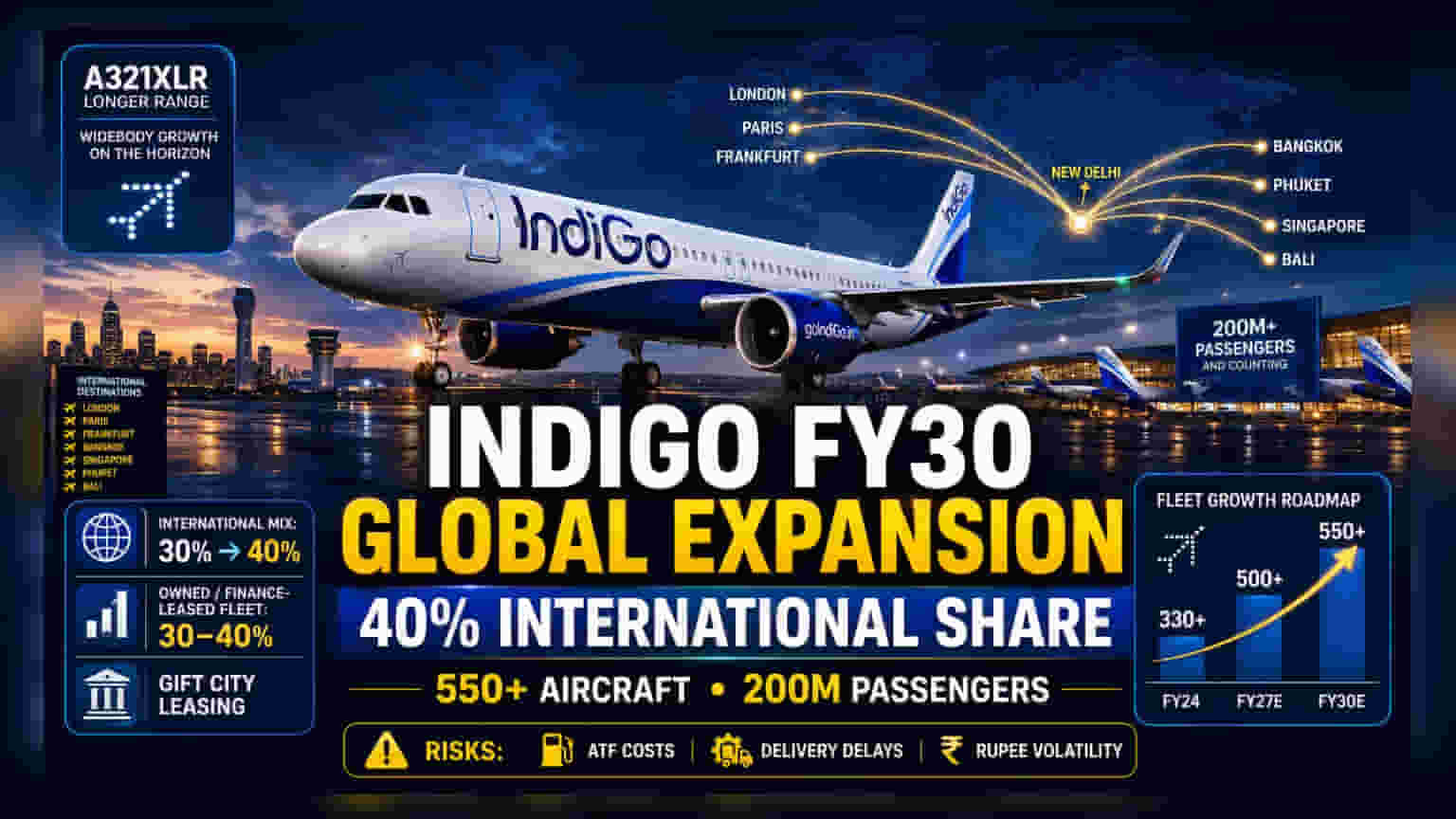


What Happened
InterGlobe Aviation, which operates India’s largest airline, IndiGo, has unveiled an ambitious growth roadmap for the financial year 2030 (FY30). The airline aims to increase its international capacity share to 40% of its total operations, up from the current 30%. To achieve this, the company plans to scale its fleet to over 550 aircraft and handle approximately 200 million passengers annually. This expansion will be supported by the induction of Airbus A321XLR long-range narrowbody jets and Airbus A350 widebody aircraft, which are designed to reach deeper into international markets, including routes to Europe and Southeast Asia.
The Strategic Shift
IndiGo is fundamentally changing its business model. For years, the airline operated with an asset-light strategy, relying heavily on leasing aircraft. It is now moving toward owning a larger portion of its fleet through finance leases and direct ownership. By establishing a leasing subsidiary in GIFT City, the airline aims to lower its exposure to US dollar-denominated lease payments and currency depreciation. This move is designed to bring stability to its cost structure, as fluctuating rupee values have historically pressured airline profit margins. The goal is for owned or finance-leased aircraft to account for 30-40% of its fleet by 2030, a significant departure from its past model.
Competition and Sector Context
IndiGo is positioning itself for a direct challenge in the international travel market, where it competes primarily with the Tata-owned Air India group. The aviation landscape in India is becoming increasingly competitive, with rivals aggressively expanding their own international footprints. While IndiGo has established dominance in the domestic market, transitioning to a broader model that includes business class and long-haul international flights represents a shift toward a premium play, moving away from its traditional all-economy, low-cost carrier format.
Risks and Market Challenges
Despite the long-term vision, the airline faces significant operational hurdles. The sector is currently grappling with high Aviation Turbine Fuel (ATF) costs, which remain volatile due to geopolitical tensions in the Middle East. Fuel often accounts for a large percentage of an airline's operating expenses, and price spikes can quickly erode margins if they cannot be fully passed on to passengers through fares. Additionally, global supply chain disruptions have led to aircraft delivery delays, which may temper the airline's capacity growth in the short term. The company has already indicated that capacity expansion may remain cautious in the near term as it manages these external headwinds.
What Investors Should Track
Investors looking at IndiGo's roadmap may want to monitor several key indicators. First, the actual delivery schedule of the new A321XLR and A350 aircraft is vital, as any further delays will impact the airline's ability to execute its expansion. Second, the movement in aviation fuel prices and the rupee-to-dollar exchange rate will continue to be a primary driver of operational profitability. Finally, tracking how the company balances its capital spending for aircraft ownership with its cash flow generation will be important for assessing the sustainability of its business model. The transition to an ownership-led fleet structure, while potentially reducing forex risk, requires significant upfront capital, making operational efficiency and high aircraft utilization more critical than ever.