 Whalesbook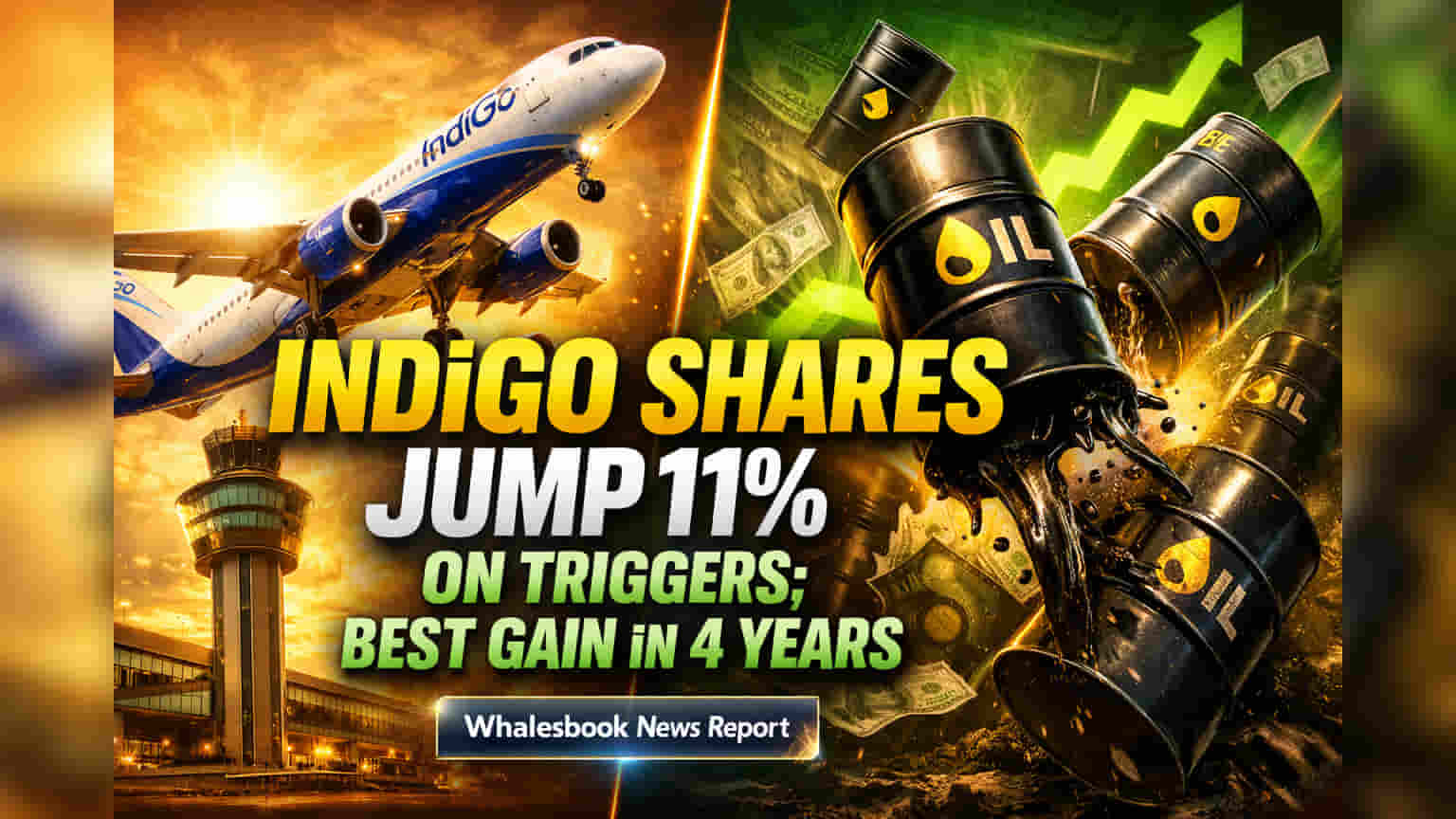


Rally Fueled by Cost Cuts, Lower Oil
IndiGo shares posted their largest single-day gain since February 2022, driven by two key developments. The Airport Economic Regulatory Authority (AERA) cut parking and landing charges by 25%, and global oil prices dropped sharply after a U.S.-Iran ceasefire agreement. While these factors provide immediate cost relief and boost investor sentiment, they don't fully resolve underlying financial issues. The airline is still down 8.3% year-to-date. Its current valuation, with a P/E ratio around 51-52x, is significantly higher than its 10-year median. IndiGo also increased fuel surcharges on domestic and international routes in early April, even as oil prices fell, showing management's challenge in balancing costs with profit margins.
Airport Fee Cuts and Oil Price Drop
IndiGo shares climbed as much as 11% on Wednesday, reaching an intraday high of ₹4,744. The AERA's directive, effective immediately for three months, directly targets operational costs, especially for domestic flights. The drop in oil prices is expected to lower Aviation Turbine Fuel (ATF) costs, which typically make up 30-40% of an airline's expenses. This dual benefit of lower airport fees and cheaper fuel should ideally boost margins. However, IndiGo's stock trades at a P/E ratio of about 51.39 as of April 7, 2026, well above its historical median and industry average. This indicates investors expect significant future growth and profits that the airline has not consistently delivered.
New CEO Faces Profitability Challenge
The appointment of William Walsh as IndiGo's new CEO, effective August 3, adds another layer to the story. Walsh, formerly CEO of British Airways and now Director General of IATA, brings extensive global aviation experience. Analysts see his appointment as strategic for IndiGo's international growth plans. Walsh's immediate challenge will be managing current price pressures and the company's history of increasing fuel surcharges amid volatile fuel prices and competition. This follows the resignation of former CEO Pieter Elbers due to rising fuel costs and a Jefferies price target cut.
IndiGo's Market Position and Sector Outlook
IndiGo leads the Indian domestic market with a roughly 63-64% share, though this has slightly decreased. Its main competitor, the Air India Group, holds about 27-29% and is growing. Akasa Air has around 5%, while SpiceJet is at 2-4%. IndiGo typically leads in on-time performance (OTP). Financially, IndiGo posted a net profit in Q3 FY25, whereas the Air India Group reported a significant consolidated loss for FY25. The overall Indian aviation sector is expected to grow, but industry-wide net losses may persist in FY26 before decreasing in FY27. Recent safety concerns, including a charter plane crash in January 2026, also raise questions about the sector's rapid growth and the need for strict safety standards.
Lingering Risks and Valuation Concerns
Despite the recent stock surge, several risks remain. IndiGo's choice to raise fuel surcharges, even as crude oil prices drop, prompts questions about its ability to pass on savings or its cost structure. The company's P/E ratio over 50x is significantly higher than its 10-year median, suggesting the stock might be overvalued if earnings don't grow fast. IndiGo benefits from an all-Airbus fleet and strong efficiency, but faces tougher competition from a growing Air India Group. Recent data also shows a slight dip in IndiGo's market share, indicating intensifying competitive pressures. A January 2026 charter plane crash has put safety oversight and pilot training under scrutiny, a risk that could affect the sector's growth and investor confidence.
Analyst Views and Future Path
Analysts have mixed views on IndiGo. Some reports suggest a consensus 'Hold' rating with a price target around ₹4,630, while others recommend a 'Strong Buy' with average 12-month targets from ₹5,544 to ₹5,948. Jefferies, in its 4QFY26 preview, estimated IndiGo's Available Seat Kilometer (ASK) growth at approximately 4% year-over-year, below the company's initial guidance. New CEO William Walsh’s ability to manage cost pressures, set competitive prices, and drive global expansion will be key to closing the gap between current market sentiment and long-term value creation, particularly given the airline's high valuation.