

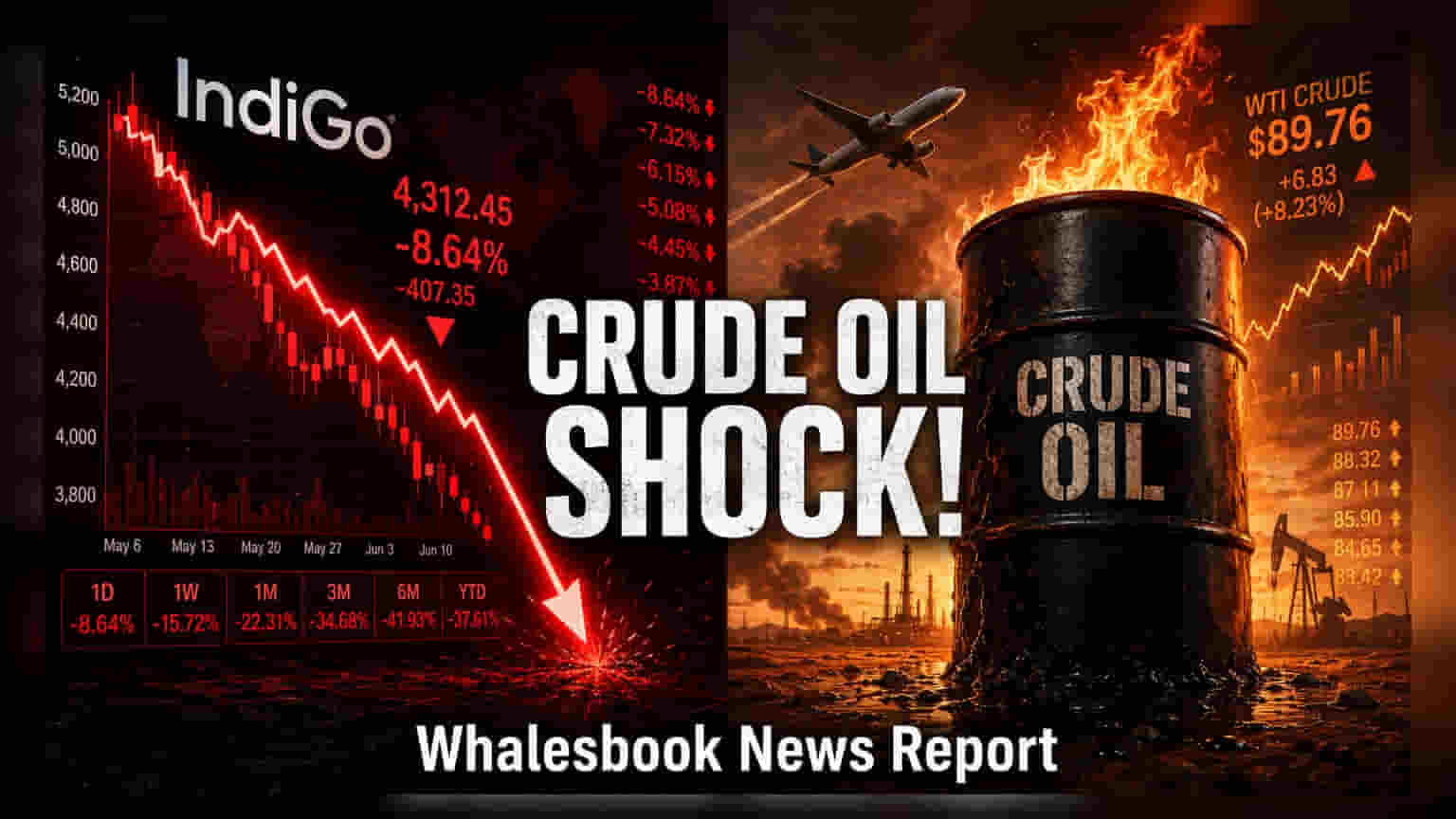
InterGlobe Aviation shares fell 1.5% on Monday as rising crude oil prices sparked concerns over airline operating costs. With Aviation Turbine Fuel accounting for about 40% of expenses, investors are closely watching how oil volatility may impact profit margins in the coming quarter. Domestic air traffic remains a key support factor for the airline's performance.
Shares of InterGlobe Aviation, the operator of India’s largest airline IndiGo, faced selling pressure on Monday, trading 1.5% lower at ₹5,233 on the National Stock Exchange. The decline reflects investor caution following a 4.3% surge in global crude oil prices, which hit $79.28 per barrel for Brent crude. The market reaction follows reports of renewed tensions in West Asia, which have raised concerns regarding global fuel supply chains.
Impact of Fuel Costs on Profitability
For airlines, the price of Aviation Turbine Fuel (ATF) is a critical factor for financial health. Since fuel typically accounts for nearly 40% of an airline's total operating expenses, any sustained increase in crude oil prices can directly reduce profit margins. While the company has shown the ability to manage costs through efficient fleet operations, the sharp rise in fuel prices places immediate pressure on the bottom line. Investors are particularly focused on whether the airline can offset these higher costs through ticket pricing or ancillary revenue streams like seat selection and baggage fees.
Revenue Outlook and Operational Environment
Despite the immediate market reaction, the broader financial outlook for the first quarter of fiscal year 2027 (Q1FY27) remains a key area for analysis. Domestic passenger traffic in India has shown resilience, and IndiGo continues to maintain a strong market share. The airline’s ability to generate revenue is supported by steady demand, but earnings growth may face headwinds. Aside from fuel costs, a weaker Indian Rupee creates additional pressure, as significant portions of aircraft lease payments and maintenance costs are settled in foreign currencies.
Technical Support Levels to Monitor
From a market perspective, the stock has recently encountered resistance near the ₹5,470 level. Analysts point to the 200-day moving average, currently near the ₹5,000 mark, as a significant support zone. The stock's ability to maintain this level is viewed as important for its short-to-medium-term trend. As long as the price holds above this support, the overall structure is often considered stable, though investors should expect continued volatility as long as geopolitical tensions influence oil prices.
Moving forward, the primary monitorables for shareholders will be the company’s Q1FY27 financial results and management commentary regarding their ability to pass on fuel price increases to customers. Any further escalation in West Asian tensions remains a risk that could lead to additional volatility in both fuel costs and airline stock performance.