 Whalesbook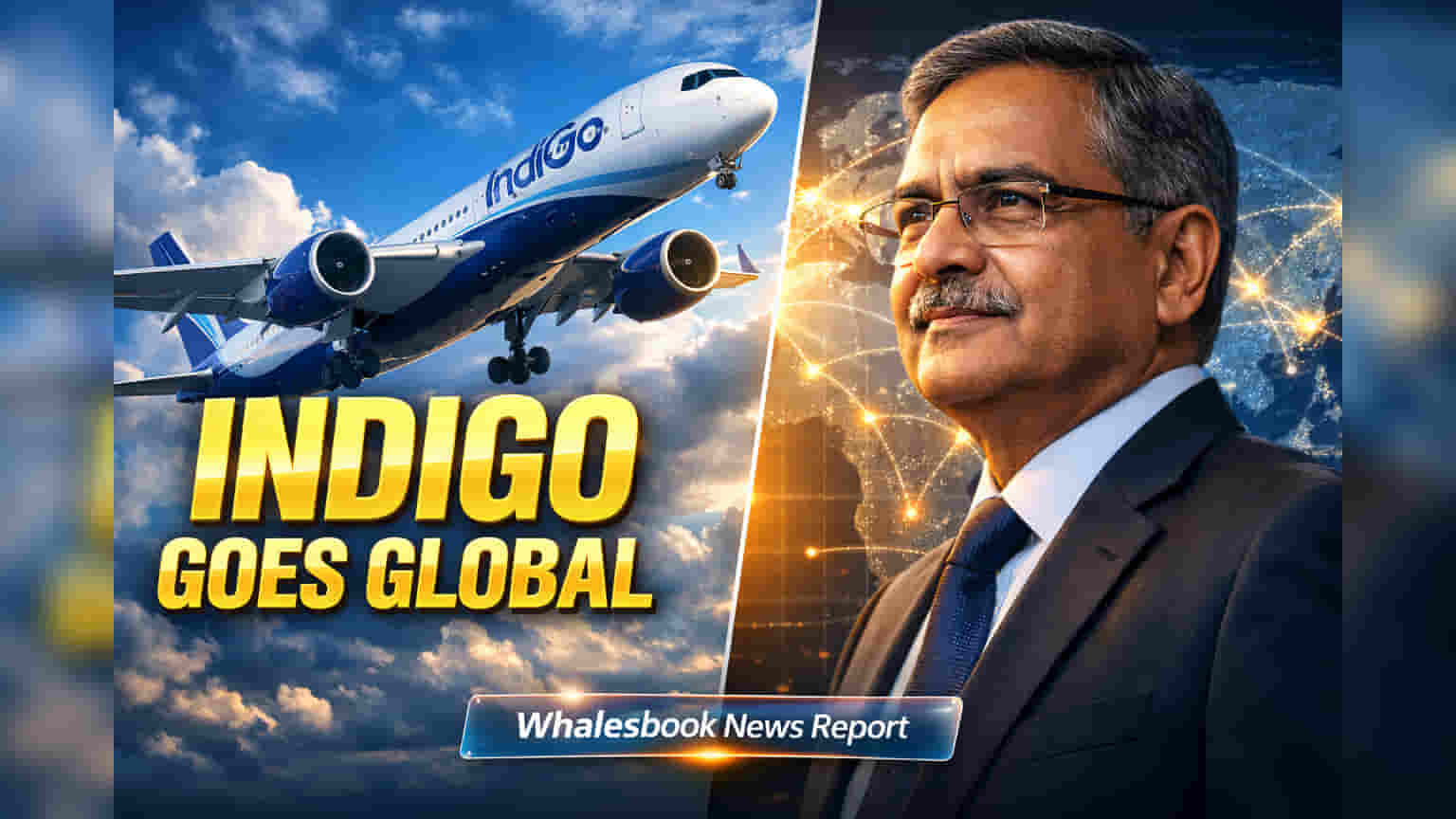
Global Ambition Takes Flight
The appointment of Aloke Singh as Chief Strategy Officer marks a key step in IndiGo's strategic direction, signaling its intent to shift from domestic dominance to becoming a major global player. This move clearly indicates the airline's commitment to executing a complex, capital-intensive strategy centered on the Airbus A350. The initiative aims to overcome past operational disruptions and executive transitions, preparing the airline for international connectivity and diversified revenue streams.
Market Reaction and Valuation
IndiGo's expansionary ambitions and ongoing industry pressures have drawn investor caution. As of March 23, 2026, IndiGo's shares were trading near their 52-week low of ₹3,895.20, as investors worry about volatile fuel costs and their impact on profitability. Despite a substantial market capitalization of approximately ₹1.61 trillion, IndiGo's Price-to-Earnings (P/E) ratio stood around 49.94 in March 2026. This premium valuation implies investors expect the A350 strategy to deliver significant returns. The appointment of Singh, who previously led Air India Express's transformation, aims to boost confidence in executing this ambitious long-haul vision. This includes the planned delivery of 60 A350-900 aircraft starting mid-2027, intended to build a more resilient organization. However, immediate market impact is currently subdued by broader industry pressures.
Navigating a Competitive Global Landscape
IndiGo's move toward long-haul operations with the A350 marks a significant shift from its traditional domestic-focused, asset-light model. While IndiGo holds a dominant ~63.6% share of the domestic market, the international arena is considerably more competitive. The Air India Group, now a consolidated entity with ~26.5% domestic market share, is also making significant fleet and network investments. Newer carriers like Akasa Air are also growing. The Indian aviation sector is forecast for significant growth, but consolidation is driven by financial strain and soaring fuel costs, exacerbated by geopolitical tensions. Analyst views are divided. Some maintain 'buy' ratings with high targets, while others, like Goldman Sachs, have cut earnings estimates, predicting minimal profit for FY27E due to oil price volatility and conflicts in the Gulf region. IndiGo's stock has fallen 21% year-to-date. Singh's experience, including guiding Air India Express through its merger and fleet expansion to over 100 aircraft, is vital for managing these challenges. The airline is also evolving its financial strategy from leasing to greater ownership and financial leasing via GIFT City to control costs.
Execution Risks and Financial Pressures
IndiGo's ambitious long-haul A350 push, while potentially transformative, carries substantial execution risks. Route success depends on sustained passenger demand to justify significant capital investment per aircraft. IndiGo must also replicate its low-cost efficiency on routes traditionally served by full-service carriers. The risk of operational crises, such as those seen in December 2025 due to pilot shortages and flight duty regulations, remains a concern, potentially impacting public trust and stability. Intense competition comes from the Air India Group and established global carriers on international routes. The Indian aviation sector's overall financial health remains precarious, with a projected net loss of Rs 170-180 billion for 2025-26 and significant debt, including lease liabilities. While IndiGo has a strong balance sheet, financing and operating a widebody fleet internationally brings new cost pressures. Profitability on new routes could be delayed or harder to achieve, especially given volatile fuel prices and potential market overcapacity.
The Future Outlook
Despite current industry pressures, analysts remain cautiously optimistic. Morgan Stanley maintains an 'Overweight' rating with a price target of ₹6,498, forecasting a 56.7% upside. Goldman Sachs, despite cutting earnings forecasts, retains a 'buy' rating with a target of ₹5,200, suggesting a 25% potential upside. IndiGo's management highlights long-term growth drivers like fleet expansion and international route development, aiming for increased fleet ownership and international capacity share. The removal of domestic airfare caps could provide pricing flexibility as jet fuel costs climb. The airline's strategy focuses on using its scale and efficiency to overcome industry challenges and secure a substantial share of India's fast-growing aviation market.