 Whalesbook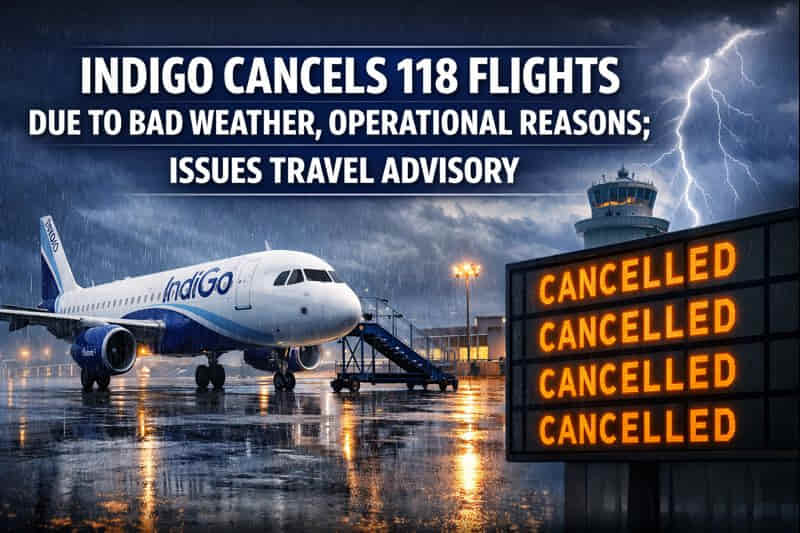
IndiGo Faces Major Disruption: 118 Flights Cancelled Amidst Severe Fog
IndiGo, India's leading airline, announced the cancellation of 118 flights on Monday, citing challenging weather conditions and operational reasons. This significant disruption has impacted air travel across the country, particularly affecting operations at major airports in Northern India. Passengers are advised to verify their flight status before heading to the airport.
Core Issue: Widespread Flight Cancellations
The majority of the cancelled flights were attributed to adverse weather, primarily dense fog blanketing several key airports. Six flights were cancelled due to internal operational issues. The widespread cancellations affected services to and from major cities like Delhi, Mumbai, Bengaluru, Cochin, Hyderabad, and Kolkata, among numerous other destinations listed on the airline's website.
Official Statements and Passenger Advisories
In a travel advisory issued around midday, IndiGo confirmed the ongoing impact of foggy conditions in Delhi and northern India, warning that visibility was yet to improve fully. The airline indicated that flight movements would continue to be sequenced to ensure orderly operations, aiming to minimize passenger inconvenience. This advisory was posted on X, formerly Twitter.
Regulatory Framework for Fog Operations
The Directorate General of Civil Aviation (DGCA), India's aviation regulator, has declared December 10 to February 10 as the official fog window for winter. During this period, airlines must comply with stringent operational norms. This includes mandating pilots trained to operate in low-visibility conditions and ensuring the deployment of CAT-IIIB-compliant aircraft fleets. These regulations are designed to maintain safety standards during periods of significantly reduced visibility.
Historical Context and Precedent
This latest series of cancellations by IndiGo follows a pattern of disruptions. Earlier in December, the airline had to cancel thousands of flights, including a staggering 1,600 on a single day, due to new court-mandated flight duty and rest period regulations for pilots, which left many passengers stranded. The current fog season, which began around December 10, has already seen substantial cancellations, with 67 flights axed on December 25 and another 57 on Saturday.
Market Reaction and Financial Implications
While the article does not detail specific stock movements, such widespread operational disruptions can have a negative impact on an airline's reputation and financial performance. Repeated flight cancellations can lead to passenger dissatisfaction, potential compensation claims, and a loss of business to competitors. For investors, this highlights the sector's vulnerability to weather patterns and regulatory changes.
Future Outlook
As the winter fog season is expected to continue until mid-February, further disruptions for airlines operating in Northern India remain a possibility. IndiGo and other carriers will likely continue to face challenges in maintaining on-time performance. Passengers are urged to remain vigilant and check for updates regularly.
Impact
This news directly affects a large number of air travelers in India, causing significant inconvenience and potential financial losses due to missed connections or rescheduled plans. For IndiGo, it represents a considerable operational challenge and a potential hit to customer trust. The aviation sector, in general, experiences increased costs and complex logistical hurdles during fog season.
Impact Rating: 7/10
Difficult Terms Explained
- CAT III: A set of advanced aviation standards that enables aircraft to conduct landings and takeoffs in very low visibility conditions, significantly enhancing flight safety during fog.
- CAT-IIIB: A specific sub-category of CAT III operations, permitting aircraft to land with runway visual ranges (RVR) as low as 50 meters, a critical capability for airports like Delhi during dense fog.
- RVR (Runway Visual Range): A meteorological measurement indicating the distance over which a pilot of an aircraft on the ground can see the runway surface. It is used to determine operational limits for landings and takeoffs in poor visibility.
- DGCA (Directorate General of Civil Aviation): The primary government regulatory body in India responsible for the supervision, regulation, and promotion of civil aviation.